Key points
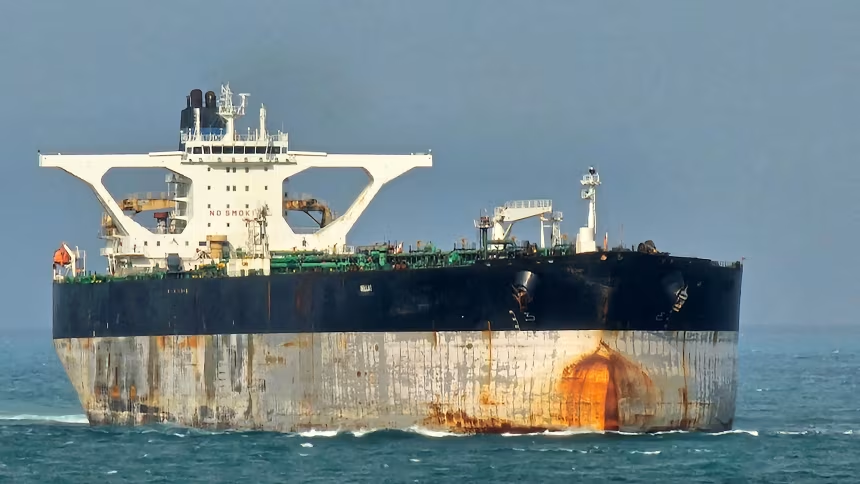
- The United States seized a Russian-flagged oil tanker, the Marinera (formerly Bella-1), in the North Atlantic after a multi-week pursuit; U.S. officials say the seizure was made under a federal court warrant for alleged violations of U.S. sanctions.
- The Marinera had been tracked by the U.S. Coast Guard and other forces after evading an earlier U.S. attempt to intercept ships tied to a so-called “shadow fleet” transporting Venezuelan oil.
- Officials say the vessel had reflagged and used circuitous routing to avoid seizure; U.S. forces also moved against a second tanker, the M Sophia (Panama-flagged), in related enforcement actions.
- The operation adds a new escalation to sanctions enforcement, risks diplomatic fallout with Russia, and underscores the difficulties of policing global maritime shadow networks that ferry sanctioned oil.
Lede — US Seizes Russian-flagged Oil Tanker Linked to Venezuela
U.S. authorities say they boarded and seized the Marinera in the North Atlantic after tracking the vessel for several weeks. The ship—sanctioned previously under other names—was identified by U.S. officials as part of a network of tankers that have moved Venezuelan crude while attempting to evade Western sanctions. The U.S. Coast Guard, working with Department of Justice and Department of Homeland Security teams, carried out the operation using assets that shadowed the tanker across international waters.
What we know (step-by-step)
- Identification and tracking. U.S. maritime forces kept the Marinera under surveillance after suspecting it had been involved in sanction-evading voyages; the vessel had previously been designated in U.S. sanctions lists under a different name.
- Pursuit and interdiction. After an attempted interception in the Caribbean in late December, the ship altered course and headed north; U.S. assets continued to track it until crews boarded the vessel in the North Atlantic pursuant to a federal warrant.
- Concurrent actions. Authorities also moved against at least one other vessel tied to the same network—the M Sophia—and say the broader enforcement campaign targets a “shadow fleet” that shields sanctioned cargoes through reflagging and transshipment.
- Diplomatic reactions. Russian officials condemned the seizure and described the tanker as Russian-flagged; reporting indicates Russian naval vessels were in the general area during the episode, raising the stakes for Washington-Moscow maritime encounters.
Why this matters: sanctions, shadow fleets and geopolitics
- Sanctions enforcement at sea is hard. Ships can change names, reflag, switch ownership on paper, and route through third-party ports to mask origin and destination. These tactics create a true enforcement challenge for coast guards and customs authorities. The Marinera case illustrates how sustained maritime tracking—plus legal warrants—are often necessary to interrupt those flows.
- It demonstrates the limits and reach of U.S. power. Executing a seizure on the high seas, especially where other naval powers are active, requires coordination and carries diplomatic risk. Russia’s public complaints and nearby naval activity underscore that such operations can inflame bilateral tensions.
- Market and energy consequences. Aggressive enforcement of sanctions on vessels carrying Venezuelan crude can tighten the channels through which that oil reaches global buyers; in turn, buyers and intermediaries may change routing, pay premiums for secrecy, or seek alternative suppliers—all of which ripple into energy markets.
Practical implications for stakeholders
- For maritime operators and insurers: Expect stricter vetting, heavier scrutiny of ship identities and voyage histories, and potential insurance premium increases for vessels trading in risky corridors.
- For traders and refiners: Contingency planning is now more urgent; contracts should include stronger clauses on seizure risk, and counterparties must confirm lawful title and clear provenance.
- For policy makers: This case strengthens the argument for international cooperation on maritime tracking and for legal mechanisms that make it harder for shadow fleets to exploit loopholes in registry and ownership rules.
Quick interactive checklist — is your supply chain exposed?
(Answer Yes / No; if any “Yes,” prioritize mitigation.)
- Do any of your fuel or feedstock suppliers rely on brokers with opaque ownership records?
- Do contracts lack mandatory voyage history and AIS (Automatic Identification System) data disclosure?
- Do you accept deliveries or purchases where the vessel’s flag or name recently changed?
- Have you budgeted for rapid rerouting or replacement supply if a vessel is detained or seized?
If you answered “Yes” to any item, have legal and compliance teams review counterparty documentation and add seizure-risk clauses immediately.
What to watch next
- Court filings and DOJ statements: The Justice Department typically files forfeiture or seizure documents that provide the legal basis and alleged facts—those filings will show the precise charges and the evidence U.S. authorities relied upon.
- Diplomatic exchanges: Monitor statements from Russia, Venezuela, and U.S. diplomatic channels for escalation or de-escalation signals.
- Follow-on seizures or arrests: Enforcement campaigns often produce additional interdictions or prosecutions as investigations trace ownership, financing and logistic networks.
Bottom line
The seizure of the Marinera marks a high-profile instance of maritime sanctions enforcement and highlights both the ingenuity of shadow fleets and the operational complexity of countering them. For commercial actors, it’s a warning: increased diligence, clearer documentation and ready contingency plans are now essential when dealing with oil supplies that may transit high-risk maritime networks. For governments, the episode underscores the need for multilateral solutions to close the loopholes that allow sanctioned cargoes to keep moving.
Disclaimer: This article summarizes public reporting and official statements and is not legal, financial or diplomatic advice.