Key points
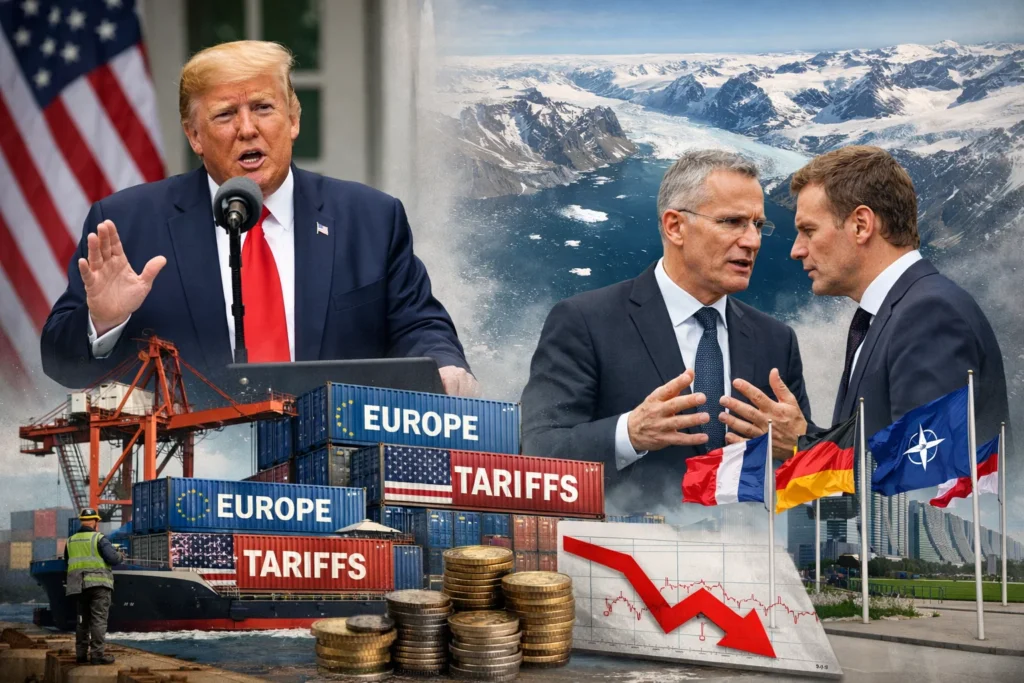
- President Trump announced tariffs aimed at several European NATO allies over their resistance to U.S. pressure about Greenland — an immediate escalation that could begin with 10% levies on Feb. 1 and rise to 25% on June 1, according to public statements.
- The list of countries named in reporting includes Denmark, Norway, Sweden, France, Germany, the Netherlands, Finland and the UK — nations that have publicly backed Denmark’s sovereignty over Greenland.
- European leaders reacted with alarm and a mix of diplomacy and contingency planning: EU officials called the move a strategic error and are preparing responses including security, trade and investment countermeasures. Several capitals warned against escalation while readying proportional responses.
- Markets and industries sensitive to transatlantic trade — shipping, consumer goods, insurance and commodity markets — are already pricing in higher near-term risk and hedging for supply-chain disruption. Analysts say safe-haven assets could benefit if tensions persist.
NATO allies face Greenland tariffs — what happened
President Trump announced a plan to impose tariffs on several European countries that have opposed his pressure campaign over Greenland. The announcement — issued in public comments and amplified on social platforms — threatens punitive import levies on countries that back Denmark’s refusal to sell or transfer Greenland, with the White House saying tariffs would start in early February and could escalate if Copenhagen does not acquiesce. The move instantly raised questions about alliance solidarity, trade law, and how NATO partners manage deep diplomatic disagreements.
What the announcement actually says (the factual core)
- Trump framed the tariffs as leverage to force a political outcome related to Greenland; he specified timing for implementation and suggested increases if his demands are unmet. Reporting shows the threatened tariff rounds are 10% initially and up to 25% later.
- No full statutory tariff schedule or implementing regulation had been published at the time of the initial reports, which means customs officials and traders face legal and operational uncertainty until formal documents appear.
Why NATO allies are alarmed
- Alliance cohesion at risk. Targeting NATO partners with trade penalties over a territorial dispute involving a fellow ally is an unusual—and for many, unacceptable—use of U.S. economic leverage inside the alliance. Leaders are worried about precedent and trust.
- Economic exposure. European exporters and global supply chains that depend on tariff-sensitive goods (food, industrial parts, specialty chemicals) could face sudden cost increases and disruption. Businesses must scramble to reroute or renegotiate contracts.
- Legal and multilateral fallout. A broad, extra-ordinary tariff regime aimed at allied countries invites WTO challenges and could prompt coordinated EU countermeasures (including the EU’s anti-coercion toolkit), raising the stakes quickly.
How European leaders are responding (quick read)
- Diplomacy first: Several capitals urged calm and opened emergency diplomatic channels to de-escalate and seek clarification from Washington. UK leaders publicly favored pragmatic dialogue over immediate retaliation.
- Contingency planning: The EU and member states signalled they are preparing economic and security packages — from trade countermeasures to increased Arctic security cooperation — to reassure Denmark and deter further coercion.
- Public pushback: Parliaments, business groups and public opinion in Europe pushed for a firm, coordinated response if tariffs materialize, citing the damage a tariff war would inflict on jobs and growth.
Market and business implications
- Immediate market moves: Commodity and safe-haven assets (gold, silver) can rally on geopolitical risk; insurers and freight forwarders are likely to raise premiums for transatlantic shipments subject to sudden tariffs or secondary boycotts.
- Supply-chain choreography: Importers should review contracts for tariff-pass-through clauses, hedging provisions, and force-majeure language. Multinational firms must assess whether to shift sourcing, stockpile critical inputs, or seek tariff-exemption mechanisms.
- Sector winners/losers: Export-intensive manufacturers in affected countries face the brunt; logistics, legal, and trade-advisory firms may see demand rise as companies scramble for compliance and contingency plans.
Legal and trade-policy questions
- Authority to impose such tariffs: Presidents have wide powers over tariffs for national-security reasons, but using that authority against allies over a territorial dispute raises novel legal and diplomatic challenges and could be subject to judicial review or congressional pushback.
- WTO and EU countermeasures: The EU can pursue dispute settlement or invoke anti-coercion measures, including retaliatory tariffs or suspension of trade concessions—responses that would escalate economic costs on both sides.
Practical checklist — what exporters, importers and travelers should do now
(Do these five steps immediately if you have transatlantic exposure.)
- Freeze non-urgent bookings and payments for imports that would land in the U.S. after the tariff start date until you know the final tariff language.
- Audit contracts for tariff-pass-through, indemnity and force-majeure terms; notify counterparties and assess renegotiation options.
- Map supplier dependence on goods from the named countries and identify substitute suppliers in unaffected markets.
- Check insurance and trade-finance terms—confirm whether political-risk, cargo and credit insurance covers tariff and embargo scenarios.
- Engage trade counsel and customs brokers to prepare for classification, valuation and possible tariff-exemption requests once formal rules are published.
What to watch next (timeline)
- Official tariff proclamation and Harmonized Tariff Schedule language from U.S. authorities (the single most important next step).
- EU emergency council and any use of the Anti-Coercion Instrument or retaliatory tariff proposals.
- Statements from Denmark and NATO on alliance cohesion and any shifts in defense cooperation or Arctic posture.
- Market indicators: insurance premia, freight rates, and commodity price moves—especially for metals and energy—will show how markets price the disruption.
Bottom line
Threatened Greenland tariffs pit a major U.S. trading partner (and alliance structure) against the still-evolving use of economic coercion in foreign policy. Even if the tariffs are never fully implemented, the episode damages trust, forces businesses to plan for disruption, and sharpens the political cost of using trade tools against allies. The next 72 hours—when formal measures or diplomatic clarifications emerge—will tell whether this becomes a short diplomatic skirmish or a lasting rupture in transatlantic relations.