Key points
- Netflix released Kidnapped: Elizabeth Smart on January 21, 2026, a first-person documentary that revisits her 2002 abduction and nine-month captivity.
- Elizabeth Smart narrates the film and appears alongside family members and investigators; several new archival materials are featured.
- Her abductors were Brian David Mitchell (convicted, serving life) and Wanda Barzee (pleaded guilty; paroled 2018 and later the subject of parole concerns).
- Smart was kidnapped at age 14 on June 5, 2002, and rescued on March 12, 2003 — about nine months later — a timeline the documentary traces in detail.
Why this documentary matters now
The film reframes a high-profile true-crime story through the survivor’s voice rather than only through court filings and headlines.
Smart’s participation shifts the emphasis to healing, agency and the long aftermath for victims and families.
What the film shows (concise)
Kidnapped uses new archival footage, family interviews and investigative reporting to map the abduction, the months in captivity, and the rescue.
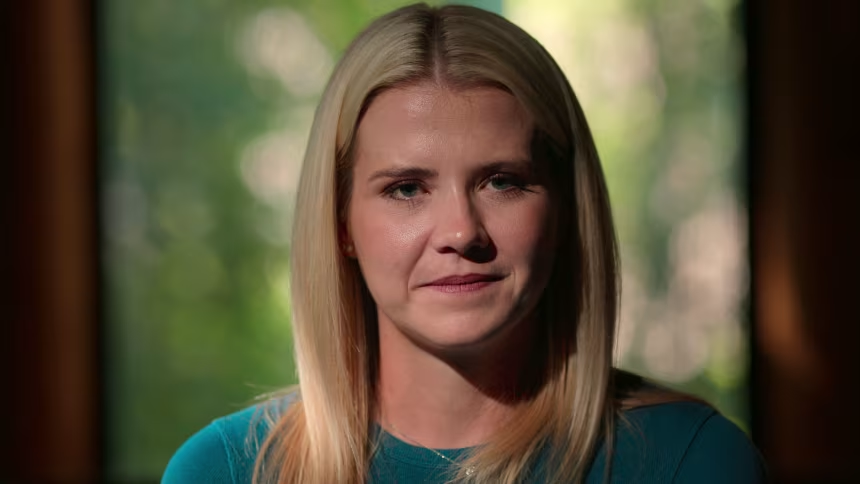
Elizabeth appears on camera and speaks about the experience and how it shaped her life and advocacy.
The basic facts — a quick timeline
Elizabeth Smart, 14, was taken from her Salt Lake City bedroom on June 5, 2002 and held for roughly nine months.
She was found and rescued on March 12, 2003 after a tip linked to a police sketch and careful investigative work.
Who committed the crime — current status
Brian David Mitchell was convicted in federal court and is serving a life sentence; he remains in the federal prison system.
Wanda Barzee pleaded guilty in 2009, was released from custody in 2018 under supervision, and her parole record drew renewed attention after later violations.
What survivors and advocates say about telling the story
Smart has turned her public profile toward supporting victims — founding a foundation and speaking about resilience.
The documentary underscores her desire to control the narrative and use the story to help others rather than simply re-sensationalize the crime.
New details and archival material — what’s fresh here
Reviewers note the doc includes never-before-seen material and candid reflections from family members who participated.
The film does not alter the legal record, but it adds context about the emotional and investigative arc that earlier coverage didn’t fully capture.
How the documentary treats sensitive content
Filmmakers and Smart foreground survivor consent and warning labels; the film balances factual recitation with attention to trauma-informed storytelling.
Viewers should expect difficult subject matter handled with an emphasis on recovery and advocacy.
Why some viewers will find it valuable
The documentary offers a rare instance of a survivor narrating her own experience in depth, useful for students of criminal justice, victim advocacy and media ethics.
It also prompts wider questions about how communities, police and media respond to missing-person cases.
Quick FAQ — short answers readers want
How long was Elizabeth Smart missing?
About nine months — from June 5, 2002 to March 12, 2003.
Who were the kidnappers?
Brian David Mitchell (convicted; life sentence) and Wanda Barzee (pleaded guilty; later paroled and under supervision).
Is the documentary on Netflix now?
Yes — Kidnapped: Elizabeth Smart was released on Netflix on January 21, 2026.
Viewer guidance and trigger warnings
The film deals with sexual assault, manipulation and prolonged captivity; content warnings are appropriate for sensitive viewers.
If the material is triggering, consider watching with support or using content advisories before viewing.
Do you support survivors telling their stories in documentary films?
Final take — what the story leaves us with
Kidnapped: Elizabeth Smart reframes a notorious criminal case as a survivor’s testimony about loss, recovery and public responsibility.
It’s less about reopening wounds and more about documenting a path from victimhood to advocacy — an angle that changes how the story sits in public memory.
Disclaimer: This article synthesizes reporting and the Netflix documentary available as of January 2026. It summarizes public facts, court outcomes and filmmaker claims; readers seeking legal records or primary source material should consult court filings and official documents.