Key points
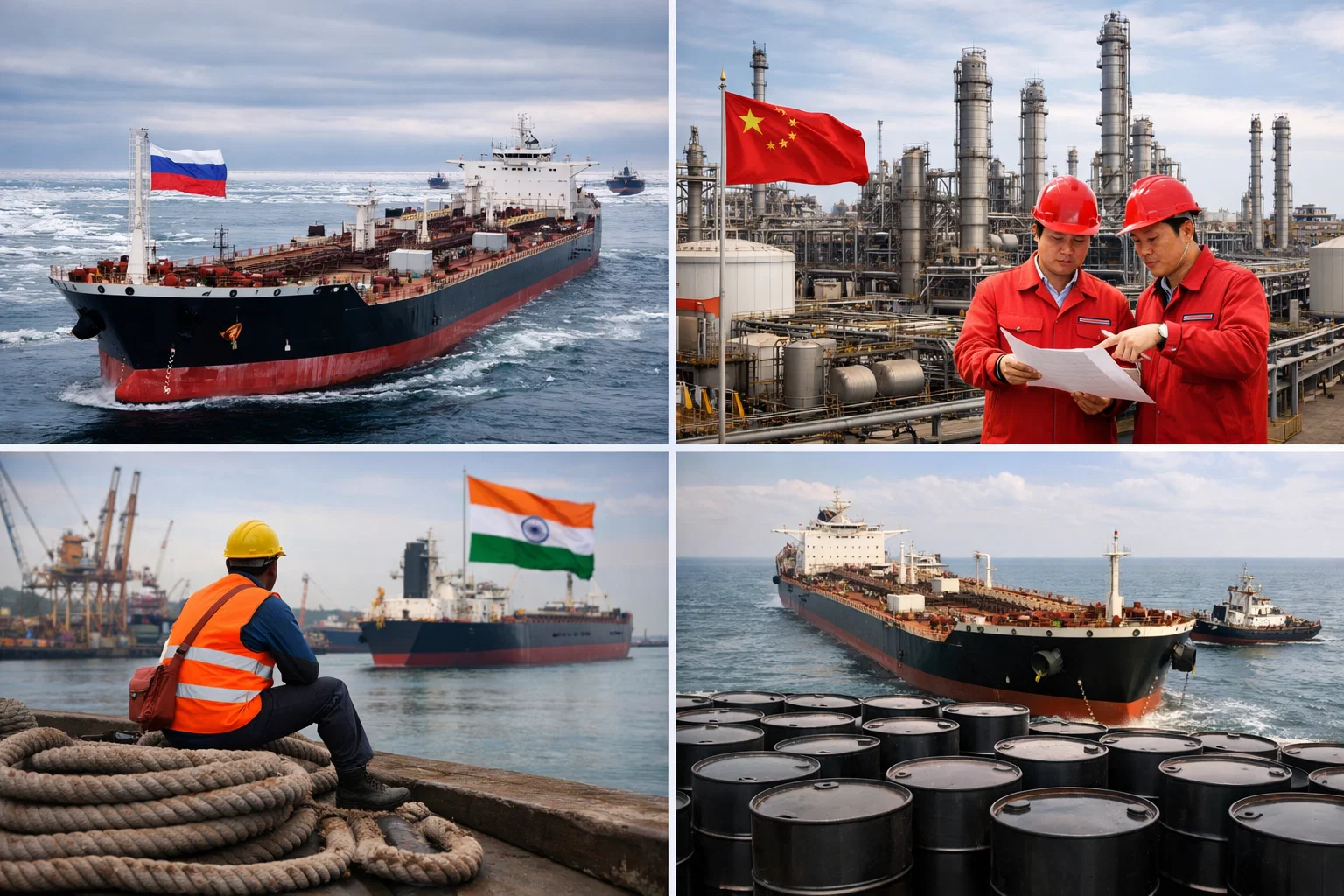
- Independent Chinese refiners are buying sharply discounted Russian crude after India pulled back, helping Moscow replace lost volumes.
- Ship-tracking and trade data show China imports of Russian crude rising to record levels in February, as grades such as Urals and ESPO trade at unusually wide discounts to Brent.
- India’s purchases of Russian oil fell sharply in January, driven by geopolitics, a U.S.–India trade overture and the logistical squeeze of sanctions — leaving a supply hole China’s refiners moved to fill.
- The surge blunts an immediate revenue hit for Russia but raises questions about longer-term market distortions, shipping flows and the effectiveness of sanctions.
What’s happening in plain language
As a big buyer of discounted Moscow barrels, India has historically been able to absorb volumes that Western buyers avoided after the 2022 invasion of Ukraine. But recent data show India sharply cut imports of Russian crude in January and February 2026. Traders, ship-tracking analytics and market data point to a clear substitution: Chinese independent refiners — the so-called “teapots” and other non-state buyers — stepped in and snapped up many of the cargoes India left behind.
That buying helped Russia avoid an abrupt drop in export receipts by redirecting barrels to a market willing to take them at steep discounts. Analysts say the movement has been driven by price (Russian crude trading $9–$12 a barrel below Brent in recent weeks) and by China’s refinery economics — independent players can profit from processing cheap heavy barrels into diesel, fuel oil and exports.
The data behind the shift
- Ship-tracking and desk estimates from analytics firms show China’s imports of Russian crude climbing to roughly ~2.07 million bpd for February deliveries — a third straight monthly increase and a record pace in some datasets.
- In contrast, India’s Russian volumes fell to their lowest since late 2022 in January, dropping more than 20% month-on-month as New Delhi diversified to Middle Eastern grades and sought to reduce potential friction with Western partners.
- Market reporting confirms steep Russia-to-China discounts for key grades (Urals, ESPO), which turned economics in favor of Chinese refiners over potential Indian buyers.
These are near-term snapshots: flows can change quickly as freight, insurance and sanctions-related frictions evolve.
Why India pulled back — short explanation
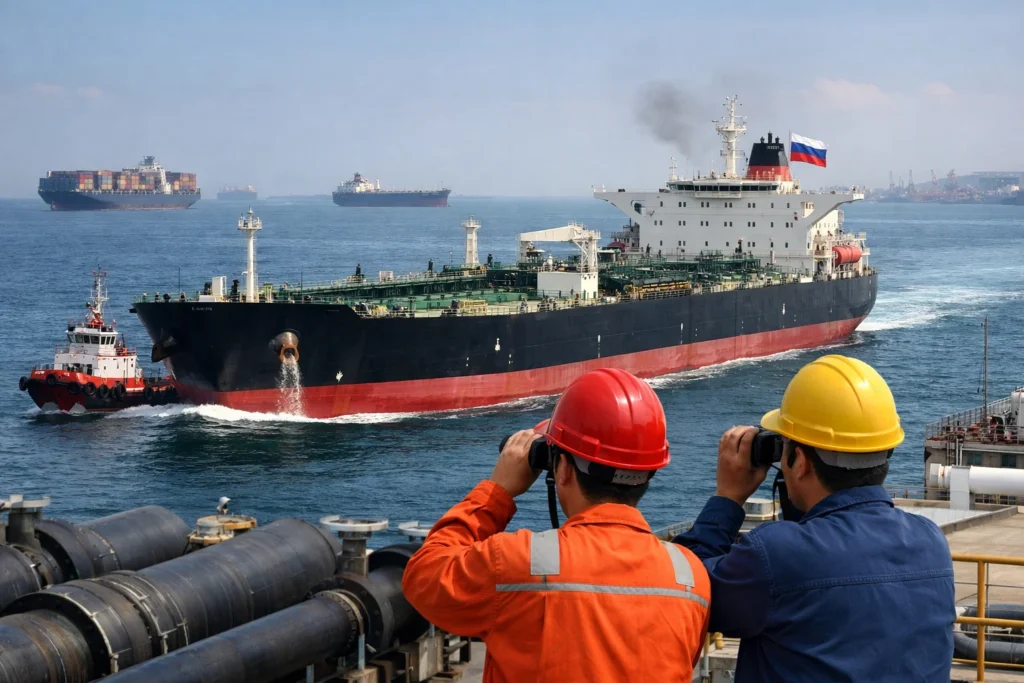
India’s retreat from Russian barrels reflects a mix of strategic and commercial forces: pressure from Western partners, a desire to deepen trade ties with the U.S., and the need to maintain access to certain financial and shipping channels that could be affected by sanctions. New Delhi has also been buying more Middle Eastern crude (Saudi and others) to replace some volumes. The result: a meaningful drop in India’s Russia exposure — which Russian sellers then sought to cover by lowering prices and courting other buyers.
Why Chinese refiners can (and did) step in
Chinese independent refiners are flexible purchasers that can profit from processing deep-discount heavy crudes into high-value refined products. In the current environment they benefit from:
- Huge price discounts on Russian grades versus Brent, which swing refinery margins in their favor.
- Available refining capacity in regions such as Shandong and beyond, some of which had been underfed by prior supply squeezes.
- Tanker and trading logistics that allow quick re-routing of cargoes to Chinese ports when buyers shift.
Because these refiners operate on thinner margins and faster turnaround cycles than many state refiners, they can absorb spot cargoes that larger buyers might pass on. This practical advantage allowed them to “sweep up” Indian-destined barrels at a price that still left room for profit.
Market and policy implications
- Short-term relief for Moscow. By moving volumes to China, Russia limits the immediate drop in hard currency receipts. That reduces the blunt impact of a near-term buyer retreat.
- Sanctions elasticity. The dynamic shows how flexible trading networks, discounts and willing third-country buyers can blunt the effect of sanctions or political pressure — not by nullifying them, but by raising the cost and complexity of enforcement.
- Price and grade effects. Heavy discounts for Urals and other Russian grades can make those crudes the marginal barrels that define regional refinery economics — boosting exports of refined products from China while depressing Urals price realizations.
- Geopolitical signaling. India’s pullback reflects diplomatic calculations — a willingness to rebalance trade to strengthen ties with Western partners — while China’s uptake signals its continuing strategic latitude in energy sourcing.
What consumers and businesses might notice
- Refined-product flows: China may export more diesel and fuel oil as refiners process cheap crude — this could affect regional product prices and trade flows.
- Volatility in oil benchmarks: Widening discounts between Urals and Brent can ripple into regional benchmark spreads, influencing trading strategies and refinery margins.
- Policy shifts: If geopolitical pressure or secondary sanctions intensify, shipping and insurance costs for Russian barrels could rise, changing the calculus for buyers who today are snapping up discounted cargoes.
What to watch next
- Monthly vessel-tracking updates from Vortexa, Kpler and other monitors for China and India Russian-oil arrivals. (Data releases typically show the clearest picture of buyer shifts.)
- Discount dynamics for Urals, ESPO and Sokol — if discounts narrow, Indian demand could return; if they widen, Chinese refiners may stay incentivized to buy.
- Policy moves: new U.S. or EU sanctions, or informal pressure on insurers and tankers, which could reduce the ability to re-route flows to third countries.
Bottom line
Chinese refiners’ quick uptake of discounted Russian crude has temporarily plugged a hole left by India’s decision to cut purchases. That arbitrage — deep discounts met by nimble buyers — shows both the resilience and the fragility of global oil flows: markets reallocate quickly, but policy tools (sanctions, insurance constraints, trade diplomacy) can still shift the balance in weeks, not just months. For traders, refiners and policymakers, the coming data releases will reveal whether this substitution is a short-term blip or a more lasting realignment.