Key points
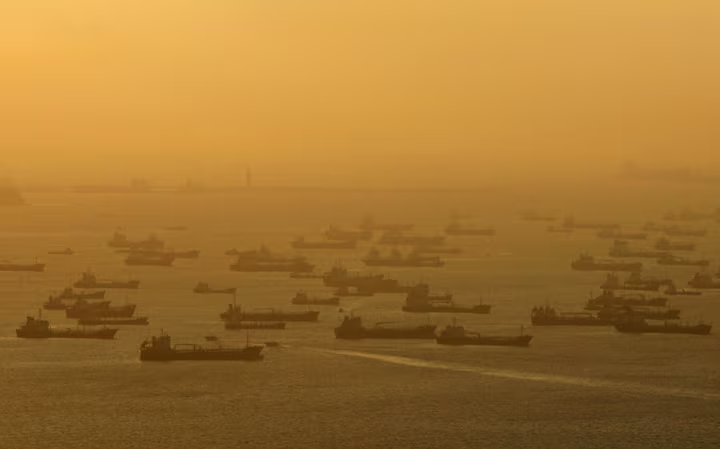
- Asia is facing a fuel-oil crunch after exports from the Middle East collapsed following the wider regional conflict; bunker fuel in Singapore has jumped sharply and inventories are eroding. Middle East Singapore
- Refineries and petrochemical plants are cutting runs because prompt replacement cargoes of Middle Eastern crude and fuel oil aren’t available.
- Refining margins and prices across the region have spiked to multi-year highs as traders scramble for alternative supplies from the West, Russia, Mexico and Venezuela — options that are costly and limited by sanctions and tanker availability.
- India and other Asian manufacturing hubs are exposed: gas and feedstock shortages are already forcing force-majeure notices and localized shutdowns.
Asia Struggles to find fuel oil— what’s happening, in one line
A near-halt in tanker transits through the Strait of Hormuz after attacks and heightened risks has choked fuel-oil flows from key Gulf suppliers into Asia, pushing bunker and feedstock prices sharply higher and forcing refiners and industrial users to cut output.
Why supply has collapsed
Shipping through the region — which usually carries a significant share of oil bound for Asian buyers — has fallen dramatically as insurers reprice risk and some vessels avoid Gulf transits. The practical effect: roughly the equivalent of many hundreds of thousands of tonnes of monthly fuel-oil cargoes that normally reach Asian hubs are now missing from the market, leaving traders scrambling for alternatives farther afield.
Immediate market impact
- Bunker fuel surge: High-sulphur bunker (the workhorse for many vessels) in Singapore has risen more than 40% since the disruption began, draining onshore and floating inventories that had been cushioning shortfalls.
- Refining margins spike: Asian refining margins have surged to their highest levels in nearly four years as refiners that normally buy cheaper Gulf barrels find replacement cargoes prohibitively expensive or simply unavailable.
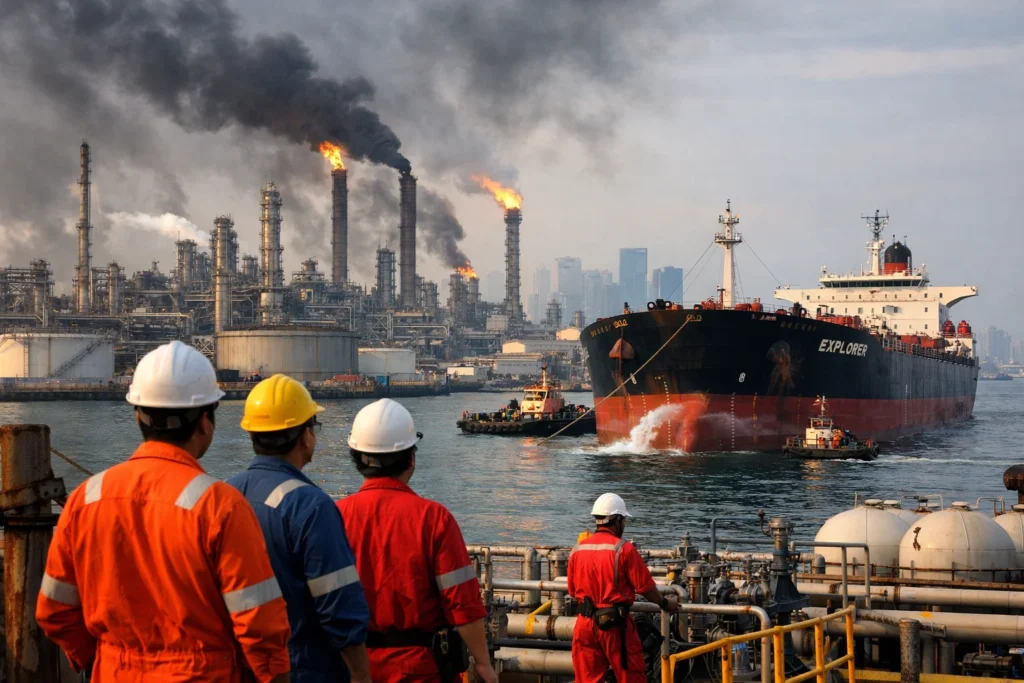
- Refinery and petrochem runs reduced: Several refiners and steam crackers have begun to cut throughput or declare force majeure because they cannot secure prompt Middle Eastern feedstock. That reduces production of fuels, naphtha and petrochemical intermediates — with knock-on effects for plastics and downstream manufacturing.
Real-world fallout: industry pain points
- Shipping costs up: With bunker prices higher and some rerouting required, owners face sharply higher voyage costs that push up freight and insurance premiums.
- Manufacturing stress: Energy-intensive sectors (fertilizers, ceramics, steel, petrochemicals) are receiving force-majeure notices and in some cases shutting mills temporarily to preserve inventories or avoid loss-making production runs. India — a major importer and a large regional industrial base — is especially vulnerable.
- Supply substitution is costly: Western crude and fuel-oil barrels are available in principle, but tanker hire costs, longer voyages and sanctions around certain suppliers (notably Russia and Iran) limit how fast and cheaply Asia can replace lost Gulf volumes.
Practical options for buyers (what refiners, ports and shippers are doing)
- Drawing down strategic and commercial stocks — Singapore’s floating and onshore tanks are being used as a stopgap.
- Extending voyage lengths to access distant cargoes (U.S., Mexico, Venezuela, Russia) — but this raises costs and timing risk.
- Temporary cuts to refinery runs and petrochemical crackers to prioritize essential fuel production and conserve feedstock.
- Bunker swaps and blended fuels — short-term technical fixes to keep ships moving while higher-quality grades are scarce.
What consumers and businesses should watch (signals that matter)
- Bunker price moves in Singapore and port inventories (daily/weekly reports).
- Refinery run rates and force-majeure notices from major Asia refineries and petrochemical firms.
- Vessel insurance and tanker-hire rate spikes (Suezmax/VLCC timecharter indices).
- Government policy responses — e.g., China urging refiners to curb exports or India invoking emergency fuel measures.
Short-term outlook
If Gulf transits remain constrained for weeks, expect sustained high bunker and refining margins, more upstream cuts in refining/petrochemicals, and a gradual pass-through to fuel and goods prices across the region. Markets may calm if shipping routes reopen or if major sellers can redirect cargoes quickly — but both outcomes face logistical, political and sanctions-related headwinds.