Key points
- Iran is reportedly formalizing a de facto “toll booth” regime in the Strait of Hormuz, with ships being told to provide cargo and crew details and, in some cases, pay for passage in yuan through intermediaries.
- AP says the system is being enforced by the IRGC and may soon be written into law, even as critics argue it could violate the U.N. Law of the Sea.
- The move has helped choke off traffic through the strait and pushed oil prices and supply fears higher across Asia and Europe.
- Several countries are now weighing maritime security responses, while Iran says the strait remains open to “non-hostile” traffic.
Iran starts to formalize its chokehold on the Strait of Hormuz with a “toll booth” regime
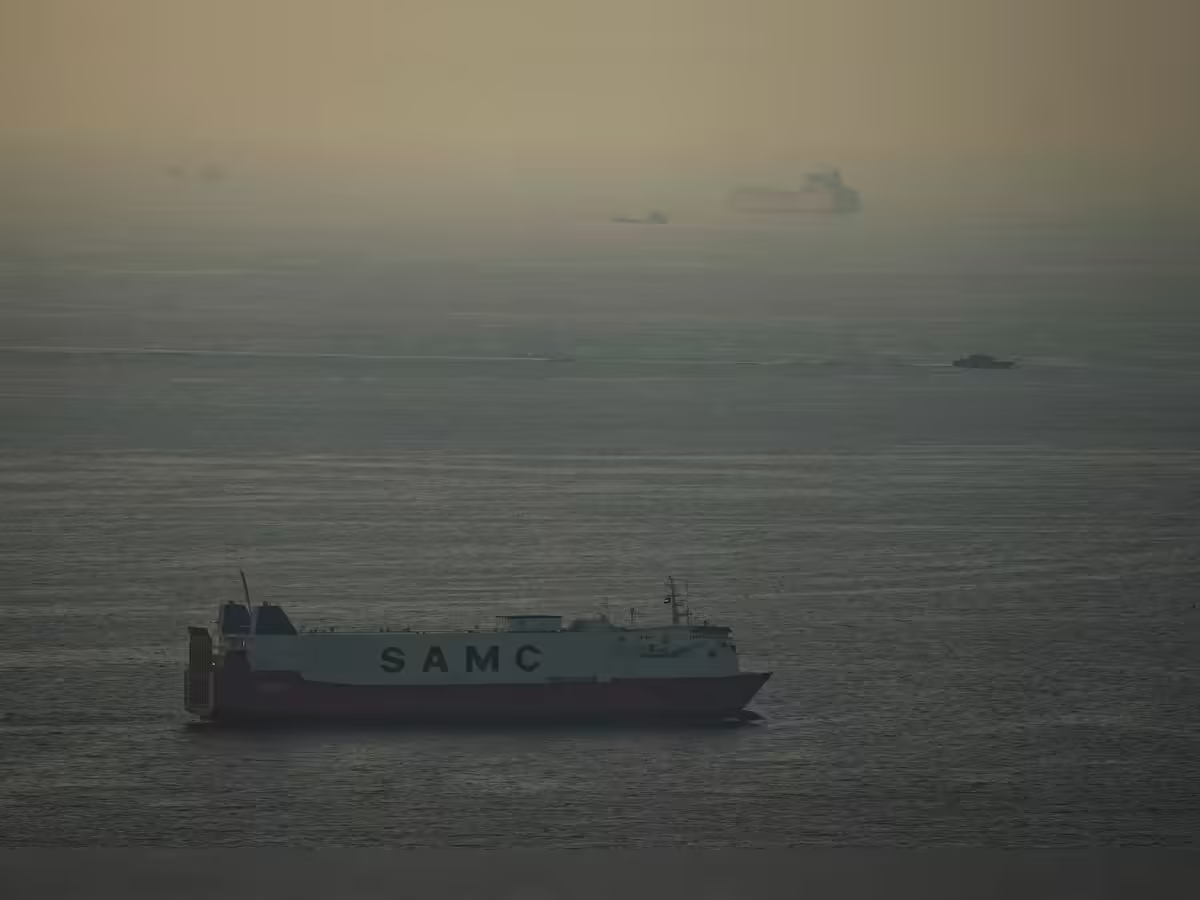
Iran is turning a wartime disruption into a more organized system. According to AP, the Islamic Revolutionary Guards Corps is enforcing a de facto “toll booth” model in the Strait of Hormuz, where vessels may be required to route through Iranian-controlled waters, submit ship details and, in some cases, pay for safe passage.
That matters because the Strait of Hormuz is one of the world’s most important energy corridors. Reuters says roughly 20% of global oil and LNG shipments move through the waterway, which means even partial restrictions can send shockwaves through fuel markets, shipping insurance and inflation expectations.
The biggest change is that this is no longer just an emergency blockade threat. AP reports that Iran’s parliament is working to codify the toll system, which would make the arrangement look more like a formal regime than a temporary wartime measure. Critics argue that this could collide with the principle of innocent passage under the U.N. Convention on the Law of the Sea.
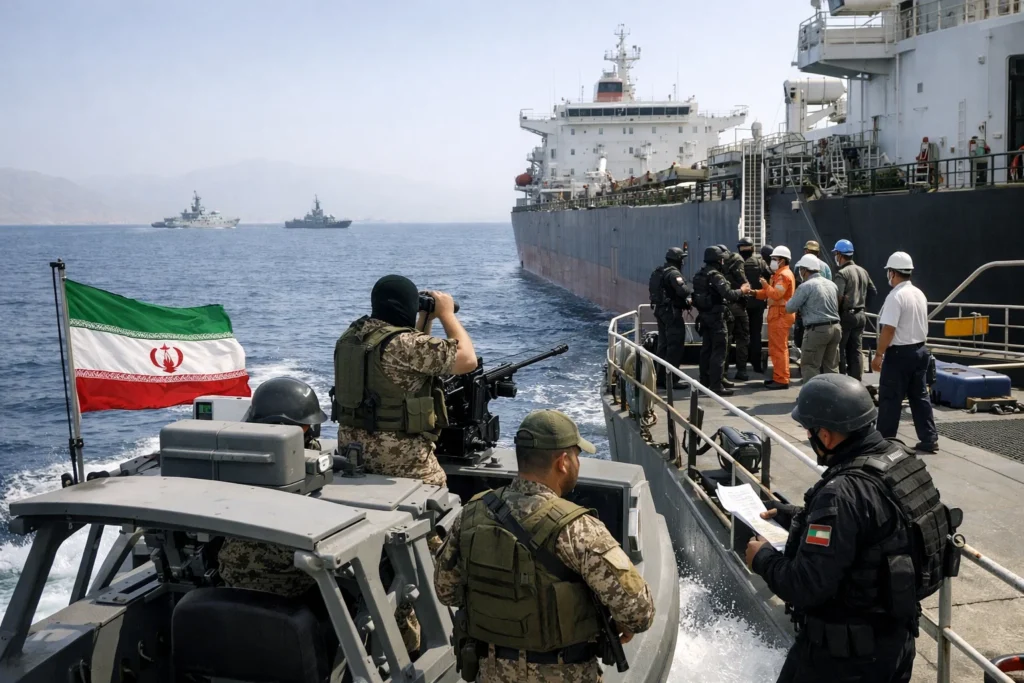
There are also signs that Iran is choosing who gets through. Reuters reported that Tehran says it is receptive to transit requests from countries it does not view as hostile, while also reserving the right to restrict vessels linked to the U.S. and Israel. Another Reuters report said some Chinese ships even turned back despite assurances of safe passage.
Iran Toll Booth Regime: For global markets, the message is blunt: Hormuz is still open, but access is now political. That makes every voyage a negotiation, not just a sailing route. Reuters and AP both show why oil buyers, shippers and governments are treating the strait as a live crisis rather than a distant headline.
Quick reader question: if a country starts charging “fees” for a chokepoint used by the whole world, is that security, leverage, or a new form of blockade?
Trenbuzz