Published by TrenBuzz.com | April 22, 2026
Key Points at a Glance
- A newly revealed 14-page contract between the White House, the National Park Service, and the Trust for the National Mall exposes the inner workings of Trump’s $400 million White House East Wing and Ballroom project.
- The contract explicitly guarantees to “preserve the anonymity and privacy of any donor who wishes to remain anonymous.”
- The White House has released only 37 donor names — and withheld several others, including BlackRock, Nvidia, and billionaire Jeff Yass.
- Known donors include Amazon, Lockheed Martin, Palantir, Coinbase, Meta, T-Mobile, and Booz Allen Hamilton — all with significant federal contracts or pending government business.
- The Trust for the National Mall earns a 2.5% fee on funds raised — potentially yielding around $9 million.
- A New York Times investigation found that ArcelorMittal, a Luxembourg-based steel company, donated $37 million in steel — and two days later, White House tariffs on its Canadian plant were cut in half.
- Fundraising began three weeks before the contract was even signed, raising additional questions about the process.
- The Washington Post first reported Trump fought to keep the contract secret before it was obtained by advocacy group Public Citizen.
The Washington Post has done it again — and this time, the story they’ve uncovered sits right at the heart of the People’s House.
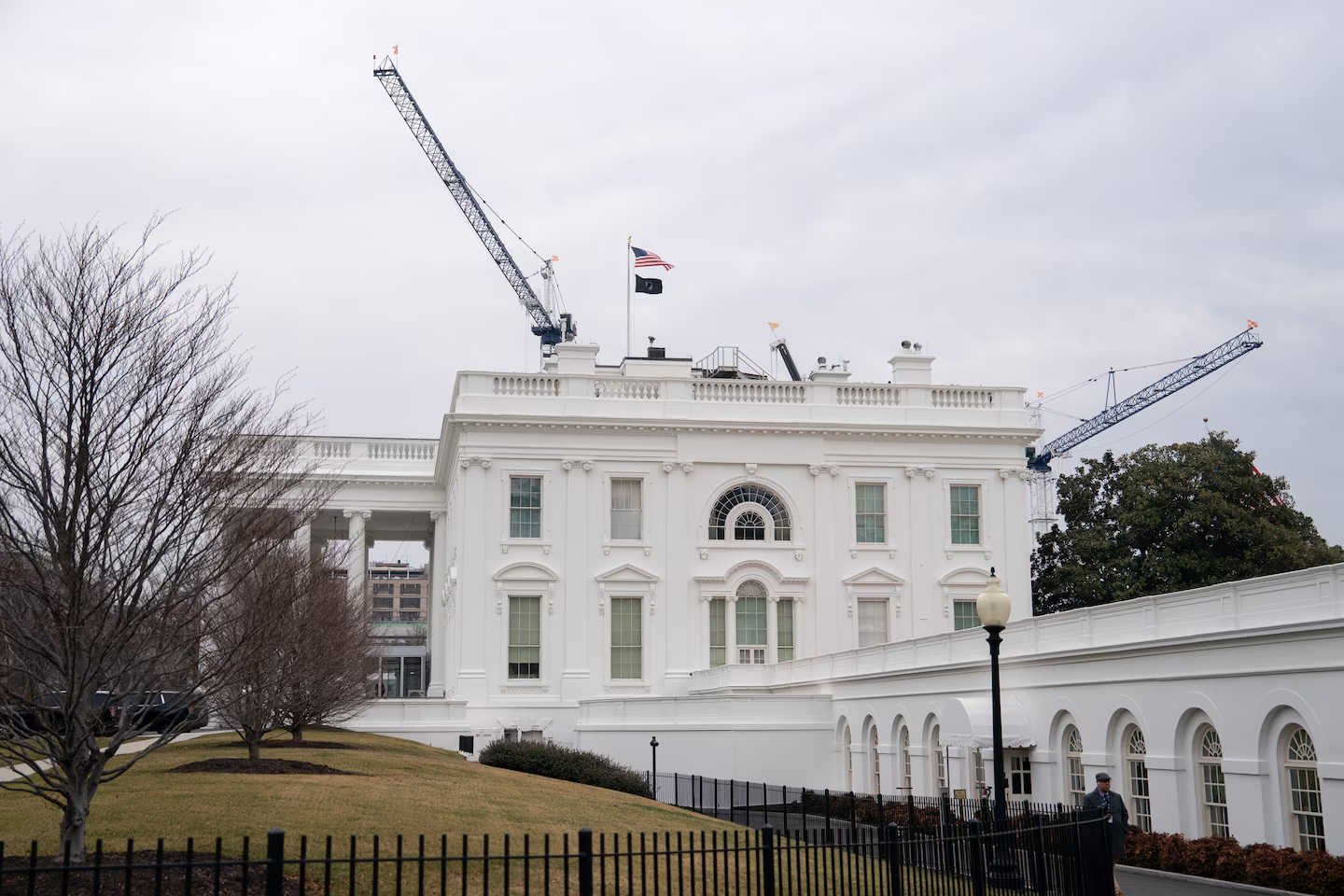
A newly revealed agreement between the White House, the National Park Service, and the nonprofit Trust for the National Mall shows the inner workings of how President Trump and his allies are financing a $400 million overhaul of the White House East Wing — and the 14-page document empowers the Trust to “accept donations in an amount sufficient to cover all costs” of the project, as determined by the White House.
The Anonymity Clause That’s Raising Eyebrows
The agreement ensures that all parties involved will “preserve the anonymity and privacy of any donor who wishes to remain anonymous.” So far, the White House has provided the names of about three dozen individual and corporate donors, but declined to say how much each has given.
Under the October arrangement, the White House is responsible for “identifying potential donors for the Project on behalf of the NPS” and referring them to the Trust, while specifying “whether the potential donor wishes to donate anonymously.”
Ethics watchdog Eva Golinger put it plainly: “This document reveals that anonymous donations are the heart of this agreement.”
Who Are the Known Donors — And What Do They Want?
Among the known ballroom donors are federal contractors, companies facing adverse government action, and individual members of Trump’s administration or their families. Companies including Lockheed Martin, Palantir, and T-Mobile that are active registrants under the Lobbying Disclosure Act did not disclose their ballroom donations in federal filings.
Nothing in the contract prevents contributions from donors who have business before other components of the federal government. Amazon, for instance, donated to the project and has billions in federal contracts.
In April 2026, a New York Times investigation found that the anonymous $37 million steel donor was ArcelorMittal, a Luxembourg-based company. Two days after Trump announced the donation, the White House issued a proclamation cutting in half the tariffs on automotive steel from a Canadian plant ArcelorMittal uses to make steel for the United States.
The Timeline That Raises Questions
Fundraisers began soliciting contributions nearly a month before the Trust signed the agreement with the administration. Potential donors received pledge forms around September 15, 2025, but the contract with the White House wasn’t fully signed until October 8.
The mid-September pledge form made no mention of the 90,000-square-foot East Wing makeover — it said only that donations “shall be used in support of the White House Ballroom.”
Trump’s Personal Role — The President as Fundraiser-in-Chief
Trump described himself as personally involved in soliciting contributions, recounting a conversation where someone said: “Sir, would $25 million be appropriate?” and he replied: “I’ll take it.” Trump also reportedly negotiated the excavation contract himself, bringing it down to $2 million.
Construction began in September 2025 and continued through the federal government shutdown that October — funded by private donors, exempt from budget negotiations.
Senate Pushback — Demands for Transparency
Senator Richard Blumenthal sent letters to each of the donors kept anonymous by the White House, demanding all documents related to their contributions and asking a direct question: “Why did you choose to have your name remain anonymous? Please provide a list of all lobbying contacts you or anyone working on your behalf has made with the White House since January 20, 2025.”
Ethics watchdogs note that donors appear to be making contributions with the goal of earning goodwill from Trump, with officials at some companies giving money to show support for Trump while supporting what they called a “nonpartisan cause.”
Trump donor anonymity contract White House ballroom 2026: With a $400 million renovation, a secret donor list, a steel tariff cut two days after an anonymous donation, and a contract the White House fought to suppress — the question isn’t just who built the ballroom. It’s what it cost them to get in the room.
Disclaimer: This article is intended for general informational and news reporting purposes only. All quotes, contract details, and donor information referenced are based on publicly available and credible news sources as of April 22, 2026. TrenBuzz.com does not make independent legal judgments about any entity mentioned. Readers are encouraged to follow credible investigative journalism and official government sources for the most current developments.