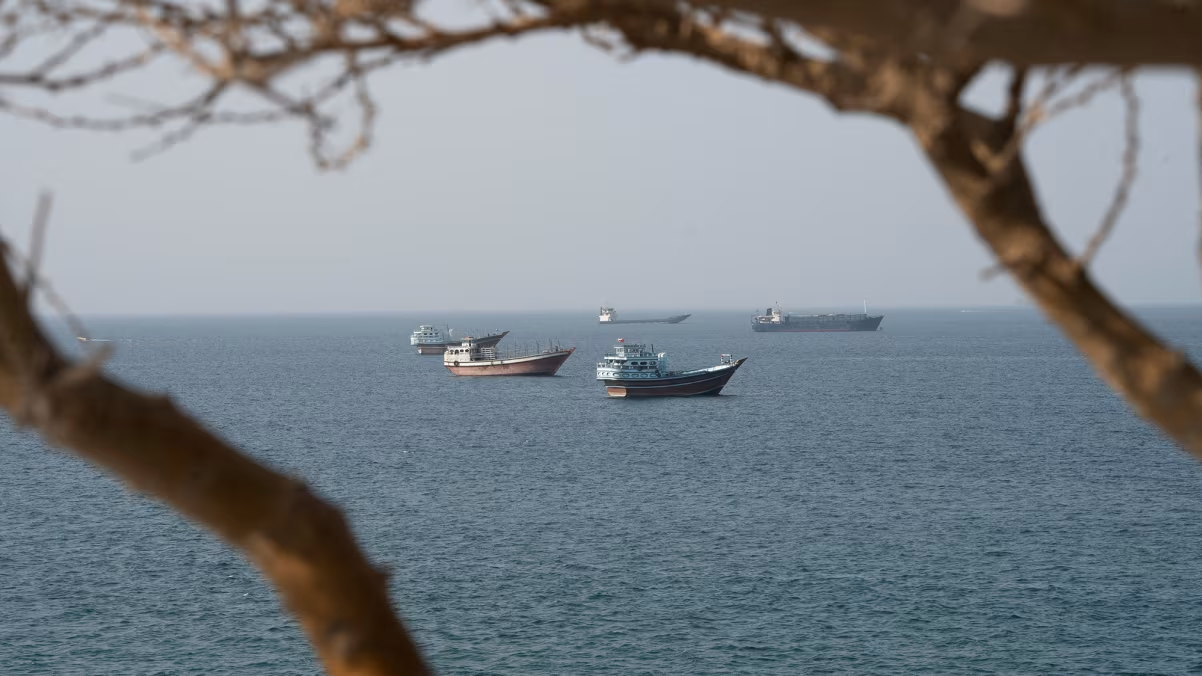
Key Points: Iran Losing Control Of Strait Of Hormuz
- Iran losing control of the Strait of Hormuz is now backed by fresh shipping data rather than just competing claims.
- More than 80 percent of vessel transits over the past two weeks used the Omani route Iran strongly opposes.
- The shift comes months after Iran shut the strait entirely following the assassination of Supreme Leader Ali Khamenei.
- Neither Iran nor the United States holds full control, though the balance has clearly tilted toward Washington.
Iran Losing Control Of The Strait Of Hormuz Becomes Measurable
Iran losing control of the Strait of Hormuz has moved from a talking point to a documented trend. For months, both Washington and Tehran claimed the upper hand over this narrow, critical waterway, and the competing statements left plenty of room for doubt.
New tracking data changes that picture. Shipping analytics firm Kpler found that over 80 percent of vessel transits through the strait recently took the Omani route, a path Iran has fought hard to block.
How This Crisis Began
This entire standoff traces back to February, when the United States and Israel launched strikes on Iranian military targets, including the assassination of Supreme Leader Ali Khamenei. Iran responded almost immediately by sealing the strait to foreign shipping.
Iran’s Revolutionary Guard Corps broadcast warnings to vessels, insisted the waterway remained closed to what it called unfriendly nations, and eventually created a Persian Gulf Strait Authority to issue its own passage permits.
That authority has never been recognized internationally, since the strait includes both Iranian and Omani territorial waters, a legal reality Iran’s claims largely ignore.
Why The Omani Route Matters So Much
The Omani route runs south of traditional shipping lanes and Iranian waters entirely. It was established through a United Nations backed arrangement, giving vessels a path to avoid Iranian territory altogether.
Iran has repeatedly attacked ships attempting to use this corridor, including strikes in late June and again in early July that damaged multiple vessels and triggered fresh American airstrikes in response.
Despite those attacks, shippers have increasingly leaned on the Omani corridor anyway, a sign that naval escort operations are giving companies enough confidence to risk the route.
What The Numbers Actually Prove
Even with Iran’s continued attacks, oil flows through the strait remain well below pre war levels, an important detail that complicates any claim of total control from either side.
Trump declared this week that the United States has achieved total control over the strait, a claim regional analysts describe as overstated given ongoing attacks and reduced overall traffic volume.
At the same time, experts tracking the situation say Iran’s actual deterrence power has clearly weakened compared to where it stood just a month or two ago.
The Bigger Picture For Global Oil Markets
Before this conflict began, roughly a quarter of the world’s seaborne oil trade and a fifth of global liquefied natural gas shipments passed through the Strait of Hormuz every single day.
Any meaningful disruption to that flow tends to ripple through global energy prices almost immediately, which is exactly why this strait has remained such a closely watched flashpoint throughout the broader Iran conflict.
Regional governments are not waiting around for a resolution either. Several are already investing heavily in alternative shipping routes, betting that traffic through the strait may never fully return to pre war patterns.
Where Things Stand With Oman And Iran
Iran and Oman have been negotiating separately to restore safe passage through the strait, notably without direct American involvement in those specific talks. That arrangement has reportedly frustrated the Trump administration.
Iranian officials maintain publicly that the strait stays closed until their broader demands are met, even as actual shipping data increasingly tells a different story on the water.
What Comes Next
Both sides appear locked into a prolonged standoff rather than any quick resolution. Iran continues framing the situation as leverage, while the United States points to shipping numbers as proof of progress.
For now, the clearest fact remains this: Iran losing control of the Strait of Hormuz is no longer just rhetoric, it is something now visible in the actual flow of ships through the water.
Trenbuzz will continue monitoring developments in the Strait of Hormuz as this conflict continues shaping global oil markets.