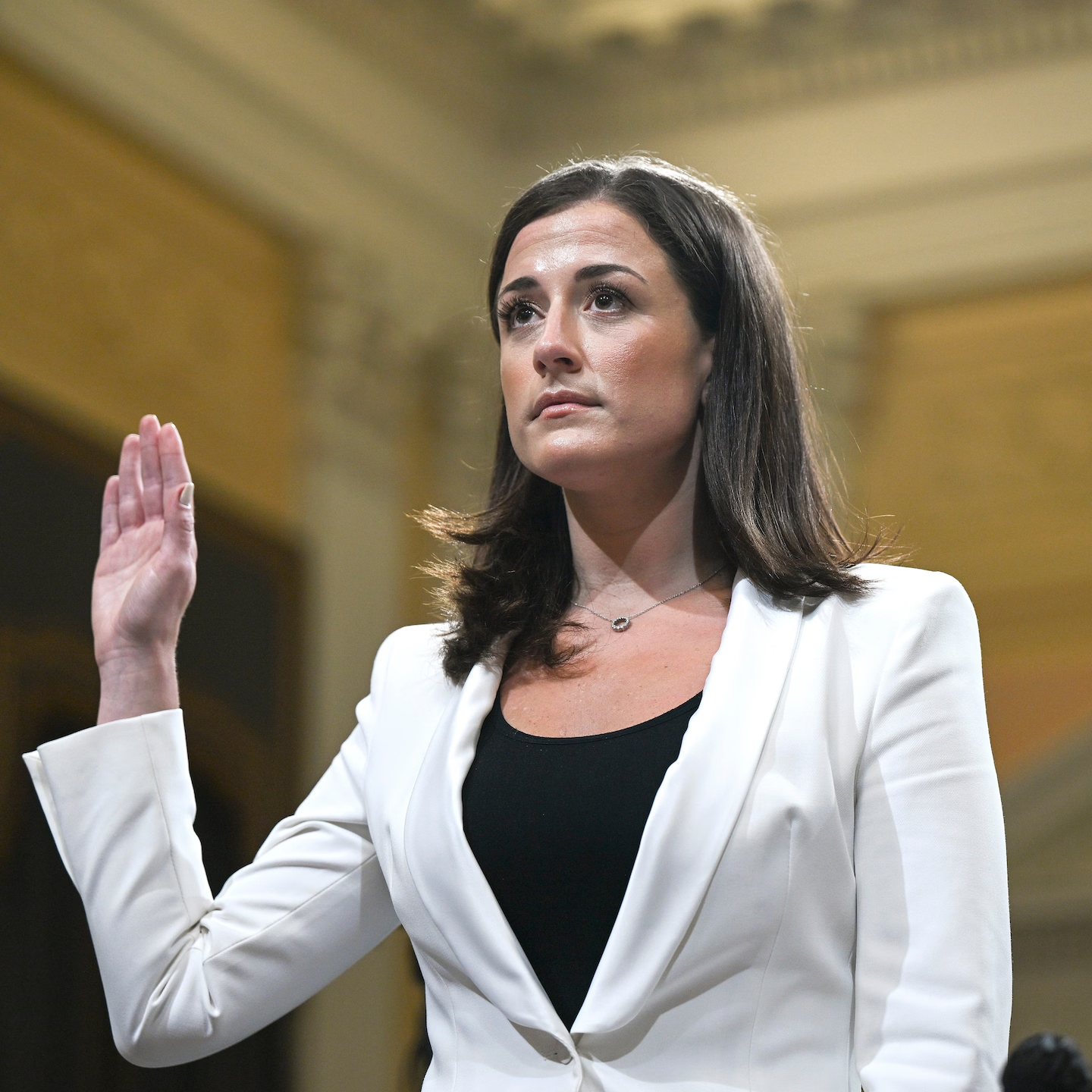
Key Points: Cassidy Hutchinson Avoids a Stunning Indictment
- On Tuesday, October 27, 2026, a Washington grand jury reportedly declined to indict Cassidy Hutchinson over her Jan. 6 testimony.
- The case came from a criminal referral by House Republicans Barry Loudermilk and Jim Jordan in March.
- Parts of her 2022 testimony were secondhand, which makes a false statement case harder to prove.
- The decision does not stop the Justice Department from trying again.
- Neither Hutchinson’s lawyers nor the department had commented publicly at the time of the reports.
Cassidy Hutchinson Today: What Happened in Court
A federal grand jury in Washington, D.C., refused to approve charges against Hutchinson on Tuesday. The news came from sources, since grand jury work is secret.
A Justice Department lawyer told Magistrate Judge Zia Faruqui that the grand jury had not agreed on a proposed indictment. He did not name the defendant, but people familiar with the matter said it was Hutchinson.
Cassidy Hutchinson today is free of charges, but the story is not fully closed.
Where the Case Started
Hutchinson was 25 when she testified before the House committee investigating Jan. 6, 2021. She was a top aide to White House Chief of Staff Mark Meadows.
Her June 28, 2022 hearing was a surprise, and it made her one of the best-known witnesses of the probe. Trump later said he hardly knew who she was.
On March 6, 2026, Rep. Barry Loudermilk sent the Justice Department a criminal referral, co-signed by House Judiciary Chairman Jim Jordan. They accused her of lying to Congress.
What Was Disputed
Not everything she said has been challenged. Much of her account of that day matched other reporting, including that several aides urged Trump to act as the Capitol was attacked.
The fights centered on a few claims. One was a story about a struggle in the presidential SUV, which Secret Service sources denied in 2022.
Another was a handwritten note, which former White House lawyer Eric Herschmann said he wrote himself. A House Republican report later said four White House employees contradicted her, while she and her lawyer have said her testimony was truthful.
Why This Kind of Case Is Hard
This is the angle most coverage glosses over. Proving someone lied to Congress is a high bar.
Prosecutors must show a statement was false, material, and made knowingly. If a witness says “someone told me this,” the question becomes whether she accurately repeated what she heard.
Some of Hutchinson’s most striking claims were secondhand, relayed from others. A witness who reports what she was told can be wrong without lying, and that is a tough thing for a jury to convict on.
A Rare Result
Grand juries almost always agree to indict. There is an old saying that a prosecutor could get one to indict a ham sandwich.
That makes a refusal unusual. NBC News called it the latest in a string of failed attempts to charge people Trump has described as political enemies.
The New York Times reported that some prosecutors had privately doubted they could win a conviction.
An Unusual Path Inside the Department
The case did not come from the usual place. According to reports, the Justice Department’s Civil Rights Division, led by Harmeet Dhillon, ran the investigation.
False statement cases are normally handled by other parts of the department. Critics see that as a sign of political pressure, while supporters say the referral deserved a serious look.
Reports also say Hutchinson was not subpoenaed to appear before the grand jury. Her side of the story may never have been heard in that room.
The House Connection
The House played two roles here. A Democratic-led House committee created the testimony, and a Republican-led House team later attacked it.
That committee no longer exists, but its work is still the center of a political fight. The referral shows how a congressional dispute can turn into a federal criminal matter years later.
It also shows how much the story depends on which party controls Capitol Hill at a given moment.
What Comes Next
A refusal to indict does not bar future charges. The department could present the case again or try a different theory.
Watch for any official statement from the Justice Department and for reaction from Loudermilk and Jordan. Also watch whether Hutchinson’s lawyers say more.
For now, the facts are plain. A grand jury looked at the evidence on Jan. 6 testimony and, according to multiple reports, said no.