Key points
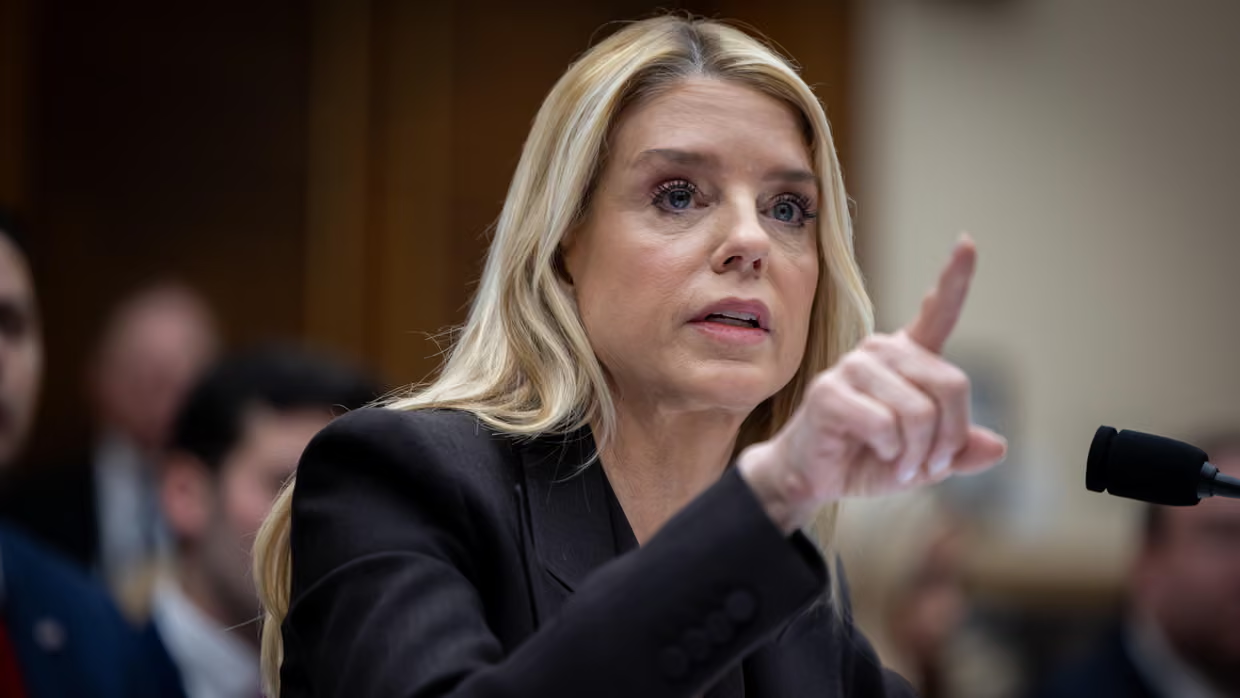
- Attorney General Pam Bondi testified before the House Judiciary Committee about the Justice Department’s release of the Jeffrey Epstein files; the session turned into a five-hour, often chaotic hearing.
- Democrats pressed Bondi over heavy redactions, the exposure of victim names and what they called a lack of accountability; Bondi repeatedly pushed back and refused to issue a direct apology.
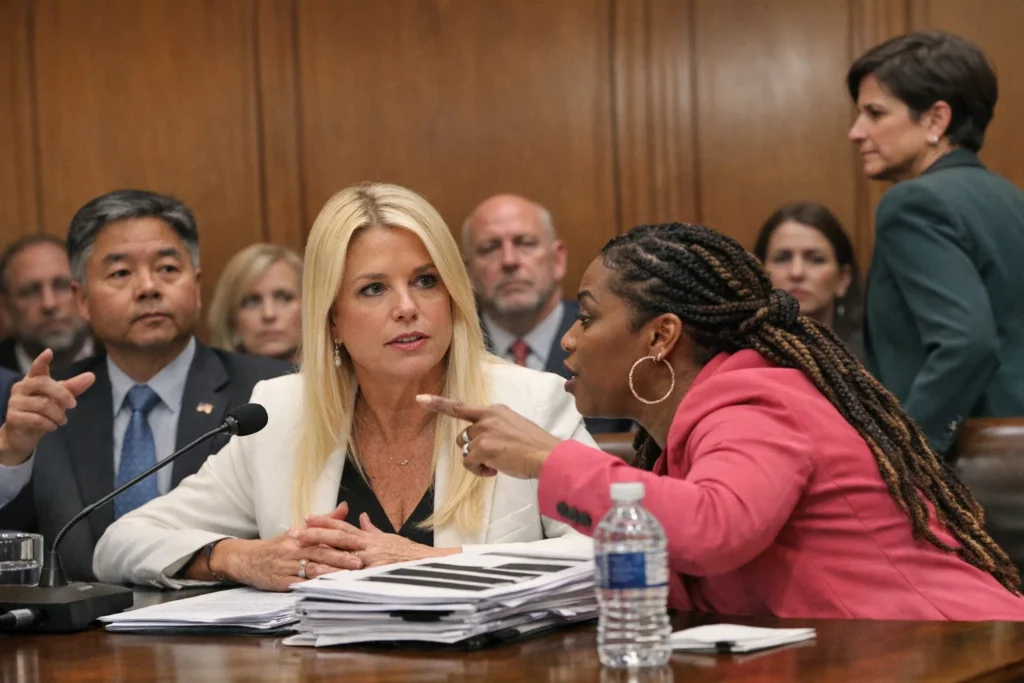
- Rep. Jasmine Crockett delivered one of the sharpest exchanges, pressing Bondi on multiple mentions of President Trump in the files; Crockett’s confrontation drew viral attention.
- Rep. Ted Lieu accused Bondi of falsely dismissing potential leads tied to powerful people; the AG denied wrongdoing and called some lines of questioning “theatrics.”
- Rep. Becca Balint walked out after Bondi raised Balint’s record on antisemitism during a tense back-and-forth — a moment that underscored how the hearing veered from oversight to personal confrontation.
What happened, in a tight timeline
Bondi appeared before the Judiciary Committee on Feb. 11 to explain the DOJ’s handling of millions of pages tied to Jeffrey Epstein.
Lawmakers — led by Democrats — alleged excessive redactions that hid names of people in the files while, in some cases, victims’ details surfaced.
Why lawmakers are furious (short)
Members said the department violated transparency expectations by redacting apparent associates and failing to protect survivor privacy in some releases.
Democrats demanded explanations and concrete steps to remedy errors; survivors in the hearing room added an emotional dimension to the questioning.
Key flashpoints in the hearing — Crockett, Lieu, Balint and Jayapal
Jasmine Crockett’s sharp, viral questioning zeroed in on names and why the DOJ had not pursued certain leads — her exchange with Bondi was replayed widely on social media.
Rep. Ted Lieu pressed Bondi on whether the DOJ had followed up on references to high-profile figures; he accused Bondi of misleading the committee when she denied certain investigative steps.
Rep. Becca Balint confronted Bondi about whether the DOJ had interviewed senior Trump-era officials; Bondi’s retort about Balint’s record prompted the Vermont lawmaker to leave the hearing in protest.
Rep. Pramila Jayapal urged Bondi to apologize directly to survivors in the room after several testified they had not been contacted by DOJ investigators. Bondi declined the explicit apology request.
Bondi’s line of defense (concise)
Bondi said the files were produced under tight deadlines and involved thousands of documents reviewed by a large team, and she framed many questions as partisan theater.
She defended DOJ decisions and emphasized investigations that she described as ongoing or constrained by legal limits.
What’s unproven and still unfolding
Committee room heat does not equate to legal findings — allegations that the DOJ hid names or obstructed probes remain subject to document review and possible inspector-general or judicial scrutiny.
Until reports and investigations conclude, readers should treat contested claims as part of congressional oversight and not as adjudicated facts.
Who is Pam Bondi (brief bio & age)
Pamela Jo Bondi, born Nov. 17, 1965, is a former Florida attorney general and the U.S. attorney general since February 2025.
Her record as a state prosecutor and later political ally of President Trump has made her a polarizing figure in Washington.
What to watch next — practical checklist
- The Judiciary Committee’s forthcoming memorandum summarizing materials and any follow-up subpoenas or referrals.
- Inspector-general or internal DOJ reviews into how redactions and releases were handled.
- Any new disclosures from the DOJ that either corroborate lawmakers’ concerns or clarify the department’s review process.
Quick FAQ — short answers readers want
Did Bondi apologize to Epstein survivors?
No — Bondi expressed sympathy in remarks but declined a direct apology when pressed by lawmakers and survivors at the hearing.
Was anyone charged today based on the files?
No new criminal charges were announced during the hearing; members focused on oversight and transparency questions rather than bringing new prosecutions.
Did the hearing include bipartisan criticism?
While most criticism came from Democrats, several Republicans also pressed the AG on procedural issues; the hearing displayed limited cross-party consensus on specifics.
Do you trust the DOJ’s handling of the Epstein files after the Bondi hearing?
Final take — why this hearing matters
Wednesday’s hearing shows oversight of the Epstein files has moved from document release into a political and procedural reckoning.
Whether Congress secures clearer answers, an inspector-general review, or policy fixes on document releases is the next test of accountability and of public trust in the Justice Department.
Disclaimer: This article synthesizes contemporaneous reporting on the Bondi hearing (Feb. 11, 2026). It reports lawmakers’ allegations, the AG’s testimony and publicly available documents; it does not resolve disputed facts.