Key points
- Congress members are demanding fully unredacted access to documents tied to Jeffrey Epstein, saying current releases hide key names and evidence.
- Top House Democrats accuse the Department of Justice of tracking which lawmakers search the files and have called that practice “surveillance.”
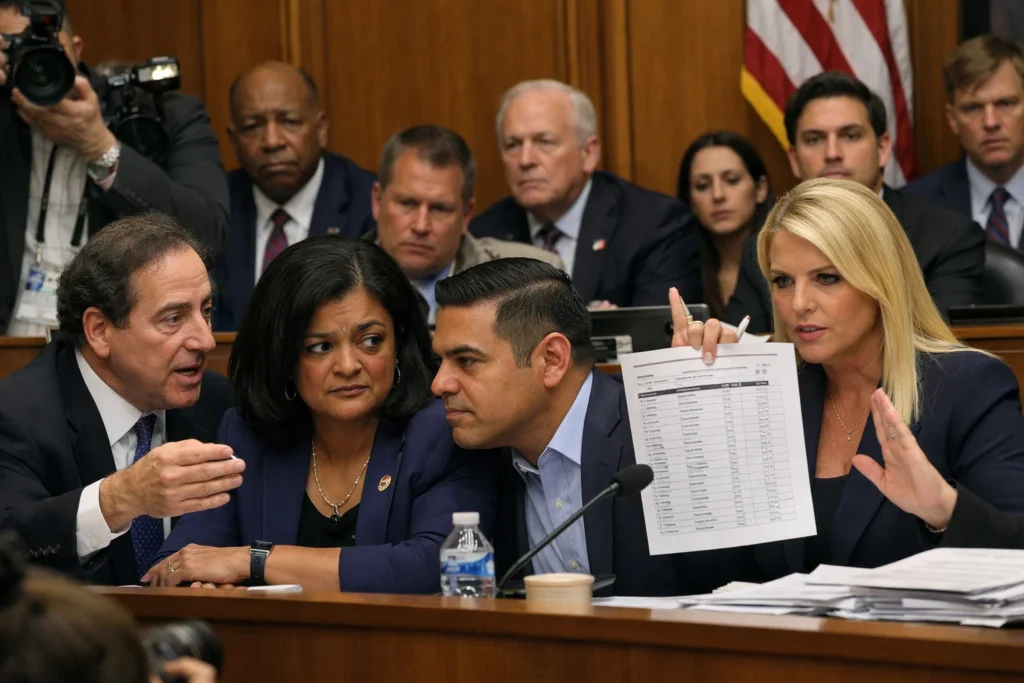
- A letter from lawmakers including Jamie Raskin, Pramila Jayapal and Robert Garcia demands immediate protocol changes.
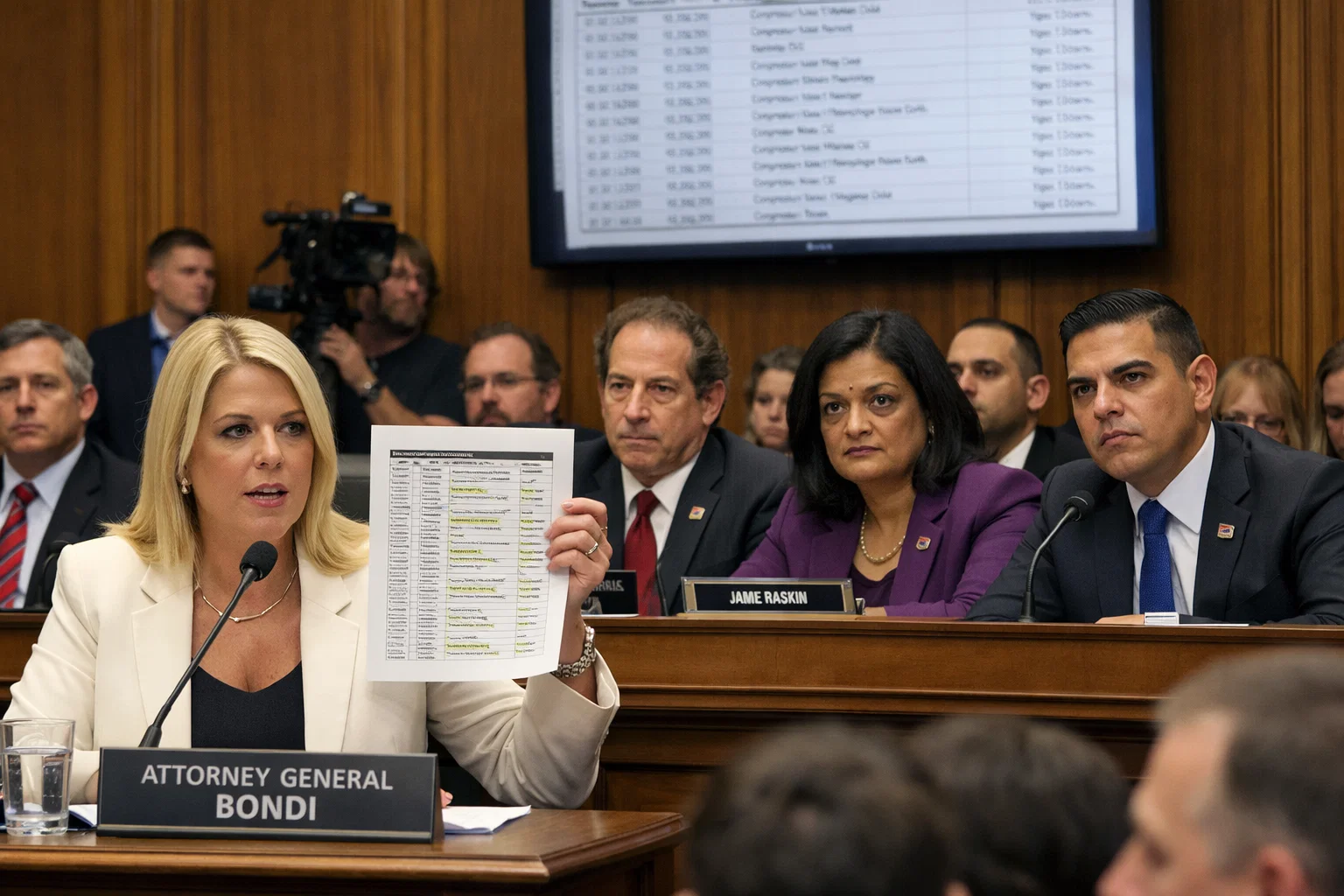
- The row erupted after Attorney General Pam Bondi’s combative hearing, where she displayed logs of congressional searches — prompting bipartisan alarm.
- DOJ File repositories at the end
What lawmakers are asking for (Full Epstein Files)
Democrats want unredacted records made available under controlled but congressional review conditions on Capitol Hill, not only inside DOJ rooms.
They argue only onsite, unlogged access preserves oversight while protecting victim privacy through supervision.
Why the Justice Department’s logging practice matters
House leaders say DOJ’s system records who searched which pages and when — a capability they call a surveillance risk that chills oversight.
DOJ officials say logging is routine to prevent accidental leaks and to protect victims; lawmakers call for new rules that let Congress do meaningful review without being tracked.
The flashpoint: Bondi’s hearing and the “burn-book” moment
Attorney General Bondi brought excerpts and search logs to the House hearing, which Democrats said proved the DOJ catalogued members’ review activity.
That display stoked bipartisan outrage and prompted an immediate letter demanding the practice stop and unredacted review be enabled on Capitol grounds.
How lawmakers are organizing their response
Ranking members and committee chairs are coordinating to demand DOJ produce a plan within days to permit unredacted review under new safeguards.
They’re also pressuring for inspector-general oversight and possible subpoenas if DOJ refuses to change its approach.
What victims’ advocates and journalists say — two concerns
Advocates insist on protecting survivor privacy and safety; they want victims redaction-protected while ensuring investigators and lawmakers see the full context.
Reporters and watchdogs argue redactions that obscure powerful names — yet reveal victims — undermine both justice and public trust.
Political crosscurrents: oversight, politics and credibility
Republicans defend DOJ’s legal constraints and blame Democrats for politicizing the release; Democrats counter that redactions look like selective shielding of elites.
The clash is as much about institutional trust as about document content — and it’s playing out in hearings, letters and the media almost hourly.
Short FAQ — quick answers readers want
Why can’t Congress just get the unredacted files?
DOJ cites legal privileges, privacy laws and ongoing investigative limits; Congress says a secure Capitol-based review solves those issues while preserving oversight.
Are lawmakers being tracked when they view files?
Lawmakers allege the Justice Department logged searches and displayed those logs at a hearing; DOJ says logging is standard to prevent leaks and protect victims. The dispute is central to today’s demands.
Will unredacted release mean public disclosure?
Lawmakers propose controlled, nonpublic review for members and vetted staff on Capitol Hill — not blanket public dumping — to balance transparency and victim protection.
Should Congress be allowed supervised, unredacted review of the Epstein files on Capitol Hill?
Final take — transparency, trust, and the next chapter
The fight over unredacted Epstein files is about more than names on a page: it tests whether Congress can exercise real oversight without fear of being monitored by the agency it is supposed to check.
How DOJ responds — and whether lawmakers accept a secure, nonpublic Capitol review — will determine whether this row cools into process reform or erupts into a constitutional confrontation.
Disclaimer: This article summarizes contemporaneous reporting and lawmakers’ public letters as of February 2026. It reports allegations, agency statements and oversight activity; it does not adjudicate disputed facts.