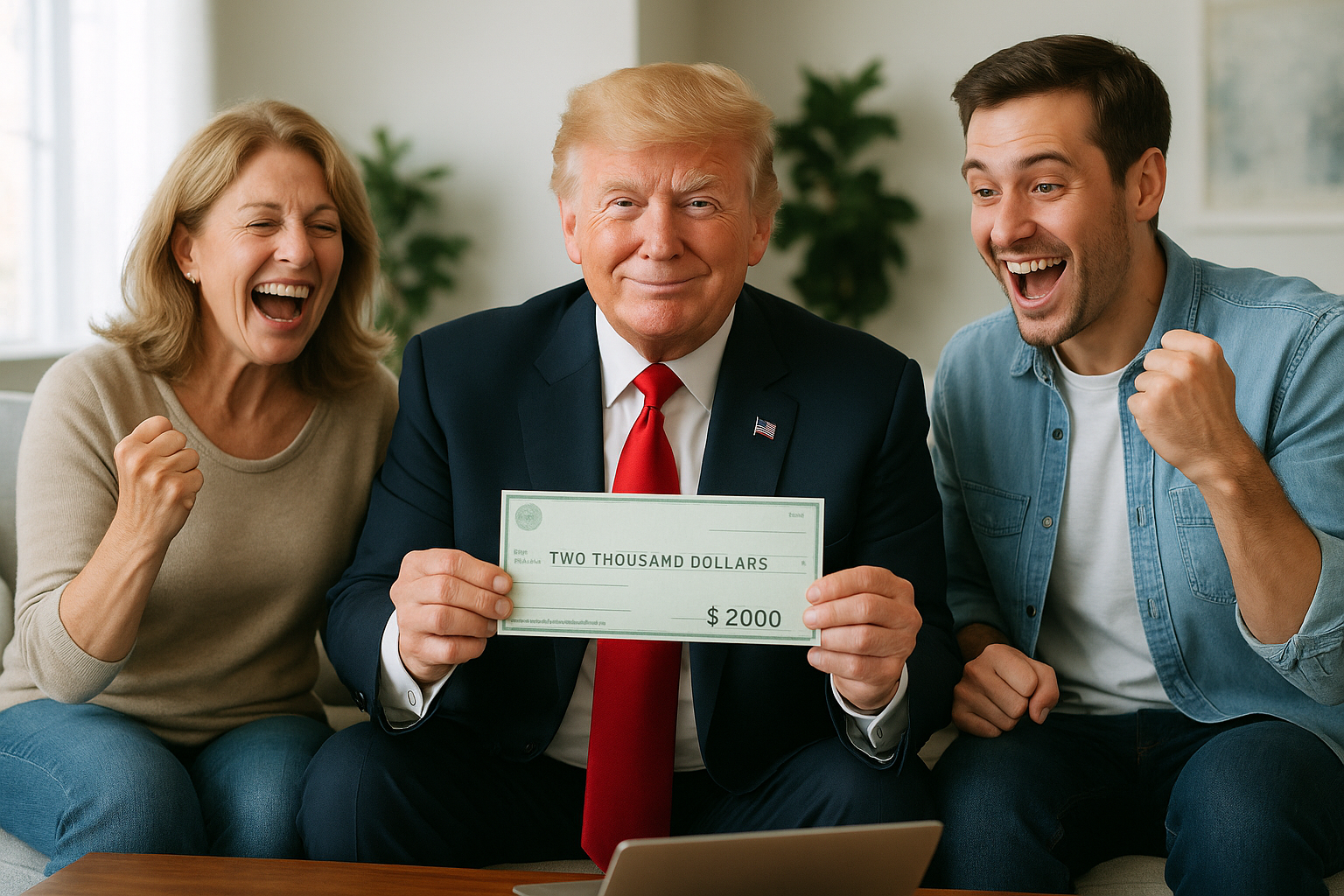
Get a $2000 Tariff Dividend in November 2025: This TrenBuzz explainer walks readers step-by-step through President Trump’s renewed promise to deliver a $2,000 tariff “dividend” to most Americans, what the plan would require, whether a payment can actually arrive in November 2025, who would qualify, the legal and budget hurdles, how markets reacted, and what to watch next.
Short answer up front- Get a $2000 Tariff Dividend in November 2025
President Trump publicly floated paying most Americans $2,000 from recent tariff revenue, calling it a “tariff dividend.” That is a headline policy proposal — not a payment schedule — and implementing it would still require legal, administrative, and likely congressional steps before a single check or deposit lands in bank accounts.
1 — What the President actually said (and where)
Over the weekend the President used his social channels to say most Americans should receive at least $2,000 “tariff dividend” checks funded by federal tariff receipts. News outlets picked up the post and reported the number and the idea almost immediately. Those public statements are the origin of today’s headlines; they are political commitments, not published regulations or Treasury orders.
2 — Is the $2,000 figure a formal program or just a proposal?
It’s a proposal. Administration comments and follow-ups suggest the White House is promoting the idea, but Treasury and budget offices have not produced a formal rule, distribution plan, or appropriations language that would legally authorize mass payments. That means a working implementation plan is not yet public.
3 — Where would the money come from — the tariff math
The President frames the dividend as paid from tariff receipts — taxes on imports collected by Customs and recorded as federal revenue. The administration says tariffs have produced large sums in 2025; reporters note that while tariffs have raised tens or sometimes low-hundreds of billions in recent reporting windows, the sums vary by accounting window and do not automatically equate to a single expendable pool big enough to fund universal $2,000 checks without other changes. Budget analysts caution the headline math does not add up without assumptions or additional steps.
4 — Quick budget illustration: why $2,000 is expensive
A simple example shows scale: $2,000 × 150 million recipients ≈ $300 billion; $2,000 × 250 million recipients ≈ $500 billion. That’s why independent budget analysts say a universal $2,000 payout is a very large fiscal item and likely to exceed recent tariff receipts unless the program is narrowed, phased, or paired with other changes (tax credits, targeted eligibility, or new appropriations).

5 — Could the administration unilaterally write checks from tariff money?
Not immediately. The executive branch can use some collected revenue to make administrative payments, but mass cash rebates at this scale generally require either (a) a clear legal authority to spend those funds that withstands judicial review, or (b) congressional appropriations that expressly authorize and fund distribution. Given ongoing lawsuits challenging the administration’s broad tariff authority, courts could constrain the usable revenue. That creates a major legal and practical impediment to instant payments.
6 — The legal wild card: Supreme Court cases about the tariffs
Several of the administration’s wide-ranging tariff actions have been challenged in court and were being reviewed by the Supreme Court as of early November 2025. If a court rules against parts of the tariff program, the revenue streams the President cites could be reduced or legally disputed — complicating any effort to use those monies for dividend checks. In short: pending litigation matters for payment feasibility.
7 — Treasury and White House remarks (what officials are saying)
Administration spokespeople and some Treasury officials have discussed ways a dividend could be structured — for example through tax credits, refunds, or some type of rebate — but Treasury has not published an operational plan nor an eligibility rule for a $2,000 per person program. One senior official has publicly acknowledged the idea but emphasized that the details are not finalized. That gap between rhetoric and rule-making matters.
8 — Market & Nasdaq reaction — what investors thought
Markets showed a positive risk-on reaction to headlines that hinted at a government reopening and fiscal clarity; equity indexes (including Nasdaq futures) moved higher on broader hopes the government would resolve fiscal gridlock. However, markets react to many moving parts — shutdown news, tariff legal risks, and macro data — so any direct link to the $2,000 dividend should be treated as one of several drivers.
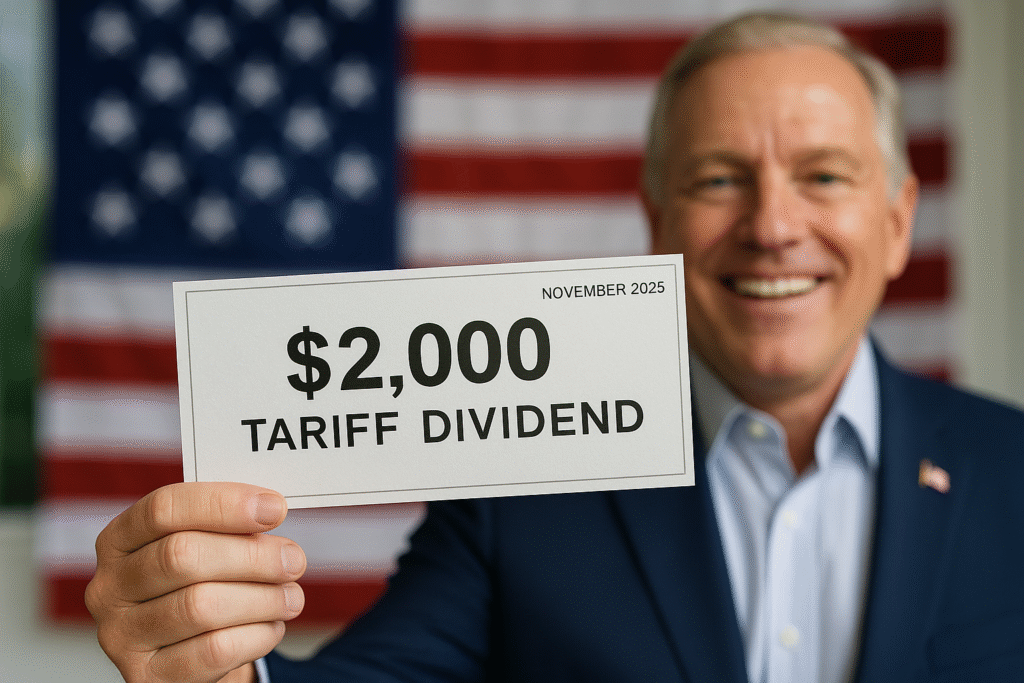
9 — Realistic timeline: will you see a $2,000 check in November 2025?
Short answer: very unlikely. Here’s why:
• Implementation needs a defined legal mechanism and fiscal accounting.
• Some tariffs are under court review; legal rulings could change available revenue.
• Treasury and IRS operational plans (bank-account lookups, mailing lists, anti-fraud checks) take time.
All of those steps typically take weeks to months — not the few days between a policy promise and a deposit date.
10 — Who might be eligible (administration’s public hints)
The President said “most Americans” would be eligible, excluding “high income people,” but he did not define income cutoffs or household tests. Implementation options include universal adult payments (fast but costly) or means-tested rebates (cheaper but administratively heavier). Without published guidance, eligibility remains undetermined.
11 — How the payment could be structured (options analysts discuss)
Common policy designs analysts point to:
• Direct deposits via IRS records (fast if the IRS has current banking details).
• Tax credits that reduce liability (may take longer to deliver in cash).
• Targeted rebates limited to certain income bands (reduces cost).
Each approach has tradeoffs in speed, cost, precision, and legal exposure.
12 — Possible offsets and the “pay for” question
The administration says leftover tariff revenue would be used to pay down debt after dividends are distributed. Independent budget watchdogs warn that tariffs are unreliable as a permanent revenue source and that a rebate program of the proposed size would either deplete one-time surpluses or require other offsets (spending cuts or new revenue). Analysts have flagged that the President’s $2,000 figure likely outstrips sustainable annual tariff receipts.
13 — How this matters for inflation and household purchasing power
In theory, a $2,000 payment increases household purchasing power in the short run. But economists caution: tariffs raise the domestic prices of taxed imports, which can offset rebate value for some households. The net effect depends on the composition of tariffs, how costs get passed to consumers, and whether the checks are one-time or recurring. In short: a rebate isn’t a pure windfall if tariffs raise costs on everyday goods.
14 — Fraud risk & what to watch for (very important)
Whenever headlines promise government checks, scammers act fast. Common scams include:
• Fake “claim your $2,000” sites or texts asking for bank details.
• Email or phone scams that mimic Treasury or IRS notices.
Only trust official Treasury/IRS communications for eligibility and timing. Don’t click payment links from social posts or SMS.
15 — What Congress can do (and why it matters)
Congress has the power to write a statutory payment program or to appropriate funds with conditions and eligibility rules. If the White House wants a fast, durable program that survives court scrutiny, the most durable route is legislation that specifies funding, distribution, and oversight. That route, however, requires negotiation and votes — which take time.
16 — Three realistic scenarios (short)
- Fast, targeted rebate: Treasury uses clear surplus tariff receipts to pay a small, means-tested rebate within weeks. (Less costly, politically feasible.)
- Large universal $2,000 program: Requires congressional action or new legal authority; likely months away and likely to be narrower or phased.
- Political promise only: The President continues to promote the idea without a workable implementation; no checks are sent this fall.
Which scenario unfolds depends on court rulings, congressional willingness, and Treasury readiness.
17 — What reporters and budget analysts are saying
Independent outlets and budget groups quickly flagged that a universal $2,000 program would cost far more than recent tariff revenue flows and that the legal status of the tariff program is unsettled. Several reputable outlets ran explainers urging caution and asking where the money would legally come from. Those are the top skeptical takes you should read alongside the headlines.
18 — Quick FAQs readers keep asking
Q: Will you get a $2,000 check in November 2025? — Very unlikely; no operational plan or appropriation is public.
Q: Who pays if Treasury sends checks? — Technically, Treasury would use collected revenue, but large scale rebates likely require congressional action or a legally sound administrative plan.
Q: Are the tariffs here to stay? — The administration says yes, but parts of the tariff program are under judicial review; outcomes could change the revenue outlook.
TrenBuzz disclaimer
This article summarizes public statements and reporting current as of Nov. 11, 2025. It is not legal or financial advice and does not substitute for official Treasury/IRS or congressional documents. For official eligibility, timing, or payment details consult primary government announcements.