
A surge in Alphabet’s share price after Google’s Gemini 3 AI rollout pushed Sergey Brin’s net worth sharply higher, temporarily vaulting him into the top three of global wealth rankings.
The short story — how an AI win turned into a billionaire shuffle
Alphabet’s market value jumped after investors cheered the company’s latest AI advances and reports of strategic hardware ties, lifting the fortunes of its co-founders.
That rally pushed Sergey Brin’s stake in Alphabet to a level that many real-time billionaire trackers translated into a top-three ranking.
It’s a reminder that, in today’s market, a single product leap or credible roadmap for chips and hardware can reprice entire sectors — and change the order of the world’s richest people overnight.
The spark: Gemini 3 and a hardware buzz that alarmed competitors
Reports say Google’s Gemini 3 release showed major model improvements and product readiness that closed gaps with leading AI services.
At the same time, market stories about Alphabet exploring chip and hardware partnerships (including high-profile conversations with big platform and silicon players) amplified investor excitement.
Put simply: better model performance + believable hardware plans = a step change in how Wall Street values Alphabet’s future profits.
That calculation is what booked the stock gains that translated to the sudden jump in founders’ paper wealth.
The market reaction — how much did Alphabet climb?
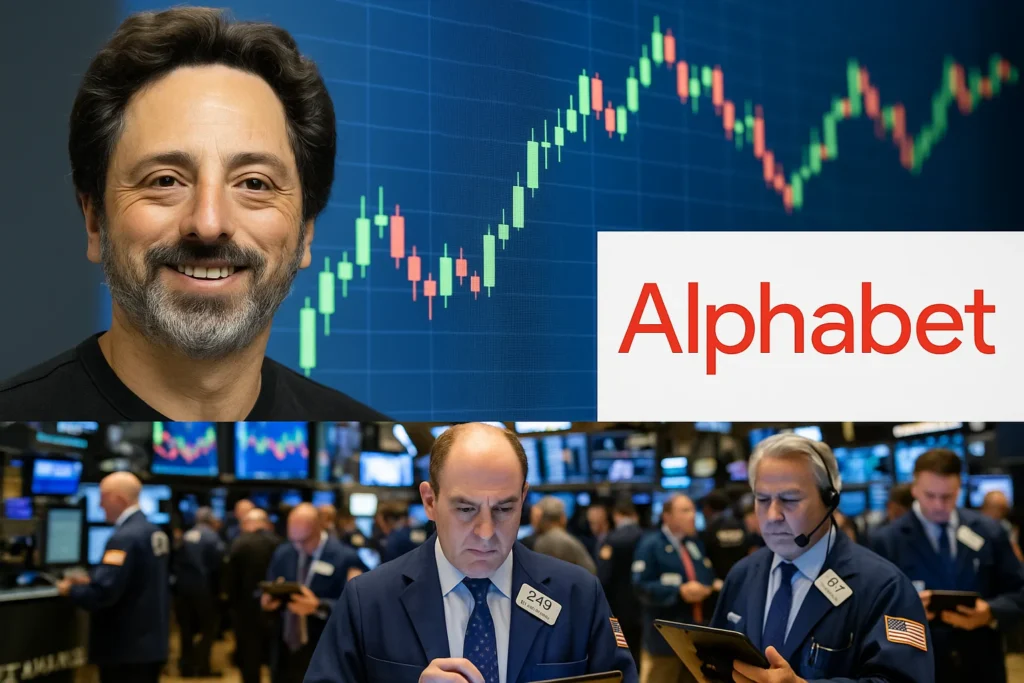
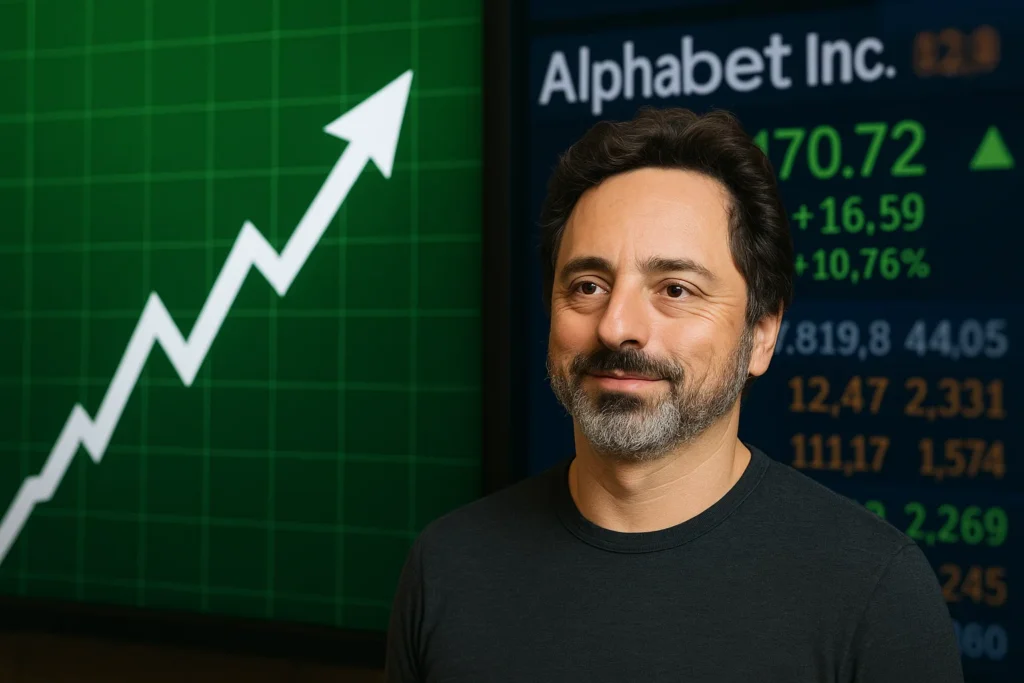
Alphabet shares surged in the days after the Gemini 3 rollout, with multiple business outlets reporting double-digit percentage moves in short stretches.
That rally added tens of billions of dollars to Alphabet’s market cap and materially increased the value of stock holdings owned by Larry Page and Sergey Brin.
Because the co-founders still hold large, voting-class positions in Alphabet, even a single day of strong gains translates to large swings in personal net worth.
Real-time billionaire trackers updated their rankings accordingly, producing headlines about who gained (and who temporarily slipped).
Sergey Brin’s net worth spike — what trackers reported
Real-time lists from major outlets recorded a rapid jump in Brin’s estimated fortune, placing him among the top three wealthiest individuals globally in immediate updates.
Media coverage tied the change directly to the market rally after Google’s AI advances and the renewed investor narrative about Alphabet’s growth runway.
Important caveat: these rankings are instantaneous, paper-wealth snapshots based on share prices and don’t reflect realized gains until stock is sold.
So headlines about “third richest” reflect market valuations at a moment in time, not cash in hand.
Larry Page, Sergey Brin — not identical fortunes
Alphabet’s co-founders both benefited, but Larry Page and Sergey Brin own slightly different share bundles; that explains why their net-worth moves aren’t identical.
For example, media outlets noted Page’s stake and relative holdings pushed him even higher in some trackers, briefly leapfrogging other tech billionaires.
Wealth lists fluctuate as markets move: one day’s tech surge can reorder the top five; the next day’s selling or news can reverse it.
Treat these movements as vivid but volatile indicators of investor sentiment — not permanent changes in underlying industry power.
Why AI product launches can move entire stock markets now
Investors price future profits into today’s stock prices, and AI is uniquely profit-bearing: it can be embedded across search, ads, cloud services, and enterprise tools.
A credible, deployable large model — combined with hardware strategies that curb reliance on third-party chips — signals scalable revenue streams to investors.
That’s why Alphabet’s AI progress is treated as a multi-year earnings lever rather than a short-lived hype cycle.
When Wall Street believes a firm may dominate both software and the necessary hardware stack, multiple years of future profits get discounted into today’s share price quickly.
The big picture: Google’s comeback reshapes the AI map
Analysts and commentators who had earlier argued Google was “falling behind” now acknowledge the company’s renewed momentum — and investors are paying attention.
The narrative shift matters: it changes competitive dynamics with Microsoft, OpenAI, Meta and chipmakers that have been central to the AI race.
That competitive repositioning also changes how policy makers, partners and customers assess long-term vendors for enterprise AI investments.
Put another way: tech policy and procurement decisions will now factor a resurgent Google into their calculations — a strategic ripple that extends beyond stock tickers.
What this means for the broader tech market and for investors
- Volatility: Expect fast, headline-driven swings in mega-cap tech valuations as AI product milestones are priced in or out.
- Concentration: Large AI winners can see outsized gains, concentrating market cap among a few firms and shifting relative valuations across the sector.
- Real-world impact: Corporate budgets for cloud services, advertising, and AI tools may re-allocate toward vendors who demonstrate deployed advantage.
These dynamics help explain why a single AI announcement can reshape billionaire rankings and global market caps in days. (
The human angle — Sergey Brin’s role and public profile
Sergey Brin co-founded Google in 1998 and later shifted to a lower-public-profile role while remaining influential at Alphabet.
His wealth largely stems from long-held Alphabet shares and the class-B voting stock structure that preserves co-founder control.
Despite immense wealth, Brin’s public appearances are rarer than those of some tech peers; nonetheless, market moves tied to his holdings get amplified in coverage because of the symbolic value of the co-founders’ fortunes.
When Page and Brin move up the wealth ladder, it’s treated as both a market event and a cultural headline about who “owns” the future of tech.
Limits of the headline — why “third richest” can change by tomorrow
Billionaire rankings are sensitive to: stock price swings, currency movements, reported holdings and occasional share sales or donations that alter stakes.
Someone’s rank in a live list can flip several places in a single trading day, so “third richest” is often temporary and illustrative rather than definitive.
Investors and readers should treat these tallies as real-time barometers of market sentiment — not final verdicts on long-run fortunes or power structures.
For deeper context, look at multi-year trends in ownership, voting control, and strategic positions across AI, cloud, and hardware stacks.
Policy and regulatory ripple effects to watch
A revitalised Alphabet commanding even more market capital raises antitrust and competition questions in the U.S., EU and elsewhere.
Regulators tracking market concentration, data governance, and AI safety may respond to a sharpened market leadership by revisiting enforcement or oversight plans.
Expect more congressional hearings, European regulatory probes and perhaps closer scrutiny of partnerships that tie major platforms to chip suppliers.
Those policy responses could, in turn, temper early exuberance and reshape how quickly companies convert AI breakthroughs into commercial scale.
What could slow or reverse this momentum?
- Disappointing product performance: if real-world deployments don’t match lab results, investor optimism can evaporate.
- Hardware bottlenecks: supply issues or competitor innovations in chips could blunt Alphabet’s advantage.
- Regulatory action: tough antitrust or AI-safety measures could constrain business models and valuations.
Any of these would likely push share prices down and reorder the short-term billionaire rankings again. Investors and observers will be watching each of these pressure points closely.
What analysts are saying (consensus themes)
Analysts highlight three themes: product credibility (Gemini 3 showed technical progress), ecosystem control (software + hardware matters), and execution risk (scaling and commercialization are hard).
Most market strategists are upbeat but cautious — rewarding firms for technical strides but discounting risks that can derail long-term monetization.
That mix of enthusiasm and caution explains why the market reaction was strong yet still subject to rapid reassessment as new information arrives.
In short: markets celebrate progress, but sustainable wealth depends on delivery, not promises alone.
Do you think Google’s AI comeback will keep Sergey Brin in the top three richest people long-term?
Disclaimer
This TrenBuzz article summarizes public reporting and market data current as of November 2025. It is informational and not financial advice.
Net-worth estimates and billionaire rankings are real-time, model-based snapshots and may change rapidly with market moves.