Table of contents
- Quick summary
- What happened — timeline of the recognition
- Why Israel acted now — strategic, diplomatic and economic motives
- Somaliland’s case: governance, stability and long-running diplomacy
- Somalia’s response and the regional diplomatic backlash
- African Union, IGAD and broader African reactions
- Security stakes — ports, the Red Sea, and counterterrorism angles
- The Abraham Accords and the Middle East dimension
- Legal and international-law questions about recognition
- What this means for Palestinians, Gulf actors and the U.S. posture
- Short-, medium- and long-term scenarios to watch
- Reader poll
- Bottom line and Disclaimer
1. Quick summary (Israel Given Recognition to Somaliland)
On December 26, 2025, Israel formally became the first UN member to recognise Somaliland as an independent state.
The announcement—framed by Israel as a historic diplomatic opening—was met by immediate, fierce objections from Somalia, regional bodies and multiple African governments.
2. What happened — timeline of the recognition
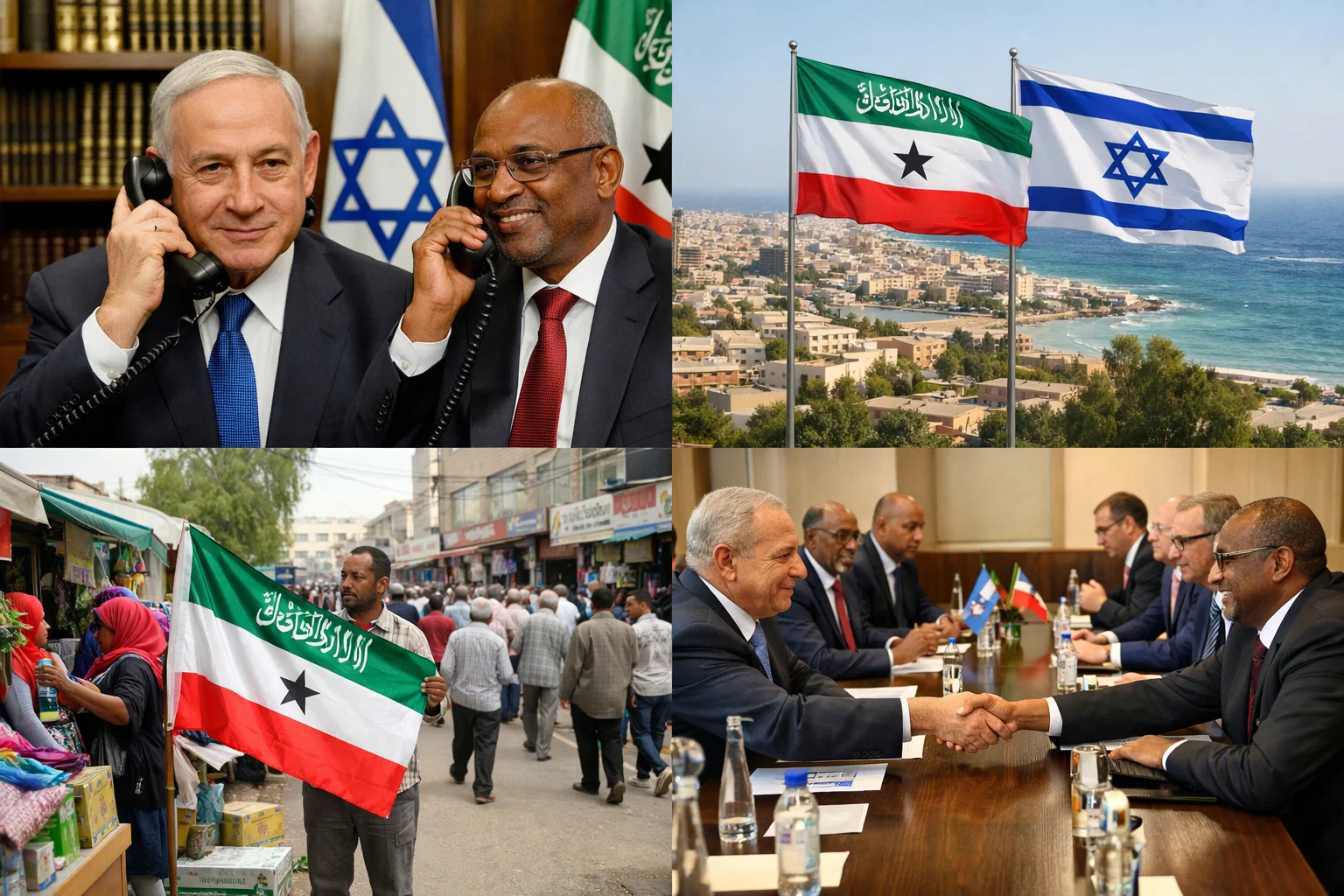
Israeli officials announced a mutual declaration of recognition and released images of a phone call between Prime Minister Benjamin Netanyahu and Somaliland President Abdirahman Mohamed Abdullahi.
Reports say the move followed months of discreet outreach, and press accounts indicate the Somaliland president may have visited Israel privately earlier in 2025.
3. Why Israel acted now — strategic, diplomatic and economic motives
Analysts point to several drivers: Somaliland’s strategic position on the Gulf of Aden, Israeli interest in new security and intelligence partners, and a diplomatic push to expand the Abraham Accords footprint.
Israeli officials also signalled interest in economic cooperation—ports, fisheries, agriculture and technology—alongside counterterrorism collaboration.
4. Somaliland’s case: governance, stability and long-running diplomacy
Somaliland has operated de facto independently from Mogadishu since 1991 with its own institutions, currency and relatively stable politics—arguments it uses to press for recognition.
Supporters argue recognition rewards stability and could anchor regional security and trade; skeptics warn unilateral recognition risks setting a dangerous precedent.
5. Somalia’s response and the regional diplomatic backlash
Somalia condemned the recognition as a violation of its sovereignty and called for Israel to withdraw the decision, labeling it an illegal act.
Several neighboring states—including Egypt, Djibouti and Turkey—publicly criticized Israel’s step, warning it could destabilize the Horn of Africa and complicate maritime security cooperation.

6. African Union, IGAD and broader African reactions
The African Union and the East African bloc IGAD stated they reject unilateral recognition and reaffirm Somalia’s territorial integrity.
Those institutions argue that secession or recognition must follow African Union rules and broad regional consultation, not unilateral moves by distant partners.
7. Security stakes — ports, the Red Sea, and counterterrorism angles
Somaliland’s Berbera port—already used by regional powers and commercial actors—lies close to vital shipping lanes; opening formal ties can create security partnerships with operational value.
Israel’s naval and intelligence planners may see Somaliland as a forward base for Red Sea domain awareness, anti-piracy patrols, and monitoring activities off Yemen and the Horn.
8. The Abraham Accords and the Middle East dimension
Israel framed the recognition in the language of the Abraham Accords, suggesting Somaliland could join or benefit from that diplomatic architecture.
That move ties a Horn-of-Africa territorial issue into broader Middle East diplomacy—prompting critics to ask whether regional peace frameworks should reshape African borders.
9. Legal and international-law questions about recognition
Recognition is a sovereign prerogative of states, but prevailing diplomatic practice favors regional buy-in and respect for existing borders to avoid instability.
African regional bodies argue that unilateral recognitions that disregard continental rules could violate the AU’s Constitutive Act and UN norms; legal challenges and diplomatic protests are expected.
10. What this means for Palestinians, Gulf actors and the U.S. posture
Some reporting links past discussions about resettlement or relocation of Palestinian populations to Somaliland—an idea that has repeatedly surfaced in various policy debates and triggered controversy.
The United States indicated it was not immediately following Israel’s lead; reaction in Washington is mixed and will inform whether other partners join Israel in recognition.
11. Short-, medium- and long-term scenarios to watch
Short term (days–weeks): diplomatic demarches, AU and IGAD statements, and possible suspension of some bilateral engagements with Israel.
Medium term (months): regional balancing—some states may quietly engage Somaliland for security or economic reasons, while Somalia mobilizes legal and diplomatic counters.
Long term (years): either a cascade of recognitions that redraw diplomatic maps in the Horn, or diplomatic isolation for Somaliland if the AU and key states maintain unity. The economic and security incentives will heavily shape outcomes.
13. Bottom line and Disclaimer
Bottom line: Israel’s decision to recognise Somaliland is a geopolitical jolt—rewarding stability in Hargeisa but provoking firm resistance from Mogadishu and many African partners.
The immediate effects will be diplomatic and legal; the strategic outcomes will depend on whether other states follow, how regional bodies respond, and whether economic or security ties outweigh political costs.
Disclaimer: This article synthesizes contemporaneous reporting and official statements current as of December 27, 2025. It aims to explain the facts and major implications of Israel’s recognition of Somaliland and should not be treated as legal advice or a substitute for primary diplomatic documents.