Key points
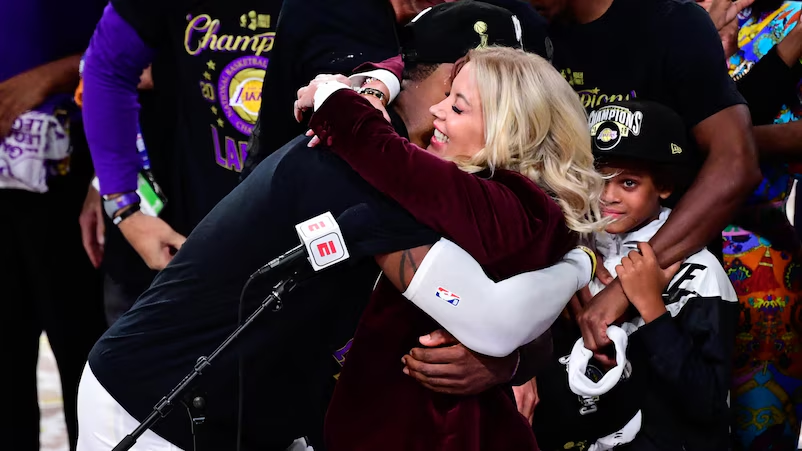
- An ESPN piece outlined internal friction between Lakers governor Jeanie Buss and LeBron James, including reporting that Buss privately grew frustrated and once weighed trading James.
- Jeanie Buss publicly pushed back, calling portions of the story unfair to LeBron and expressing regret that he was pulled into family disputes.
- The Buss family sold majority ownership of the Lakers to Mark Walter in mid-2025 for a reported ~$10 billion valuation; Jeanie retained a minority stake and is expected to remain team governor.
- Public estimates place Buss’s personal fortune in the billionaire range, underscoring the financial as well as personal stakes in the franchise.
What the ESPN report said, concisely
The article painted a picture of rising tensions: disagreements over roster moves, perceived influence of LeBron’s agency, and episodes that left Buss frustrated enough to consider radical options.
Reporters attributed many details to current and former team sources; the piece has since provoked swift rebuttals and media follow-up.
Jeanie Buss’s response — tone and substance
Buss issued a statement calling the framing “unfair” to LeBron and said it was wrong to pull him into family disputes connected to the franchise sale.
Her statement emphasized appreciation for LeBron’s contributions and a desire that he finish his career in Los Angeles.
The ownership context — why this matters now
The 2025 sale to Mark Walter — at an estimated $10 billion valuation — transferred majority control while leaving the Buss family with a continuing financial and symbolic stake.
Shifts in board dynamics after a sale can amplify personality conflicts into governance questions about direction, executive pay and roster decisions.
LeBron’s role and the inside-baseball dynamics
LeBron James remains the franchise’s on-court fulcrum and an influential voice in player decisions; that influence is often viewed differently inside an ownership circle than by fans.
Stories about negotiations, trades and perceived “egos” surface frequently in mature franchises; reporters framed this episode as a particularly intense instance of those perennial tensions.
What’s fact vs. what’s interpretation
Facts established in public reporting: the family sale to Mark Walter, Jeanie Buss’s public statement, and the existence of sources alleging friction.
Interpretation: why those tensions arose, whether Buss actually planned a trade, and the private motivations of individuals — these remain contested and partly subjective.
What this could mean for the Lakers (short list)
- Short term: heightened media scrutiny around LeBron and front-office decisions, and potential distraction approaching the trade deadline.
- Medium term: potential governance questions as Mark Walter and remaining Buss stakeholders align on long-term strategy.
- Long term: if relationships fray further, the franchise may face tougher roster-building politics than peer organizations.
Frequently asked questions — quick answers
Did Jeanie Buss sell the Lakers?
Yes — the Buss family sold a majority stake to Mark Walter in 2025; the family retained a minority share and Jeanie remains governor.
Is there a proven rift between Buss and LeBron?
Reporting cites multiple sources alleging tension, but Buss’s public denial and lack of legal filings mean the story is primarily a dispute of competing accounts.
How wealthy is Jeanie Buss?
Public estimates place her net worth around the billionaire level, reflecting long-term family holdings and her stake in the Lakers.
Do you trust the ESPN reporting about Jeanie Buss and LeBron?
Journalistic guidance for readers and editors
Treat contemporaneous sourcing with caution: attribute claims to named outlets and reporters, distinguish anonymous sourcing, and prioritize direct statements from principals (Buss, team spokespeople, LeBron’s camp).
Avoid amplifying speculation about private motives; follow subsequent reporting for corroboration and new documents rather than relying on a single article.
Disclaimer: This article synthesizes reporting current as of January 2026. It summarizes competing accounts and public statements about internal Lakers dynamics; it does not assert legal facts about private conduct. Readers should consult primary reporting and direct statements from involved parties for the full record.