Table of contents
- Quick summary
- What the viral videos showed — and who posted them
- The Quality Learning Center: license, claimed payments and the misspelled sign
- Is this part of an ongoing, wider Minnesota fraud problem? — context and precedent
- What state and federal officials are saying now
- Why critics tie the story to immigration and why that matters
- How to read allegations responsibly — checklist for readers and reporters
- Practical next steps: what investigators will look for and what the public can expect
- Reader poll (interactive)
- Bottom line
1 — Quick summary (Minnesota Somali Daycare Fraud Exposed)
A wave of viral videos and conservative commentary this week spotlighted apparently empty child-care sites in Minneapolis, centering on one licensed provider commonly called the Quality Learning Center.
Those posts claim large public payments flowed to centers with few or no children and have prompted demands for audits and criminal probes. State and federal officials say investigations are underway or ongoing.
2 — What the viral videos showed — and who posted them
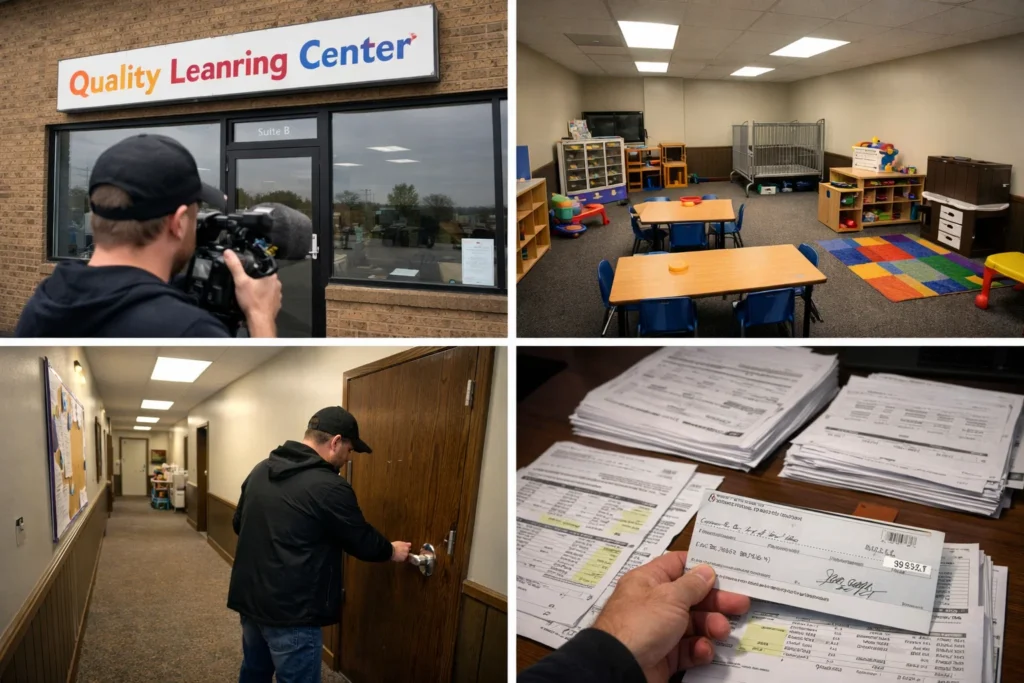
Independent creator Nick Shirley published on-the-ground footage visiting multiple child-care locations, pointing to empty rooms, locked doors and pay records he says show millions in public money.
The videos spread rapidly across X and YouTube and were amplified by commentators including Vice President JD Vance and some conservative media outlets. Those amplifications raised the story’s national profile and pressed officials for answers.
3 — The Quality Learning Center: license, claimed payments and the misspelled sign
The facility identified in social posts as Quality (or “Learning”) Center appears in state licensing records as an enrolled CCAP (child-care assistance program) provider; posts highlighted a misspelled sign and low observed activity.
Online clips assert the site received multi-million-dollar payments from state programs; those dollar figures are prominent in social feeds but require verification against official disbursement records.
4 — Is this part of an ongoing, wider Minnesota fraud problem? — context and precedent
Minnesota has seen major fraud prosecutions in recent years—most notably the Feeding Our Future scandal, which produced dozens of convictions for pandemic-era and other benefit fraud.
Federal officials and prosecutors have repeatedly investigated nonprofit and social-service fraud in the state; commentators now say the newly viral daycare footage may connect to that larger pattern, though formal links are not yet confirmed.
5 — What state and federal officials are saying now
Minnesota Governor Tim Walz’s office pushed back on instant narratives and noted that the state has taken action on fraud and strengthened program oversight, including audits and administrative reforms.
At the federal level, FBI leadership has acknowledged investigations into fraud patterns in Minnesota; top officials described some recent announcements as part of a wider probe but urged patience for standard investigative procedures.
6 — Why critics tie the story to immigration and why that matters
Some commentators emphasized the Somali-American community because several prior prosecutions involved actors connected to Somali-led nonprofits—an association that critics argue shows systemic abuse.
Civil-rights groups and community leaders warn against broad-brush blame: investigative attention to alleged fraud should not become an excuse for scapegoating an entire immigrant community. Journalists and officials must separate individual alleged crimes from ethnic generalizations.
7 — How to read allegations responsibly — checklist for readers and reporters
— Treat social-video dollar claims as leads until verified by public disbursement records.
— Distinguish licensed status (provider lists) from criminal guilt; licensing does not equal fraud.
— Expect investigations: subpoenas, audits and criminal charges require time and documentary proof.
8 — Practical next steps: what investigators will look for and what the public can expect
Investigators will compare enrollment records, attendance logs, payroll and bank transfers against state payment data; they will interview staff, parents and auditors to confirm whether children were served.
If evidence supports criminality, prosecutors will file charges; if not, administrative remedies and program reforms (tightened eligibility checks, on-site audits) are likeliest outcomes.
10 — Bottom line
Viral footage pointing at the Quality Learning Center Minneapolis and other Minnesota child-care sites has calmed into an official response: audits and federal probes are under way, but allegations on social media remain unproven until verified by records and, where warranted, by indictments.
Reporters should prioritize primary documents—state payment ledgers, licensing and court filings—before drawing sweeping conclusions, and policymakers should balance program integrity with civil-rights safeguards as investigations proceed.
Disclaimer: This TrenBuzz article synthesizes reporting current as of December 29, 2025. It summarizes verified reporting, official statements and viral-source claims; it does not assert criminal liability for any named person or entity. If you have documentary evidence (payment records, enrollment logs) relevant to an investigative authority, provide it to state auditors or law enforcement rather than posting unverified claims on social media.