Key points
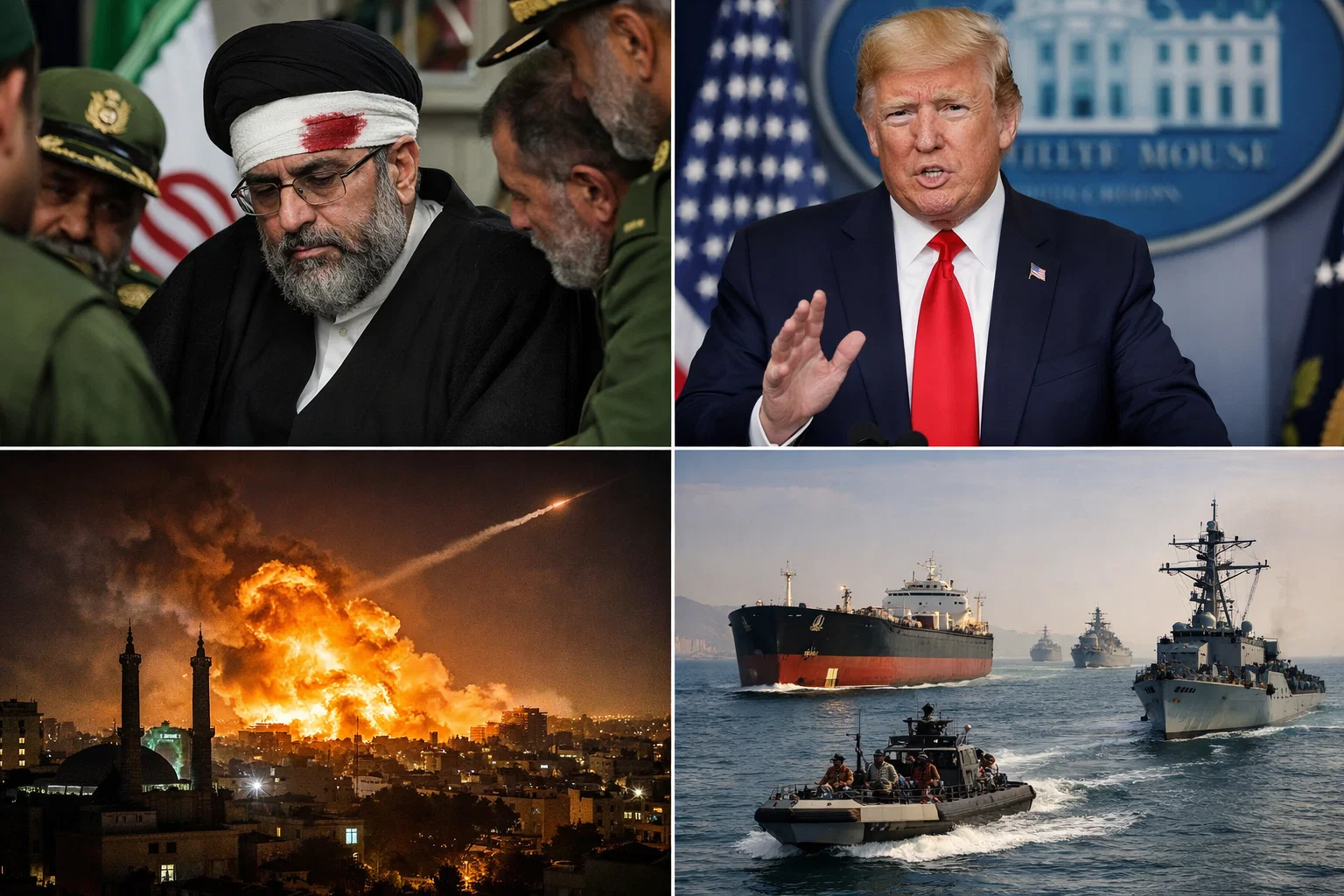
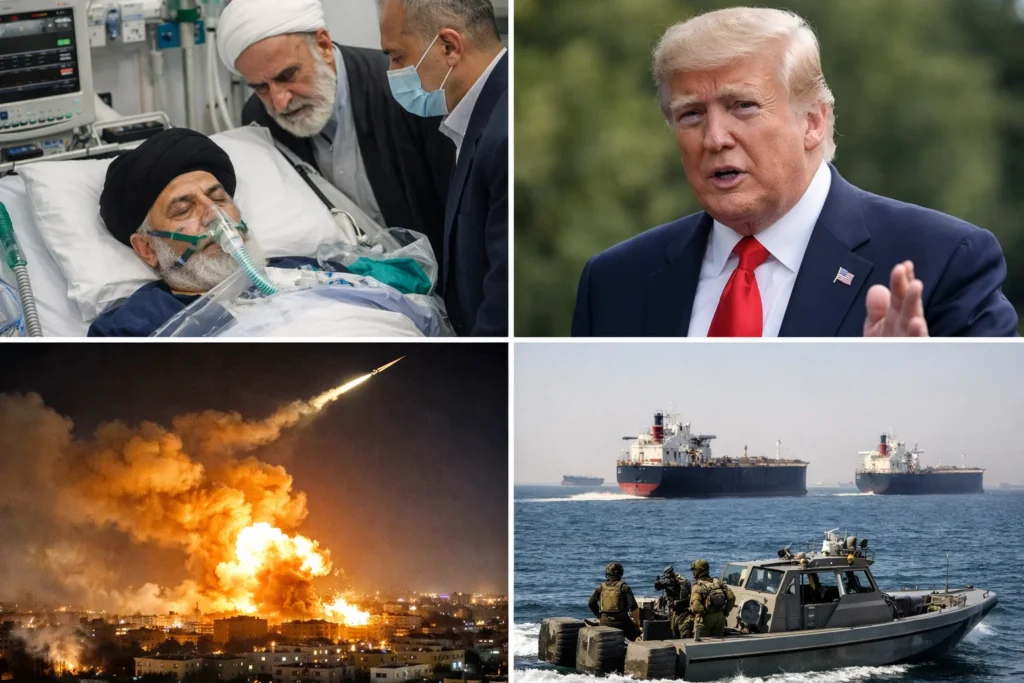
- Iran’s new supreme leader, Mojtaba Khamenei, remains a focal point of uncertainty after an attack that killed his father and left the leadership transition murky; Tehran issued a message in his name promising retaliation.
- U.S. President Donald Trump has publicly said he “thinks” the new leader is alive but “damaged,” and later said he’s “hearing” the leader might not be alive — comments that have fed speculation and diplomatic tension.
- Israel has said it has launched new waves of strikes against targets inside Iran as the U.S.–Israeli campaign continues, raising the risk of further escalation across the region.
- Reporting and intelligence notes differ on the new leader’s condition and on who is actually running policy inside Iran — the Islamic Revolutionary Guard Corps (IRGC) is widely reported to have major influence
- Markets and navies are watching tanker routes (Strait of Hormuz) and global energy flows as strikes and threats disrupt oil shipments and push prices and insurance costs higher.
What’s happened — the concise narrative
In the days since the U.S.–Israeli strikes that killed Ayatollah Ali Khamenei, Tehran named his son, Mojtaba Khamenei, as successor. The new leader’s public footprint has been minimal: his first message was read on state TV rather than delivered in person, and Iranian officials have offered limited detail about his health. That lack of on-the-record appearances has produced a swirl of claims, intelligence briefings and media reports about whether he is capable of exercising authority — and whether the Revolutionary Guard is effectively running day-to-day operations.
Trump’s public comments and their effect
President Donald Trump has made several public remarks suggesting uncertainty about the supreme leader’s status — telling broadcasters he believes the leader is “damaged” in one interview and later saying he’s “hearing he’s not alive.” Those statements quickly reverberated through the news cycle, increasing diplomatic friction and accelerating speculation inside Tehran and in allied capitals. Reuters and other outlets carry the on-the-record quotes that drove much of the coverage.
Israel’s new wave of strikes — what officials say
The Israeli military says it has begun “new waves” of strikes inside Iran, targeting a range of military and infrastructure sites as part of a campaign it says is needed to remove threats to Israel. Israeli spokespeople have said strikes will continue until operational goals are met; Iran has continued to retaliate with missile, drone and proxy activity across the region. These back-and-forth moves are the proximate reason energy markets and regional governments are on heightened alert.
Who’s really in charge inside Iran?
With contradictory public signals about Mojtaba Khamenei’s condition, analysts point to an important practical reality: the Islamic Revolutionary Guard Corps — and its senior commanders — already exercised large policy influence before the strikes and likely play a central role now. That means operational decisions (maritime harassment, proxy mobilization, missile strikes) may reflect institutional IRGC strategy as much as any single cleric’s wishes. Several outlets report that the IRGC’s regional commands and hardline cadres have been the most active actors since the escalation began.
Russia and succession dynamics
Observers watching Tehran’s internal politics note that outside patrons — including Russia — may play a diplomatic or logistical role during a succession that looks brittle on paper. Moscow has publicly issued cautious statements of support for Iran’s sovereignty in some briefings, and reports of medical transfers or contacts between Iranian and Russian facilities have circulated in some media — all of which feed speculation about succession options and external influence. (Reporting on this topic remains fluid and often sourced to intelligence or diplomatic leaks; treat claims that involve foreign medical aid or transfers as unconfirmed unless multiple high-quality sources corroborate them.)
Why the “is he alive?” line matters
When a country’s top leadership is opaque, two immediate risks arise:
- Decision-making shock: Ad hoc or highly centralized institutions (like the IRGC) can make faster, more aggressive operational choices without the usual checks, increasing the risk of rapid escalation.
- Misinformation and strategic signaling: Public claims from rivals (or from leaders like the U.S. president) about a leader’s health can be used as pressure or to induce confusion — but inaccurate public claims also complicate diplomacy and crisis management.
That combination explains why allies, neutral states and markets are watching both statements and concrete signals (ship movements, command briefings, and credible medical confirmations).
What to watch next — concrete signals
- Proof-of-life or verified on-camera appearances by the new leader; absence will prolong speculation.
- IRGC public orders or claims of responsibility for attacks — these show operational direction.
- Allied naval deployments and insurer advisories for passage through the Strait of Hormuz — practical indicators of shipping risk.
- Statements from foreign capitals (including Moscow) on any logistical help or diplomatic contacts that bear on succession and medical care.
- Verified, multi-source corroboration before accepting any claim about the leader’s death or incapacitation; single-source social posts and sensational clips are unreliable.
Practical takeaways for readers
- For news consumers: rely on established wire services and official transcripts for claims about leaders’ health; treat social clips and single-source intelligence leaks with caution.
- For markets and logistics: expect continued volatility in energy prices and shipping insurance while uncertainty persists — firms should monitor routing and insurers’ advisories closely.
- For policymakers and diplomats: the most stabilizing course is transparent, verifiable communication and rapid efforts to open diplomatic channels that can reduce the risk of miscalculation.