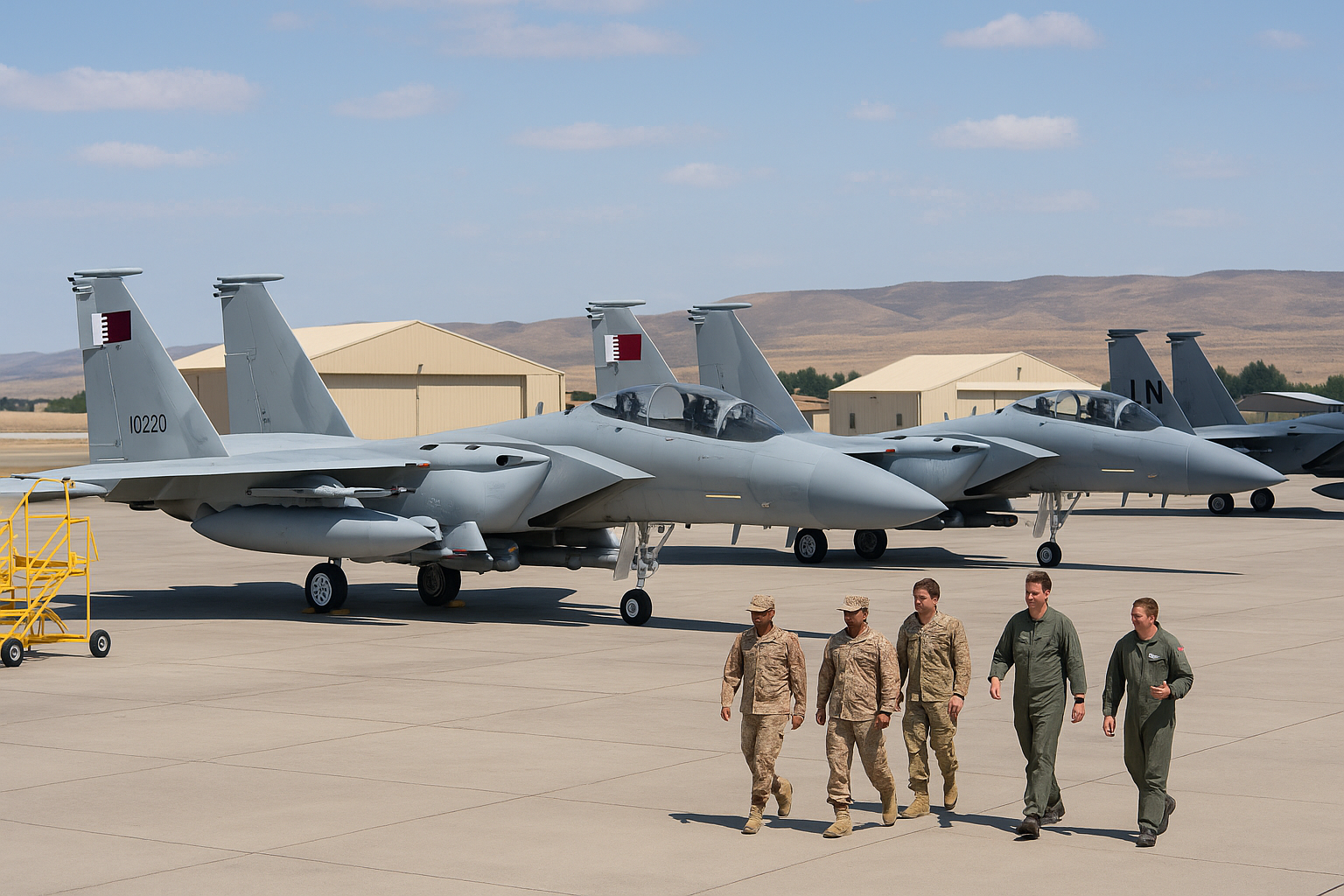
Qatar Air Force Base Idaho: An announcement in October 2025 that Qatar will have an air-force facility at Mountain Home Air Force Base (Idaho) set off a wave of headlines, social posts and questions: Is Qatar building a sovereign base in the U.S.? How many jets and personnel? What does it mean for Idaho and U.S. policy? This clear, sourced explainer walks you through the facts, the legal and community context, the likely timeline, and where to read the original documents — all verified with official and reputable reporting as of October 2025.
Qatar Air Force Base Idaho — the one-paragraph summary
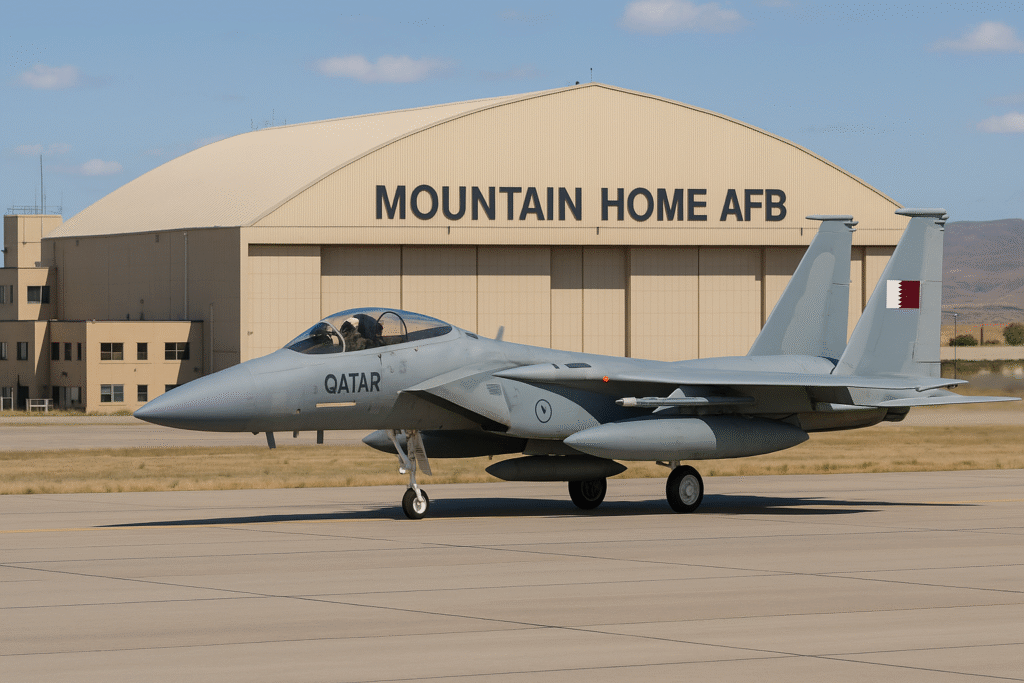
The U.S. Department of Defense announced that a facility for the Qatari Emiri Air Force will be established at Mountain Home Air Force Base (Idaho) to host a contingent of Qatari F-15 fighter jets and pilots for training and joint exercises. U.S. officials emphasized this will be a facility inside an existing U.S. base — not a separate sovereign foreign military base — and that Qatar will fund parts of the project. The decision reflects deepening U.S.–Qatar military cooperation and has prompted local pride, national political debate, and calls for transparency about the arrangement.
1 — What was officially announced (and by whom)
Defense Secretary Pete Hegseth announced the agreement during a meeting with Qatar’s defense minister: Qatar will set up a facility at Mountain Home Air Force Base to host Qatari F-15s and pilots for training alongside U.S. units. The Department of Defense framed the move as an interoperability and training partnership. Multiple major outlets reported the announcement on Oct 10–11, 2025.
2 — Important word choice: “facility” vs “base” — why it matters
Officials and many outlets used the word facility rather than “Qatari sovereign base.” That distinction matters: this project is to build Qatari-operated facilities on an existing U.S. Air Force installation (Mountain Home AFB), not to transfer sovereign control of land or create a foreign-controlled base. U.S. authorities stressed Mountain Home remains a U.S. base under U.S. command and control; Qatar would station aircraft and personnel there under an agreement. Multiple outlets and Pentagon statements emphasize that nuance.
3 — How many jets and personnel are reported (the numbers you’ll see)
Several reports cite planning documents and official statements that mention about a dozen Qatari F-15 jets and roughly 300 Qatari and supporting personnel as part of the initial contingent, though exact numbers and timelines may be refined as construction and environmental reviews proceed. Those figures were reported by the Financial Times, AP and others covering the Pentagon announcement. Expect final numbers in formal agreements or base planning documents.
4 — Why Mountain Home AFB (Idaho) was selected
Mountain Home already hosts significant training activity and has previously hosted overseas partners for training missions (for example, Singaporean units have trained there). Its expansive airspace, range complex, and runway infrastructure make it suitable for high-performance fighter training. Mountain Home’s remote location and training ranges are logistical fits for intensive F-15 flight operations and exercises.
5 — Legal and policy framework: how foreign forces operate on U.S. bases
When a foreign military uses U.S. facilities, the arrangement typically rests on memoranda of understanding, Status of Forces Agreements (SOFAs) or specific access pacts that lay out jurisdiction, logistics, funding and command relationships. These agreements preserve U.S. sovereign control of the base while allowing host-nation aircraft and crews to operate under negotiated terms. The Pentagon’s public statements and subsequent planning documents will clarify legal details for the Mountain Home facility.
6 — Local and political reactions — praise, questions and critique
Idaho officials and some local leaders welcomed the jobs and economic activity such a facility would bring, while national political critics questioned the wisdom of stationing personnel from a Gulf monarchy on U.S. soil and demanded transparency on security and vetting. Conservative commentators and some lawmakers raised safety and political concerns, referencing past incidents involving foreign trainees at U.S. sites. Supporters pointed to long-standing U.S.–Qatar security cooperation and the diplomatic benefits of closer ties. Coverage included both local reporting and national opinion pieces.
7 — Security implications and safeguards
Pentagon spokespeople and defense analysts note training partnerships deepen interoperability and readiness — critical when partner air forces fly U.S.-made platforms (Qatar purchased dozens of F-15s). But those same analysts say safeguards are standard: U.S. vetting of visiting personnel, base security measures, control of weapons and munitions, and clear jurisdictional rules must be in place. Expect formal security memoranda and base-level operating procedures to be published or summarized as part of implementation.
8 — Environmental and planning steps — what comes next locally
Constructions within U.S. bases typically trigger environmental reviews and engineering planning. Earlier Mountain Home planning documents (dating from prior years’ foreign training proposals) included environmental assessments for hosting partner aircraft, and similar studies are likely required now. Those reviews cover noise, air quality, water, cultural resources and traffic impacts; they also create public comment windows that Idaho residents and stakeholders can use to raise questions. News reporting has noted environmental assessments were part of prior planning phases.
9 — How this fits into the bigger U.S.–Qatar relationship
Qatar has been a major U.S. security partner for years: it hosts Al Udeid Air Base (a critical U.S. hub in the Middle East), has bought U.S. fighters, and played a diplomatic role in regional mediation. The Mountain Home arrangement deepens practical ties — allowing Qatari pilots to train in U.S. airspace on U.S.-supplied jets — and reflects Qatari willingness to invest for that access. Official statements link the move to interoperability, regional security and the ongoing defense partnership.
10 — What to watch for next (timelines and documents)
Look for these public milestones: (1) formal intergovernmental agreements or memoranda that set the legal framework; (2) base planning and environmental review documents that detail construction and operations; (3) Pentagon or State Department releases with specifics on the number of aircraft, personnel, and duration; and (4) congressional briefings or hearings if lawmakers request oversight. Newsrooms will report initial rollouts, but the technical and legal documents are the authoritative sources.
11 — Common myths and quick answers
Q: Is the U.S. “giving” land to Qatar?
A: No — reports stress this is a facility within an existing U.S. base. Mountain Home remains under U.S. control; Qatar will have facilities and personnel under negotiated agreement.
Q: Is this unprecedented?
A: Not entirely. The U.S. has hosted overseas training units at U.S. bases before (e.g., Singapore), but permanent foreign sovereign bases inside the U.S. are extremely rare. This arrangement follows a pattern of foreign training contingents on U.S. ranges.
Q: Will Qatar pay for construction?
A: Reports indicate Qatar will fund much of the construction; final funding and contracting details will be in the implementing agreements and base plans.
Practical takeaways for Idaho residents
If you live near Mountain Home or plan to follow this story: expect public notices about environmental reviews and planning meetings. Watch local news and the Mountain Home AFB public affairs page for construction timelines. Economically, training units bring jobs (construction, base support, some local spending), but residents should also expect noise and temporary traffic changes during construction and periodic training operations thereafter.
Sources & where to read the original reporting
Below are the verified, authoritative news reports and analyses used to compile this explainer. Read these primary sources for the official announcements, local reaction and detailed reporting.
- Associated Press — “Pentagon will build a training facility for Qatari pilots in Idaho.” (AP News)
https://apnews.com/article/cdfccbaa4bd4c70c717bf630daf37a89 - Financial Times — “Qatar to build fighter jet facility at US base in Idaho.” (Financial Times)
https://www.ft.com/content/7d4410d7-1525-42e2-a610-0df13556e3f9 - CBS News — “Hegseth announces Qatar will build air force facility at U.S. base in Idaho.” (CBS News)
https://www.cbsnews.com/news/hegseth-qatar-air-force-facility-us-base-idaho/ - AP explainer — “Things to know about the Qatar training facility planned for an Idaho Air Force base.” (AP News)
https://apnews.com/article/idaho-qatar-us-air-force-base-fc1506584e7833dbde3e16fe8613b6b4 - Al Jazeera — “Pentagon chief Hegseth announces Qatari Air Force facility at Idaho base.” (Al Jazeera)
https://www.aljazeera.com/news/2025/10/10/pentagon-chief-hegseth-announces-qatari-air-force-facility-at-idaho-base - ABC News — “Pentagon will build a training facility for Qatari pilots in Idaho.” (ABC News)
https://abcnews.go.com/US/wireStory/pentagon-build-training-facility-qatari-pilots-idaho-126417396 - Task & Purpose — “Idaho Air Force base will host a Qatari F-15 training unit.” (Task & Purpose)
https://taskandpurpose.com/news/qatar-mountain-home-air-force-base/
Final thoughts
This Idaho facility is best understood as an expanded training partnership that places Qatari F-15s and pilots inside an existing U.S. training base under negotiated terms — not the creation of a foreign sovereign base on U.S. soil. The arrangement reflects deeper U.S.–Qatar military ties, practical training needs for U.S.-built aircraft, and broader geopolitical cooperation. As the implementation proceeds, the most informative documents will be the formal intergovernmental agreements, environmental reviews and Pentagon/State Department releases — which this article links above.
Disclaimer
This article summarizes official announcements and reputable reporting as of October 2025. It is informational and does not replace government documents or legal texts. For authoritative details about agreements, environmental reviews, and base operations, consult Pentagon releases, Mountain Home AFB public affairs, and the formal documents linked above. Trenbuzz.com and the author assume no liability for policy interpretations or individual actions based on this article.