Key points
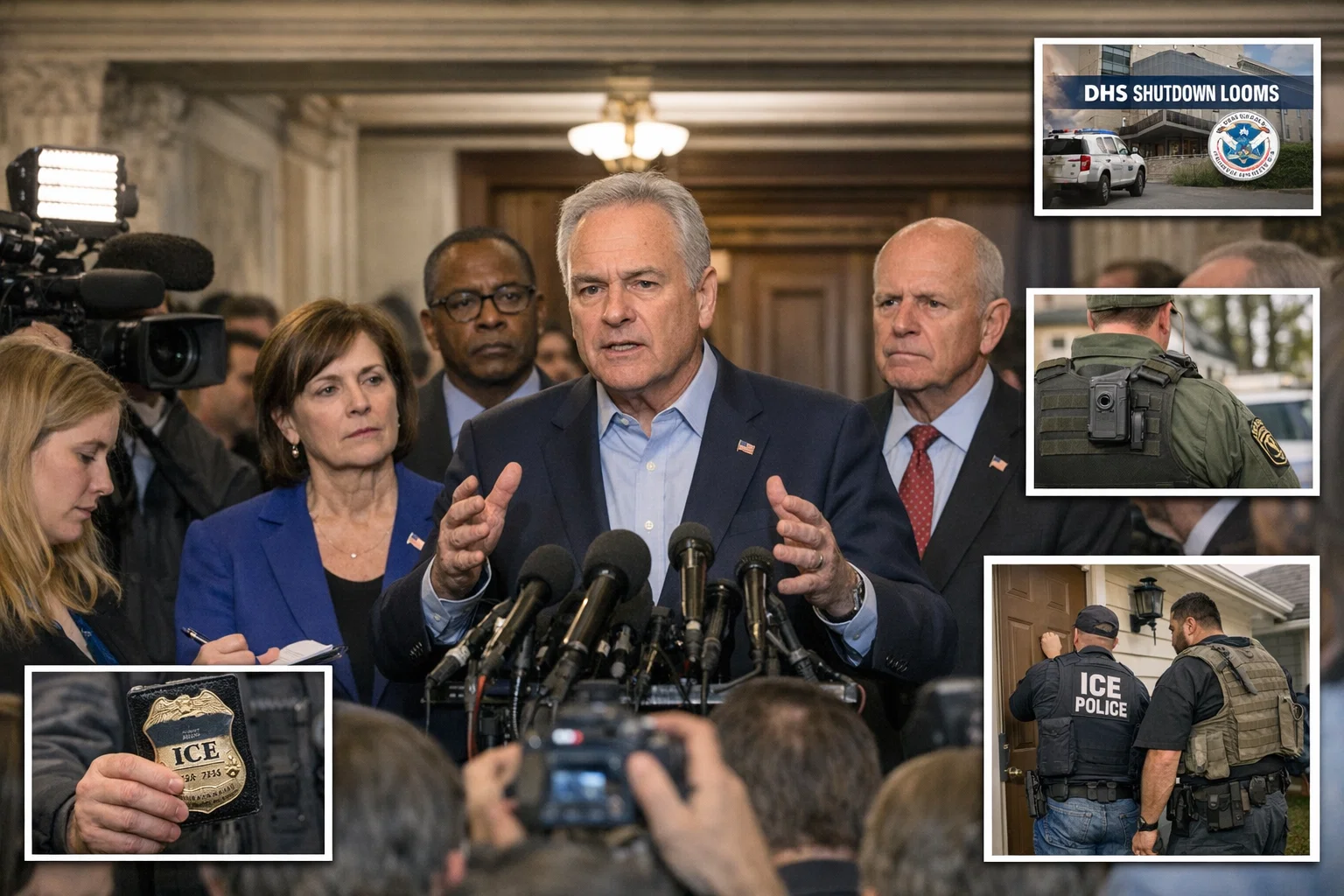
- Senate Democrats delivered a fresh counteroffer to the White House late Monday as talks stalled over funding for the Department of Homeland Security.
- The Senate stalled a DHS funding bill, raising the likelihood of a partial DHS shutdown that began after the funding deadline — though many DHS functions and most employees are likely to continue as “essential.”
- Democrats are insisting on binding operational reforms for immigration agents — warrants for home entries, clear ID and badge numbers, limits on masks, expanded body-camera use and new use-of-force standards — and say the White House offer so far is “incomplete and insufficient.”
Senate Democrats send counteroffer- What happened and what to watch
Late Monday, Senate Democrats formally delivered a counterproposal to the White House and Republican negotiators as a partial shutdown of Department of Homeland Security operations entered its first week. Both sides remain publicly dug in: Democrats say they will not fund the agency without enforceable reforms governing immigration agents, while the White House argues the administration has already taken steps and is seeking a deal that preserves enforcement capacity.
The underlying standoff follows a failed procedural vote in the Senate that blocked a funding bill; that vote increased the probability the agency would face a lapse in appropriations when funding expired at the deadline. Even so, many DHS employees are considered “essential,” meaning core operations — from border enforcement to airport security — will largely continue at first, though some support functions and reimbursements (for example, FEMA disaster reimbursements) could be disrupted if the impasse drags on.
What the counteroffer actually contains (short answer)
Negotiators have not made the full text of the latest Democratic counteroffer public. News outlets reporting from congressional briefings say Democrats pressed for binding operational rules for Immigration and Customs Enforcement and Customs and Border Protection, while rejecting what they described as a White House counterproposal that relied on non-binding assurances. That lack of public detail means both sides are shaping their narratives — and the public must rely on official summaries and floor statements for specifics.
Why Democrats are holding out
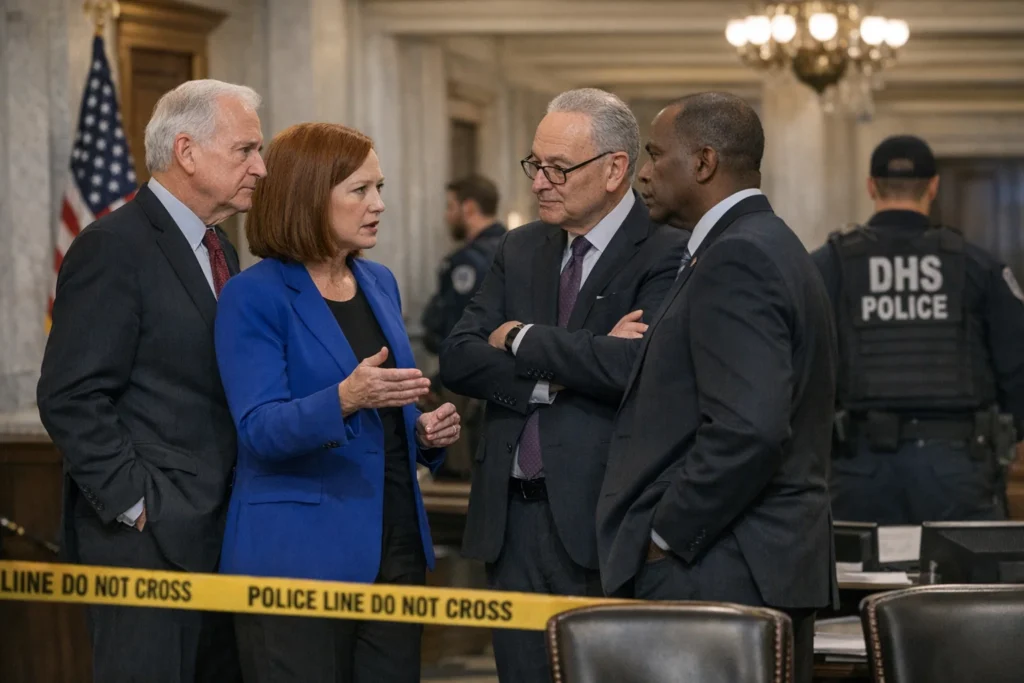
Democratic senators argue that recent fatal encounters involving federal immigration officers have shown the need for enforceable guardrails on operations. Their package centers on measures to require judicial warrants for home entries, clear identification and badge numbers for agents, limits on use of masks or concealment during operations, expanded body-camera requirements, and new use-of-force standards — changes Democrats say would bring federal immigration agents closer to the rules that govern local police. They say the White House counteroffer lacks binding teeth.
Republicans counter that such restrictions would impede enforcement and that many agency reforms the administration says it is implementing already address core concerns. That political schism — with Republicans controlling the House, Senate and White House but needing some Democratic votes in the Senate because of cloture rules — is why a handful of Senate Democrats can determine whether DHS funding moves forward.
Immediate impacts of a partial DHS shutdown (what people will actually notice)
- Most essential operations continue — at least initially. Agency officials have designated most DHS personnel as “essential,” so airport screeners, Coast Guard and many law-enforcement roles will continue working during a short shutdown, though paychecks could be delayed if the lapse extends.
- FEMA reimbursements and training programs are at risk. Disaster-recovery reimbursements and some FEMA coordination functions could slow or be interrupted, which matters if a major disaster occurs during the impasse.
- Border and immigration removals may continue in practice. ICE and CBP retain access to funds appropriated elsewhere that can be used for enforcement operations in the short run; the visible effect on deportations may therefore be limited immediately.
- Public-facing services could be inconvenienced. Non-essential customer services and some administrative activities — licensing, certain training and office-based support — are more likely to be reduced or paused.
What this means politically
Holding out for enforcement reforms is a lever for Senate Democrats to force policy changes that would otherwise be hard to ratify through ordinary legislation. The tactic carries political risk: if the public sees immediate harms (airport delays, disaster-response bottlenecks), popular pressure can push lawmakers toward a quick compromise. Conversely, if a shutdown’s effects are muted — because most DHS employees remain on the job and ICE/CBP can tap existing funds — Democrats may sustain leverage to extract stronger, legally enforceable commitments.
Quick Q&A
Q: Did Democrats reject the White House offer outright?
A: Democrats described the White House counterproposal as lacking enforceable commitments and said it was “incomplete and insufficient”; they submitted a counteroffer late Monday, but details were not publicly released.
Q: Will border enforcement stop?
A: Not immediately. ICE and CBP have access to previously appropriated funds and many employees are designated essential; removal and border operations are expected to continue in the short term, though administrative disruptions are possible if the impasse persists.
Q: When will Congress return to fix this?
A: Congress is scheduled to be in recess until Feb. 23; that calendar increases pressure for a deal but also means a prolonged shutdown is possible if leaders don’t reach an agreement before lawmakers leave town.
Bottom line
A politically consequential impasse over DHS funding has produced a narrow but meaningful partial shutdown and a fresh Democratic counteroffer to the White House. The next 48–72 hours and the congressional calendar will determine whether negotiators convert that counteroffer into a binding agreement that reforms immigration-enforcement practice — or whether both sides remain distant enough that disruptions extend. Stay tuned to trustworthy wire services and official statements for the authoritative text of any deal; early reporting will continue to evolve as negotiators prepare draft language and floor votes.