
Slender Man Stabbing – By TrenBuzz — a careful, factual, step-by-step update on Morgan Geyser, the 2014 Slender Man stabbing, the status of co-defendant Anissa Weier, the survivor Payton Leutner, and why the case keeps resurfacing in headlines.
1) What happened in 2014 — the attack in plain terms (Slender Man Stabbing)
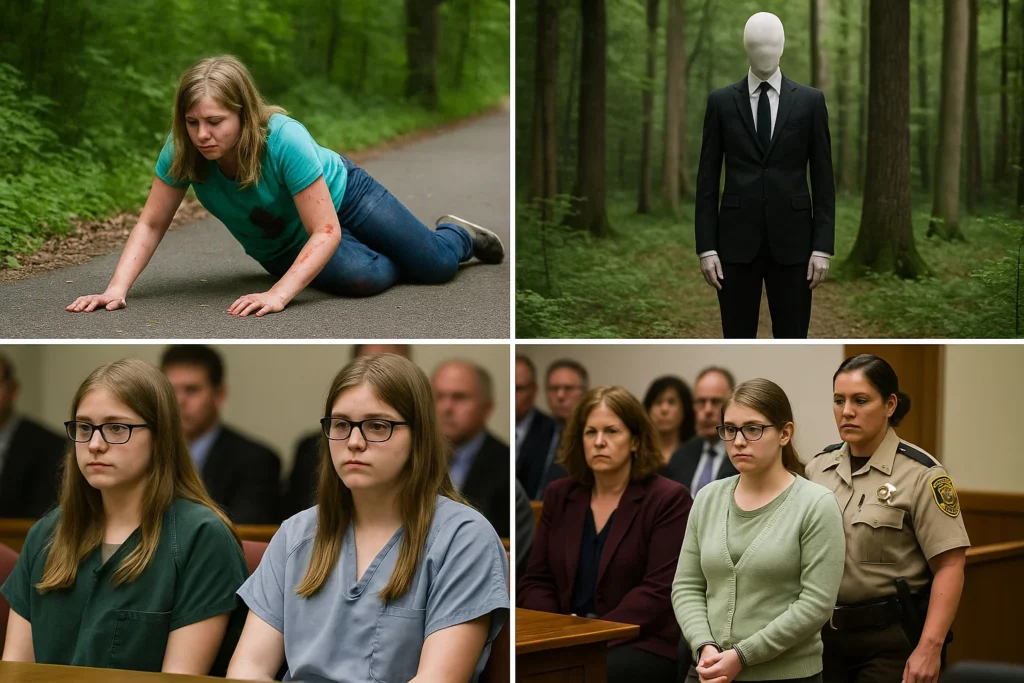
On May 31, 2014, two 12-year-old girls, Morgan Geyser and Anissa Weier, lured their friend Payton Isabella Leutner into a wooded park in Waukesha, Wisconsin.
Geyser stabbed Payton 19 times; surgeons later said one hair’s breadth could have meant death. Leutner crawled to a bike path and was rescued; she survived after emergency surgery.
The attackers later told investigators they believed killing Payton would please the fictional internet character “Slender Man,” a creepypasta figure that circulated online.
Because the perpetrators were children, the case raised immediate questions about internet influence, juvenile responsibility, and mental illness.
2) Legal outcomes — verdicts, institutional commitments and releases
In 2017, both girls were found not guilty by reason of mental disease or defect and were committed to psychiatric institutions rather than prison.
Anissa Weier received a commitment of up to 25 years and was granted conditional release in 2021; Morgan Geyser was committed for a longer term and remained in psychiatric care until a conditional release this year.
Geyser’s conditional release in 2025 followed evaluations and legal proceedings that allowed supervised transition into a group home under strict conditions.
Those releases were controversial: the survivor’s family expressed fear and some local officials publicly stated they wished for longer confinement.
3) The November 2025 missing-person alert — what authorities said first
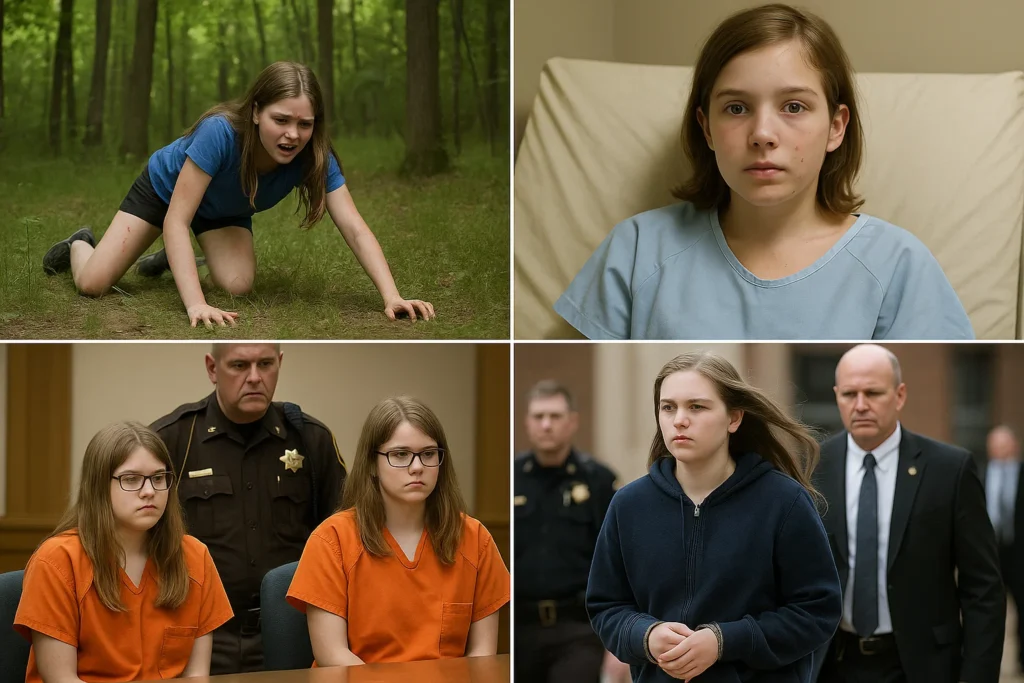
On the weekend of November 22–23, 2025, Wisconsin authorities reported that Morgan Geyser had removed an electronic monitoring bracelet and left her group home in Madison without authorization.
Law enforcement issued a search and asked for public help; Geyser was described as 23 and last seen with an adult acquaintance.
The alert raised immediate concerns because her release was conditional and subject to monitoring to protect both her and the public while she lived under supervised care.
4) Custody update — located and taken into custody in Illinois
Within roughly 24 hours of the missing-person report, police tracked and took Morgan Geyser into custody in Posen, Illinois. Officials said she had been located after leaving the Madison group home and removing her monitor.
Authorities and Geyser’s attorney urged calm while the facts were clarified and stressed the need for legal and medical processes to play out.
Local reporting indicates the Department of Corrections received an alert about her monitor malfunction and notified police; investigators were examining whether release conditions had been violated.
5) Where is Anissa Weier now? — post-sentence pathway
Anissa Weier, the other attacker, was conditionally released in 2021 after years at the Winnebago Mental Health Institute. Her release drew public attention and debate about public safety and rehabilitation.
Weier’s release predated Geyser’s conditional release, and she had been subject to supervision and monitoring as part of the release conditions.
Both conditional releases were the outcome of lengthy legal and psychiatric processes that weighed risk, treatment progress and statutory criteria for supervised reintegration.
Those decisions fueled continuing public discussion about the balance between rehabilitation and punishment, especially for violent juvenile offenders.
6) Where is Payton Leutner now? — survivor’s life since the attack
Payton Leutner survived the stabbing and has since talked publicly about recovery, schooling and plans for the future; in recent reporting she is reportedly safe and pursuing education plans.
Leutner’s family and local reporting have emphasized her resilience, long physical and psychological recovery, and wish for privacy as she builds her life.
The survivor’s perspective has been central to public reactions about conditional releases and to broader conversations about victim safety and community healing.
Many supporters and mental-health advocates say survivor-centered care and confidentiality are essential after such traumatic crimes.
7) Why the case keeps returning to headlines — three reasons
- Unusual motive and youth: The infantilized rationale (Slender Man) and the young ages at the time made the crime especially shocking.
- Long legal arc: The institutional commitments, parole-style conditional releases and periodic court filings create recurring news hooks.
- Public safety vs. rehabilitation debate: Each step toward release stokes debate about whether psychiatric progress sufficiently mitigates future risk.
Because these elements intersect law, psychiatry, technology and public policy, the story remains a touchstone for broader societal anxieties.
That’s why a missing-person alert or a release decision once again draws national and international reporting.
8) The technology angle — internet culture, Slender Man and real-world harm
“Slender Man” began as an internet horror meme, but the Waukesha attack is a grim case of online fiction fueling real violence when mixed with untreated psychosis.
Researchers and child-safety advocates point to a mix of fantasy engagement, social isolation and mental-health vulnerabilities — not the meme alone — as causal factors.
The case prompted schools, parents and platforms to rethink how to talk to children about online horror content and monitor at-risk youth.
Mental-health screening, media literacy and early intervention are commonly cited preventive strategies after this case.
9) Mental-health and juvenile justice — what experts say about conditional releases
Mental-health professionals and juvenile-justice experts stress that conditional release from psychiatric institutions is complex: it balances public safety, patient rights, and clinical rehabilitation.
Releases typically include monitoring, therapy requirements, and community placement to reduce relapse risk; violations (like removing a monitor) trigger rapid response.
Legal standards require judges and clinicians to weigh the individual’s progress, but community reaction often focuses on worst-case risks rather than statistical outcomes.
Advocates argue for transparent communication with communities while protecting patient privacy and clinical integrity.
10) What this means for community safety and policy conversations
High-profile cases like this push policymakers to revisit supervision conditions, monitoring technologies, and funding for mental-health services.
They also test the capacity of community programs to safely reintegrate people who’ve completed institutional treatment.
Local officials often respond with short-term safety briefings, while longer policy debates consider whether law or public-health investments better prevent future tragedies.
The balance — accountability plus treatment — remains contentious and politically fraught.
Which issue worries you most after the Morgan Geyser news?
Disclaimer
This TrenBuzz article is informational and summarizes reporting available as of November 2025. It is not legal advice. For official updates, rely on law-enforcement releases, court documents and statements from the Wisconsin Department of Corrections or local prosecutors.