Table of contents
- Quick summary
- What changed on January 1, 2026
- Which states and who’s covered
- How the bans work at checkout
- The public-health argument and evidence
- Critics, legal and logistical concerns
- What SNAP participants should know now
- How retailers and technology are adapting
- Quick FAQ (practical answers)
- Vote: Do you support the SNAP soda candy ban? (interactive poll)
- Closing note & disclaimer
1 — Quick summary
Starting January 1, 2026, several states began restricting the use of Supplemental Nutrition Assistance Program (SNAP) benefits to buy sugary drinks and candy.
This movement, called in-state “food-choice” waivers, is already generating operational headaches and political debate.
2 — What changed on January 1, 2026
State-level waivers approved by USDA now prohibit purchases with SNAP funds of items variously defined as soda, energy drinks, candy, and some sweetened beverages.
The federal USDA Foods and Nutrition Service (FNS) maintains a list of state waivers and the specific items each state restricts.
3 — Which states and who’s covered
Indiana, Iowa, Nebraska, Utah and West Virginia implemented new restrictions effective Jan 1, 2026.
These five are the first wave of many states that have received USDA approval to limit certain purchases under SNAP.
4 — How the bans work at checkout
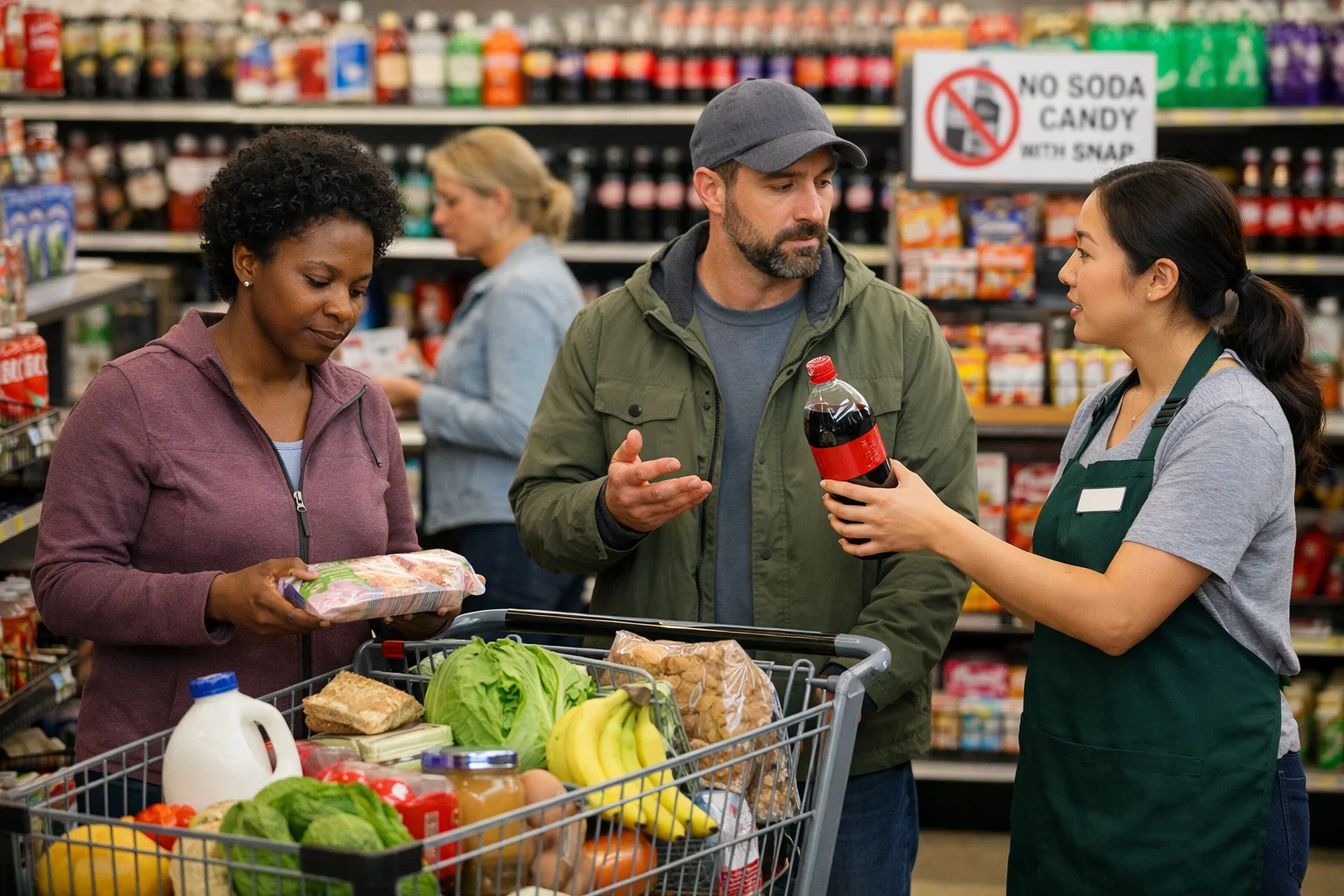
In practice the bans work by configuring EBT (electronic benefits) systems to decline restricted UPCs or product categories when SNAP EBT is used.
That requires retail point-of-sale updates, vendor training, and clearly marked product classifications — a technical lift for many stores.
5 — The public-health argument and evidence
Supporters say the SNAP soda candy ban will discourage purchase of nutrient-poor items and lower diet-related disease over time.
Researchers have studied waiver options and modeling suggests targeted restrictions could influence purchasing patterns, though long-term health impacts are uncertain.
6 — Critics, legal and logistical concerns
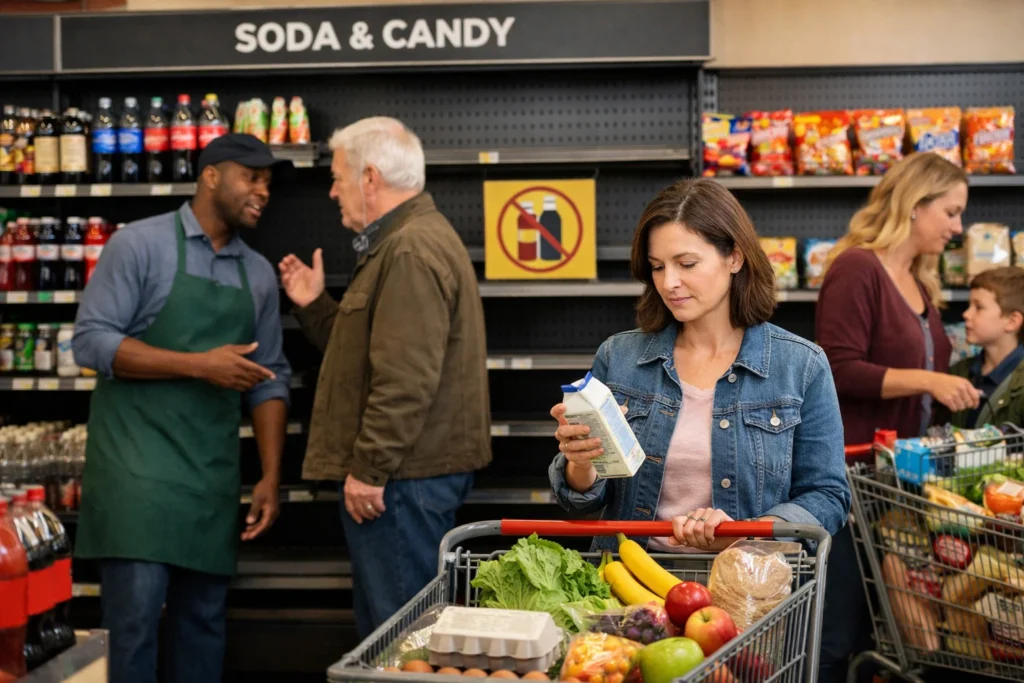
Opponents argue bans may stigmatize benefit users, create confusion at checkout, and shift costs onto states to implement new systems.
Reports and state officials also warn of high administrative expenses and potential delays that could fall hardest on rural or small retailers.
7 — What SNAP participants should know now
If you receive SNAP benefits in one of the implementing states, plan purchases with the new limits in mind and review guidance from your state SNAP office.
Non-restricted items — like milk, 100% fruit juices, and most staple foods — remain eligible for purchase with SNAP benefits.
8 — How retailers and technology are adapting
Retailers must update POS databases to mark restricted UPCs and train staff to answer customer questions quickly.
Some smaller grocers say software updates will be costly and may not be fully reliable on day one, raising concerns about mis-rings and denied purchases.
9 — Quick FAQ (practical answers)
Q: Will bottled water, milk, or 100% juice be banned?
A: No — most waivers target sugar-sweetened beverages and candy; milk and 100% juices are typically allowed.
Q: Do the bans reduce benefit amounts?
A: No — they only alter what SNAP dollars may buy, not the monthly benefit allotment.
Q: Are waivers permanent?
A: Most waivers are time-limited (often two years) and include evaluation requirements before extension.
Do you support banning soda and candy purchases with SNAP benefits?
11 — Closing note
The SNAP soda candy ban marks one of the most significant, immediate changes to benefits rules in recent years.
As states roll out waivers in early 2026, expect both technical fixes and legal-political fights to shape how the policy works in practice.
Disclaimer: This article is for informational purposes only and reflects reporting and public documents available as of December 31, 2025. It does not constitute legal, medical, or financial advice. TrenBuzz is not responsible for individual state SNAP implementation details; contact your state SNAP office for personal guidance.