By TrenBuzz — Special report
Key points
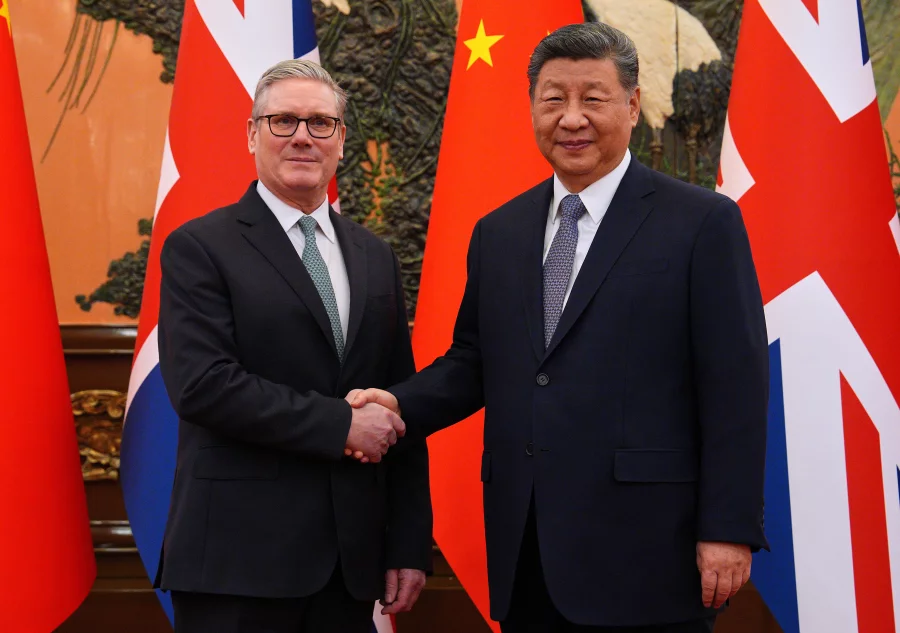
- UK Prime Minister Keir Starmer and Chinese President Xi Jinping met in Beijing and called for a “comprehensive strategic partnership” aimed at deepening trade, investment and cooperation.
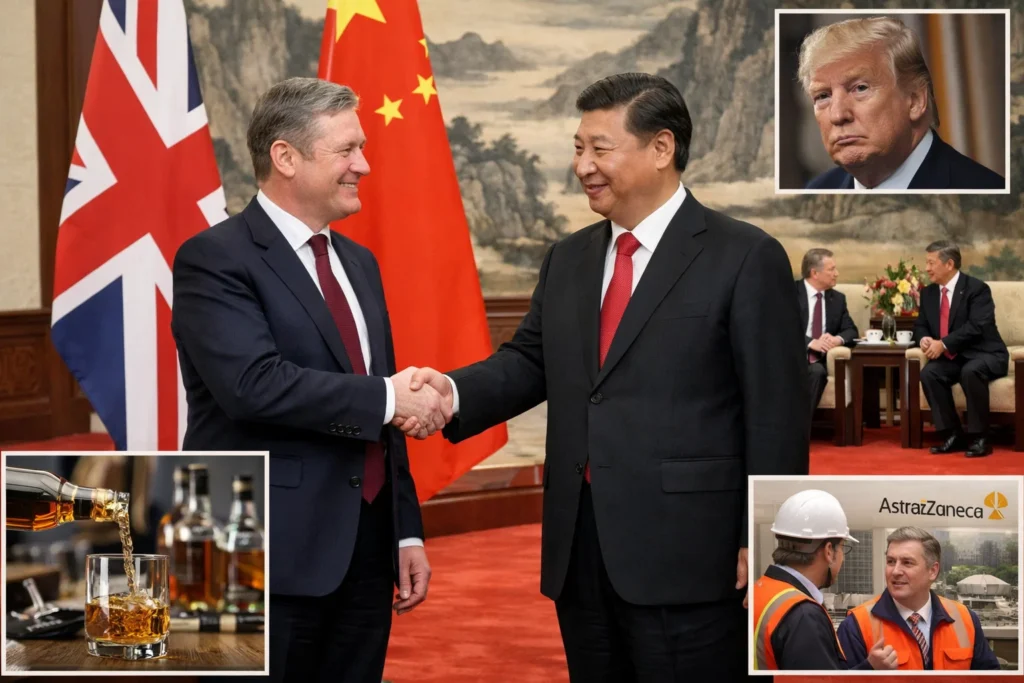
- The visit produced concrete wins on trade and mobility — 30-day visa-free travel for British visitors, reduced Chinese tariffs on Scotch whisky, and major commercial pledges including a reported AstraZeneca investment package.
- Starmer framed the reset as pragmatic: the UK must protect national security but also pursue growth and reduce over-reliance on an unpredictable ally — a clear reference to recent U.S. policy volatility under President Trump.
- The visit drew criticism at home over human-rights issues, spying concerns and infrastructure approvals, forcing Starmer to strike a balance between commerce and caution.
Starmer and Xi call for deeper UK–China ties — what happened and why it matters
On a high-stakes trip that marked the first UK prime-ministerial visit to China in eight years, Keir Starmer and Xi Jinping agreed to deepen ties across trade, technology and people-to-people links. The timing is strategic: allies across Europe and beyond are recalibrating relations with Beijing as U.S. policy under President Trump injects turbulence into the post-Cold War order. The UK wants access to Chinese markets and investment while signalling it will still raise concerns about rights and national security.
What was agreed — the practical headlines
- Mobility: A 30-day visa-free entry arrangement for British visitors to China was announced, easing short trips and tourism.
- Trade wins: China agreed to lower tariffs on some British products — notably measures intended to boost Scotch whisky exports — and both sides signalled work on tariff and regulatory frictions.
- Commercial commitments: Major business deals were flagged, including a multi-billion-dollar AstraZeneca investment agreement and plans to revive a “golden era” business dialogue to bring UK and Chinese firms together.
These practical steps are aimed at boosting UK growth by unlocking exports and inward investment — a core priority for Starmer’s government.
Why now — the larger geopolitical frame
Several trends explain the timing and tone:
- U.S. unpredictability: The Trump administration’s muscular, often unilateral moves have pushed some U.S. partners to hedge by diversifying relationships — Europe and the UK among them. Starmer’s visit signals a calculated hedging strategy: engage Beijing economically while preserving political levers.
- Economic urgency: With muted UK growth and Brexit-era adjustments still underway, London is eager for trade and investment opportunities to stimulate jobs and tax revenues. China remains one of the world’s largest consumer markets.
- Global recalibration: Other Western leaders are also engaging China diplomatically, reflecting a broader shift toward managing competition while keeping channels open for cooperation on climate, health and trade.
What critics say — risks and domestic pushback
Starmer’s outreach drew immediate scrutiny from human-rights groups and political opponents. Key criticisms include:
- Security concerns: Worries about Chinese tech, espionage and large infrastructure projects (including a planned Chinese embassy development in London) prompted questions about whether the UK is giving too much ground for economic gain.
- Human-rights and values: Observers urged Starmer to press harder on Xinjiang, Hong Kong and broader civil-liberties issues; critics argue that too soft an approach risks normalizing repression in exchange for trade.
- Domestic politics: Some MPs see the visit as politically risky—opening trade while leaving voters uneasy about national-security safeguards. Starmer has publicly pledged to bring “stability and clarity” to the UK’s China policy.
What this means for business, security and diplomacy
- Business: Short term, exporters (especially luxury goods, hospitality and pharmaceuticals) can expect easier market access and new commercial pipelines. UK firms should prepare to move quickly to lock in deals and meet Chinese regulatory requirements.
- Security: Government and industry will need sharper controls—export screening, telecom security rules and foreign-investment vetting—to limit technology transfer and espionage risks while permitting legitimate commerce.
- Diplomacy: The visit reframes the UK as a country seeking “strategic autonomy” — willing to cooperate with Beijing for national advantage while retaining the ability to coordinate with allies on security and values. This balancing act will require careful diplomacy with the U.S. and EU partners.
Interactive — a quick checklist for stakeholders
(Use this to assess impact and act.)
For UK businesses exporting to China:
- Do you have China-market compliance (labeling, standards, local registration) in place? If not — start now.
- Can you meet rules of origin and preferential regimes tied to any tariff deals? If not — consult trade counsel.
For policymakers and security teams:
- Do your export-control and telecom-screening processes reflect new commercial flows? If not — update screening thresholds.
- Is there a plan to monitor critical infrastructure proposals (e.g., ports, energy, telecom) linked to foreign investment? If not — draft one.
For voters and civic groups:
- Track parliamentary scrutiny papers and public briefings about the embassy, trade deals and human-rights dialogues. Demand written assurances where appropriate.
What to watch next
- Text and timing of implemented agreements: Watch for the formal memoranda and tariff schedules that will convert headlines into enforceable rules.
- Parliamentary scrutiny: Select-committee hearings and any new legislation on foreign-investment screening will indicate how the UK plans to protect security while opening markets.
- US and EU reactions: How Washington and key EU capitals publicly respond will indicate whether the UK’s recalibration is likely to be a one-off or part of a broader Western trend.
Bottom line
Keir Starmer’s Beijing visit and his joint call with Xi for deeper ties reflect a pragmatic pivot: Britain wants growth and investment, and China wants a more predictable partner in Europe. The trip’s tangible gains (visa facilitation, tariff moves, commercial deals) are real—but so are the political and security trade-offs. If the UK successfully pairs economic engagement with robust safeguards and parliamentary oversight, the visit could be a net win; if not, it risks backlash at home and diplomatic friction with allied capitals.