By TrenBuzz — Special report
Key points
- Federal efforts to collect detailed voter-roll data from states have been broad and aggressive: the Justice Department sought sensitive records from dozens of states, prompting widespread pushback.
- Several states and election officials refused or legally resisted demands for unredacted voter files; federal suits have met judicial setbacks — including a recent dismissal in Oregon.
- Critics say the campaign looks like a coordinated pressure play that could be used to contest or influence future elections — a charge lawmakers and state chiefs have publicly rebuffed.
- The practical stakes are high: voter privacy, chain-of-custody for election administration, public trust in election outcomes and the balance of state vs federal authority. Expect more court fights and congressional oversight.
State election chiefs rebuff Trump — the short version
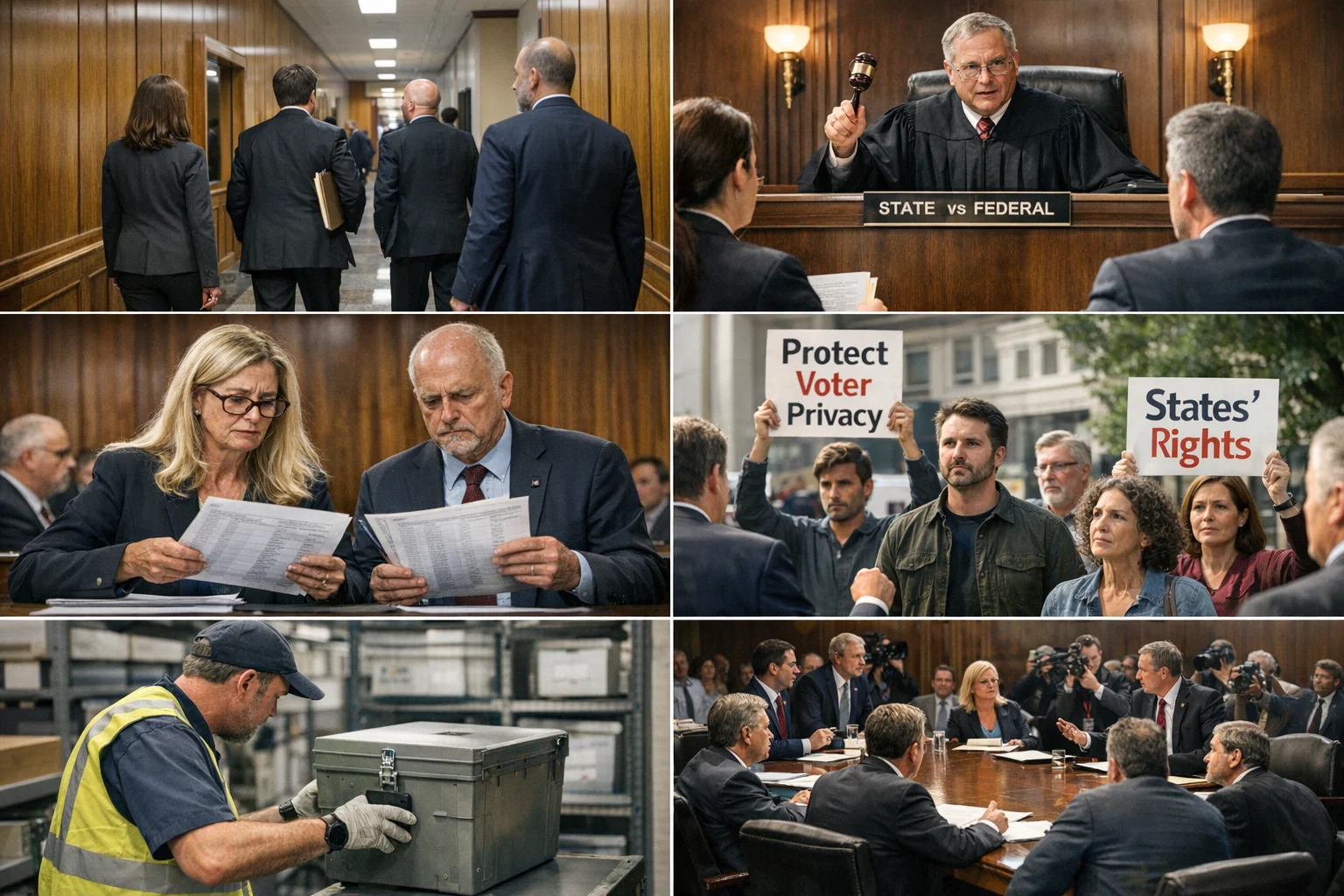
A sustained push by the Justice Department and allied agencies to obtain state voter rolls and other sensitive election data has collided with a coordinated refusal from state election chiefs and attorneys general. Officials from numerous states have rebuffed requests — and courts are already pushing back — framing the battles as a test of federal overreach, voter privacy and the integrity of U.S. elections.
What happened — the facts
Over the last several months the Justice Department has asked for sweeping voter data from a large share of state election offices — requests that include full names, dates of birth, driver’s license numbers and partial Social Security numbers in some cases. Reporting shows at least 43 states were approached in one form or another. Many state officials declined, citing privacy, statutory limits and constitutional authority over elections.
Where legal action has followed, federal judges have sometimes rejected the government’s claims. In Oregon, a federal judge dismissed the DOJ’s effort to force the state to hand over unredacted voter rolls, finding the government had not met the legal threshold required under the statute it invoked. That ruling is part of a growing pattern of courtroom pushback.
Why state officials are pushing back
- Privacy and security: Voter rolls contain highly sensitive personal data. States worry that handing over unredacted files — even to the federal government — increases the risk of identity theft or misuse and could chill voter participation.
- Legal limits and precedent: Election administration is principally a state responsibility under the Constitution. Several experts and state lawyers argue DOJ’s legal basis for demanding bulk data is weak and not tailored to a particular investigation, which makes blanket demands unlawful.
- Political context and trust: The timing and scope of the requests — amid public pressure from the White House and allies to investigate alleged irregularities — have led many secretaries of state to view the effort as politically motivated. That perception, not just the request itself, fuels refusal.

What the federal government says (and the legal pivot)
Justice Department officials have argued they need fuller records to pursue alleged violations of federal election laws and to ensure compliance with civil-rights statutes. At times the DOJ has framed requests as part of targeted investigations; critics say the early letters looked broad and coercive. Where DOJ has filed suits to compel disclosure, courts have demanded a tighter factual basis than the government provided.
Senators and state election officials have publicly urged the DOJ to stop the pressure campaign and to confine itself to legitimate, narrowly tailored investigations — warnings that reflect both legal concern and political alarm.
The risks if this continues
- Erosion of public trust: If voters believe election data is being weaponized, trust in outcomes could fall and turnout could suffer.
- Security exposure: More copies of unredacted data increase the surface for hacks, leaks or misuse.
- Federal–state friction: Aggressive federal demands risk a constitutional standoff over who runs U.S. elections—historically a state domain.
- Legal precedent: Court rulings on these disputes will shape rules about when and how federal authorities can demand election records in the future.
How state election chiefs are fighting back — playbook
- Refusal and legal defense: Many secretaries of state declined voluntarily, and several states have sought and won judicial relief.
- Public pressure and transparency: State officials have publicized DOJ letters and asked for congressional oversight, shifting the debate from closed enforcement to public accountability.
- Legislative safeguards: Some states are exploring statutory fixes to limit what data can be shared and to raise legal thresholds for federal demands.
What this means for the 2026 midterms (and beyond)
The episode tightens the political stakes for the upcoming elections. If federal requests keep being framed as investigations into potential irregularities, state officials may face renewed pressure — and further refusals could trigger more litigation and political theater. Conversely, a clear, court-backed rule that protects state voter files would calm one major source of election anxiety. Either way, courts and Congress are likely to play decisive roles.
What to watch next (timeline)
- Ongoing court decisions in current DOJ suits (Oregon and others) — early rulings will set procedural standards.
- Congressional oversight: expect letters and hearings from senators and representatives worried about federal overreach.
- State legislative fixes: watch for bills that limit the type of voter information states can legally share.
Bottom line
State election chiefs’ rejection of federal demands for raw voter rolls is more than a legal skirmish — it’s a contest over who controls the levers of American democracy. The clash exposes real risks (privacy harms, politicized law enforcement) and practical solutions (targeted subpoenas, judicial review, statutory safeguards). Courts and Congress will decide whether this moment becomes a precedent for defensive state sovereignty or a new normal for federal election scrutiny.