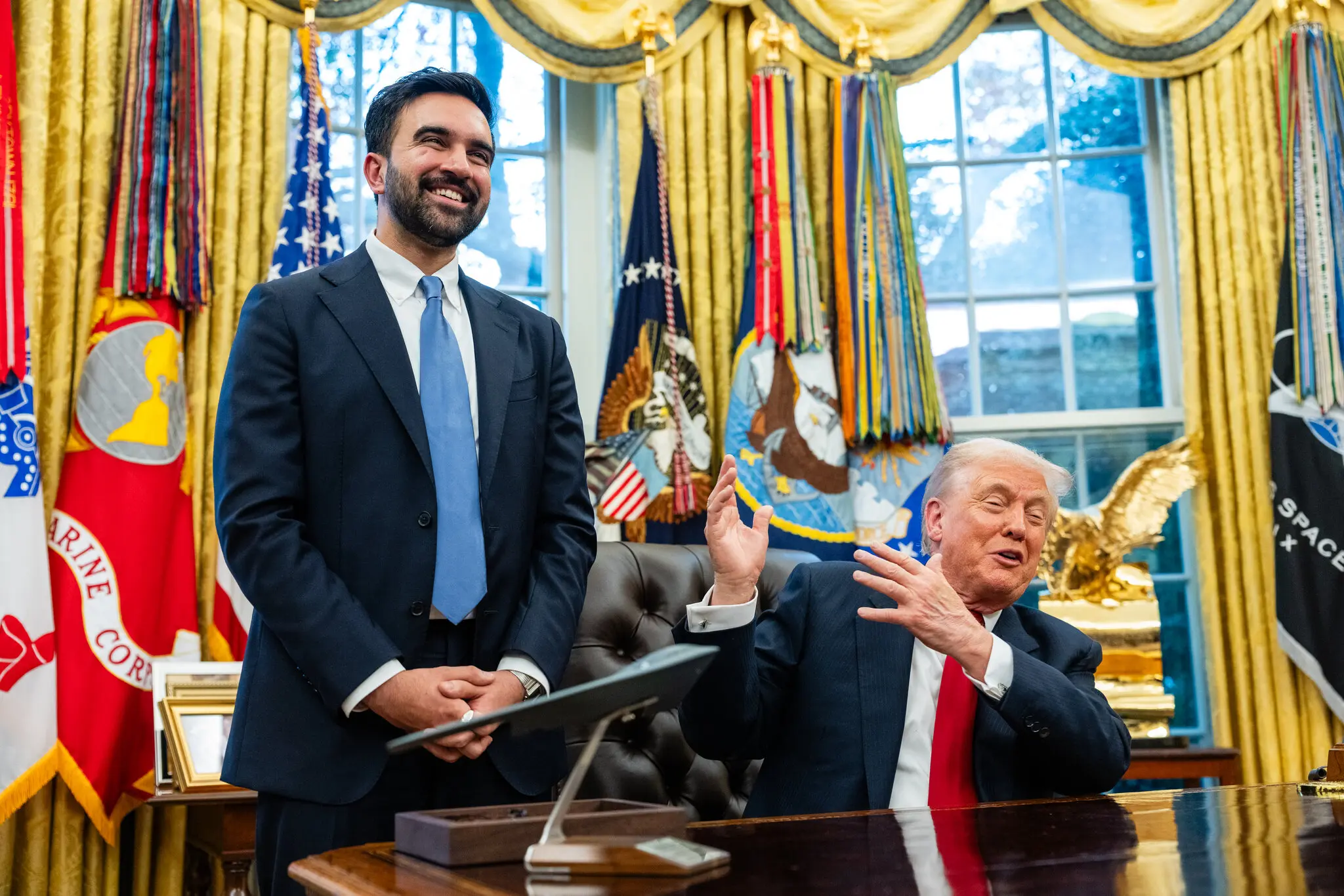
Trump–Mamdani Meeting: By TrenBuzz — a clear, step-by-step analysis of what Americans — from voters to policymakers — are watching after President Donald Trump met New York City mayor-elect Zohran Mamdani in the Oval Office.
Updated November 2025; reporting and quotes are drawn from major press coverage of the meeting.
Quick summary: the headlines everyone is reading
President Trump hosted New York City mayor-elect Zohran Mamdani on Nov. 21, 2025, and their public encounter was far warmer than many expected.
They signaled a willingness to work on shared priorities such as housing affordability, public safety and utilities, surprising observers across the political spectrum.
What does that mean for Americans? This piece walks through immediate political fallout, policy expectations, local and national signals, and what voters should watch next.
Each section uses short paragraphs so you can scan quickly and return to the parts that matter most to you.
1) Expect practical local cooperation — not a policy marriage
Many Americans will read the meeting as a pragmatic shift: two political opposites saying they’ll collaborate on concrete city problems.
That raises expectations for joint action on immediate issues like rent relief, energy costs and infrastructure for New Yorkers.
Practical cooperation is the low-bar outcome people expect first — symbolic photos in the Oval Office, then meetings between federal and city agencies.
If that cooperation yields tangible results (e.g., pressure on utilities or federal support for housing pilots), public approval could rise quickly.
2) Americans will test rhetoric against results
Voters across the country are used to photo-ops; they now want deliverables.
After months of heated rhetoric, many Americans expect measurable steps — not just warm words — as the ultimate proof of a real shift.
That means the public and press will watch the follow-up: federal letters, agency memos, grant filings, and concrete commitments from the White House and the mayor’s transition team.
If follow-up is slow or symbolic, skeptics will call the meeting a political theater move rather than a turning point.
3) Watch for a new playbook on urban politics
The meeting signals a possible new playbook where national figures — even political adversaries — coordinate on big city problems.
Americans who care about urban policy will be looking to see whether federal-city cooperation becomes a model for solving housing and cost-of-living crises.
If it works in New York, expect other big-city mayors and state governors to seek similar direct White House engagement, shifting the tone of municipal-federal relations.
That can change expectations nationwide about who gets to set city policy and how quickly federal agencies respond to local emergencies.
4) National political signals: a GOP tactic or a broader pivot?
Republican voters and some party strategists will watch closely to see whether Trump’s outreach is tactical or a broader attempt to neutralize criticism.
Some Americans — especially moderates — may view it as political triangulation meant to undercut Mamdani’s progressive base and win over city voters.
Progressives and Democratic voters will scrutinize Mamdani’s choices: will he keep campaign promises while engaging with a president many of his supporters distrust?
If Mamdani preserves his agenda after the meeting, his standing with progressives could remain intact; if not, he risks alienating his base.
5) Media and public expectations for accountability
Americans expect the press to hold both leaders accountable for the claims made during the meeting.
Major outlets will be looking for documentation: what was promised, timelines, and which agencies will act — and they will fact-check any grand claims on the spot.
This intense scrutiny means the meeting’s political capital is fragile: small missteps or contradictory statements can quickly turn goodwill into headlines about hypocrisy.
The public will expect transparent follow-up, or they will treat the event as another high-profile but empty political encounter.
6) Policy priorities Americans expect to see first
Housing affordability, energy/utility costs, and public-safety measures were front and center during the Oval Office appearance.
Residents of New York — and Americans watching urban policy — expect the first joint actions to target those areas with pilot programs or federal pressure on utilities.
If the White House and Mamdani can coordinate on utility rate relief or targeted housing funds, that will be the clearest indicator the meeting produced real policy outcomes.
Conversely, if the rhetoric does not lead to measurable interventions, public patience will fade quickly.
7) Political optics: bipartisanship or political theater?
Many Americans are hungry for bipartisanship, but they’re also skeptical after years of performative gestures.
A broad swath of voters will evaluate the meeting on whether it prioritizes residents over political advantage.
If the partnership starts producing visible wins (lowered energy bills, pilot housing programs), Americans will likely give both men credit.
If not, the meeting could be remembered as a photo opportunity that masked continuing partisan conflict.
8) What New Yorkers specifically expect next
New Yorkers expect urgency on cost of living and utilities, and they will watch municipal and federal agencies for concrete action.
Local constituencies — renters, transit riders and small business owners — will measure success by whether their bills or rents ease in the months after the meeting.
The mayor-elect’s base, including progressive groups, will expect Mamdani to protect their priorities while negotiating with the White House.
Americans outside New York will watch this local experiment as a test case for how federal help can be mobilized for cities.
9) Broader electoral implications Americans will be watching
The meeting could affect national narratives about the 2026 midterms and beyond — especially if it convinces swing voters that cross-party cooperation can work.
Americans will watch for quick wins as signals that the country might pivot from culture-war headlines toward kitchen-table issues that directly affect family budgets.
If the collaboration appears to disadvantages either political coalition, it can become a cudgel in election messaging from both parties.
Voters will interpret the meeting through their own political lenses, so the same events can be spun as progress or betrayal depending on who reports them and how.
How Americans can judge the meeting’s success — a short checklist
- Timeliness: Did federal agencies act quickly on simple, verifiable commitments?
- Transparency: Were memos, funding requests or interagency agreements produced and shared publicly?
- Impact: Do residents see lower utility bills, rent relief or expedited permits within months?
- Politics: Did Mamdani maintain his campaign priorities while negotiating?
If yes on these points, many Americans will judge the meeting a net positive; if not, they’ll mark it down as symbolic only.
Voices to watch — who will shape public expectations
- Local advocacy groups (tenant unions, energy consumer groups) will be the first to assess on-the-ground impacts.
- Federal agency officials — HUD, DOE and FEMA equivalents — will signal whether the White House is following through.
- Media fact-checkers and investigative reporters will track promises versus paperwork and hold leaders to account.
Those voices will collectively form the narrative Americans read and share, shaping whether the meeting becomes a model or a cautionary tale.
Citizens who follow those actors will be best positioned to judge whether the Oval Office encounter produced real results.
What foreign observers and business leaders are watching
International and business communities are also attentive: a model of federal-city cooperation could shape foreign investment and urban policy exchanges.
Business leaders want stability and quick fixes to infrastructure bottlenecks that affect commerce; they’ll watch for policy certainty.
If the White House leverages federal leverage to reduce energy costs or facilitate development, private sector actors may respond with new investments or public-private partnerships.
Americans interested in the economy will read those moves as an indicator of how governance can spur urban renewal.
Risks Americans are watching for
- Co-optation: Progressives fear Mamdani might be pressured into concessions that undercut campaign promises.
- Broken promises: If the White House offers symbolic gestures without resources, the meeting will be seen as empty optics.
- Backlash: Hardliners on both sides may use the meeting to inflame their bases if any perceived slight occurs.
These are the exact failure modes Americans will expect the press and civic groups to surface quickly — and they will shape voter memory far more than a single Oval Office handshake.
Successful follow-through will require communication, documentation and speed to avoid those risks.
Do you believe the Trump–Mamdani meeting will lead to real action for New Yorkers?
Bottom line: what Americans should watch for in the next 30 days
Look for interagency memos, federal funding moves, and public statements from HUD/DOE/HHS that memorialize any commitments.
If those documents and actions appear, the meeting will have produced substance; if not, expect growing skepticism from voters and the media.
Ultimately, Americans will judge the Oval Office encounter by its effects on people’s utility bills, rent, and day-to-day safety — not by photos or friendly words.
That practical metric is what will determine whether the Trump–Mamdani meeting becomes a model for future cross-party problem solving or another moment of political theater.
Disclaimer
This article is for informational purposes and reflects reporting available as of November 2025. It is not legal, financial, or political advice. Readers should consult primary documents and official statements for definitive details.