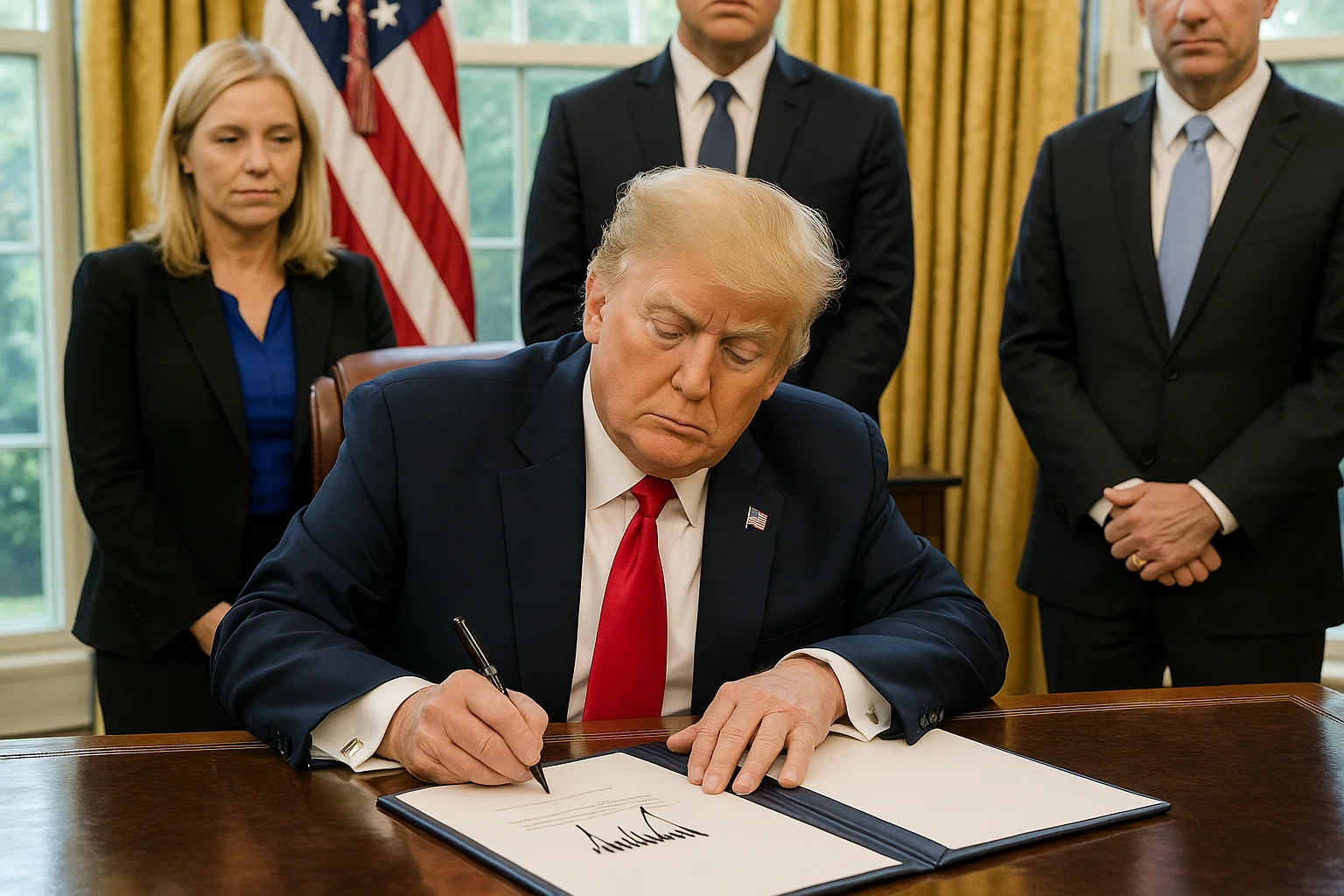
Trump to Sign “One Rule” Executive Order: President Donald Trump announced he will sign an executive order this week aiming to create a single, federal approach to artificial-intelligence oversight — a move he’s calling the “ONE RULE” plan.
The proposal is built around preempting a growing patchwork of state AI laws and streamlining approvals so companies face one national standard instead of 50 different regimes.
Below is a concise, reader-friendly explainer: what the order appears to do, why it matters to industry and states, legal and political roadblocks, likely next steps, and what users and businesses should watch.
What the announcement actually says (Trump to Sign “One Rule” Executive Order)
Trump says the executive order will centralise approval and oversight of AI tools under a federal framework described as “one rule.”
The White House pitches it as a way to preserve U.S. competitiveness by avoiding inconsistent state rules that, they say, stifle innovation.
Reporters say the order will aim to preempt state laws using federal legal authority and funding levers, though the White House hasn’t published final legal text yet.
Drafts seen earlier suggested measures ranging from lawsuits to withholding federal grants from states that adopt restrictive AI laws.
Why the White House is pushing this now
Tech firms and some GOP lawmakers argue a patchwork of state rules would raise compliance costs and slow U.S. AI progress versus global competitors.
Proponents frame federal preemption as a way to keep the U.S. market attractive to investors and researchers.
The administration also points to national-security arguments: consistent standards can speed safe deployment of AI across defense and critical infrastructure.
But speed and uniformity are the exact tradeoffs that spark most of the controversy.
What the order is reported to seek (practical measures)
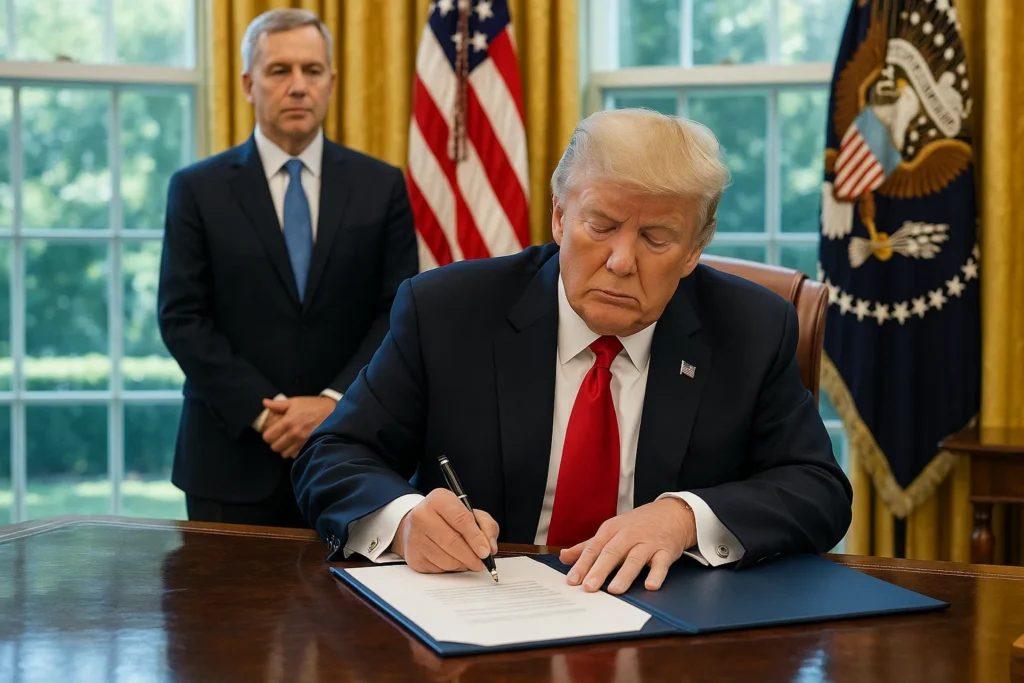
Journalists reporting on drafts say the order will: 1) assert federal primacy over state AI rules, 2) create an approval or notification regime for AI systems, and 3) deploy funding or legal channels to discourage conflicting state laws.
Those mechanisms could include conditioning federal grants and using executive-branch litigation where permissible.
Exact text matters: an executive order can direct agencies and define procurement rules, but it cannot by itself rewrite statutes or fully block state law without further legal backing.
That’s why legal scholars expect litigation — and why Congress remains a possible venue for a more durable national law.
How states and Congress are reacting (politics and friction)
Many state officials have pushed back, warning a federal preemption could prevent local protections and rapid responses to harms from AI.
Meanwhile, Republicans in Congress appear split: some want explicit preemption language, others worry federal overreach or the optics of siding with big tech.
Earlier this month, an effort to fold preemption into an unrelated bill stalled and sections proposing broad preemption faced bipartisan resistance in key committees.
That shows political momentum is uncertain — an executive order can move faster, but may not settle the long-term debate.
Legal limits: what an executive order can — and cannot — do
An executive order can direct federal agencies, procurement rules, and grant conditions, but it cannot unilaterally repeal state statutes.
If the order attempts to preempt state law broadly, expect immediate court challenges arguing the administration exceeded executive authority.
Courts will ask whether the federal government has a clear statutory basis to displace state regulation — a question that often decides preemption fights.
That’s why many observers expect a patchwork of legal fights if the order is signed in its most ambitious form.
Industry response — why Big Tech is watching closely
Major AI companies and investors broadly favour national standards to reduce compliance costs and legal uncertainty across states.
Executives at OpenAI, Google, Meta and leading VCs have publicly argued for federal coordination rather than divergent state-by-state rules.
But industry support is not monolithic: privacy advocates, civil-society groups and some labor organisations fear a single rule might prioritise corporate speed over safety and individual rights.
Civil-liberties groups have warned a weak federal floor could undercut stronger state protections for consumers.
National security, procurement, and “one rule” mechanics
A federal approval route can be anchored in procurement: companies must meet federal standards to win government contracts.
That gives the executive branch leverage, especially in defense and federally funded projects, but it won’t automatically affect purely private uses unless tied to broader regulatory requirements.
If the White House couples procurement rules with funding conditions for states, it can nudge state behaviour, but such conditionality too is legally vulnerable if viewed as coercive.
Expect careful legal drafting and likely court scrutiny about the line between persuasion and coercion.
What the rollout could look like — timelines and milestones
Short term: the executive order itself, press guidance, and an agency implementation timeline that may span months.
Medium term: agency rule-making or guidance, possible conditional funding announcements, and rapid legal reactions from states or advocates.
Long term: either congressional action to codify a national standard or a mosaic of judicial rulings that define scope and limits of federal preemption.
If Congress fails to act, expect recurring litigation and regulatory whiplash as administrations change.
Practical implications for companies, researchers and users
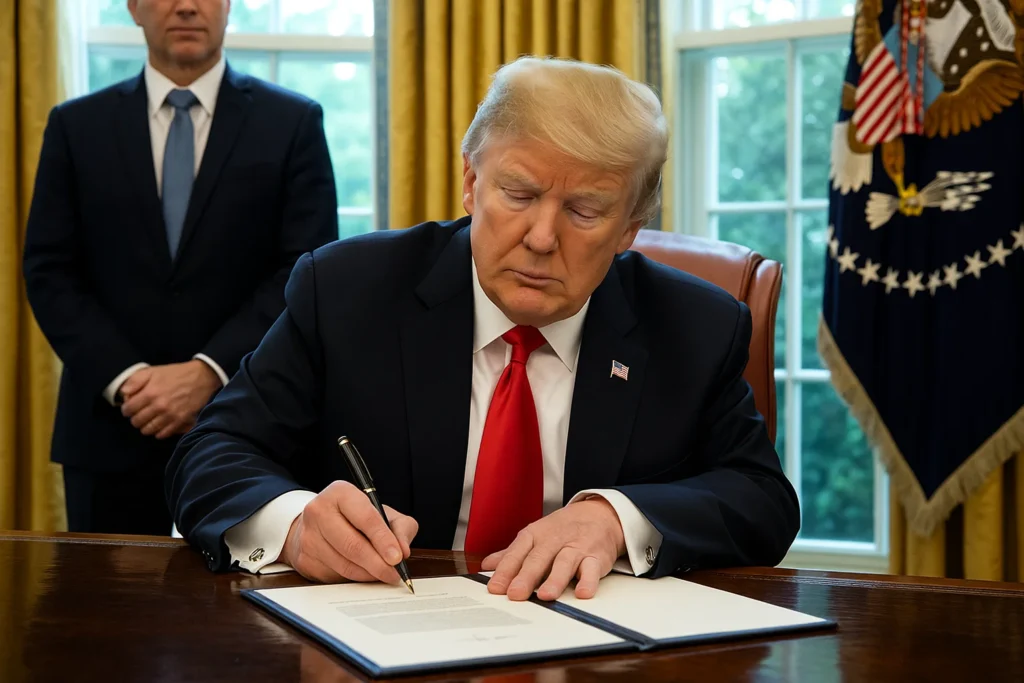
Companies: prepare for faster federal approval lanes but also for litigation risk and shifting compliance obligations.
Researchers: the order may expand or restrict data-access channels depending on how agencies interpret transparency and security provisions.
Consumers: short-term promises of national clarity could reduce product fragmentation, but protections for bias, privacy, and safety will hinge on the strength of the rule.
If you care about privacy or algorithmic fairness, watch both the order’s text and the follow-on agency rules closely.
How this fits into the global picture
The U.S. is competing with the EU’s DSA/AI Act approach and China’s state-led controls; a single U.S. rule aims to keep American firms nimble globally.
But global partners are watching whether U.S. policy emphasises competitiveness over safeguards — an outcome that will affect trade, interoperability, and cross-border data flows.
International alignment is hard when legal philosophies diverge: expect diplomatic discussions as the U.S. seeks to avoid regulatory fragmentation abroad as well.
Companies with global footprints must design for multiple standards unless a broad international convergence emerges — which is unlikely in the short term.
Five things to watch in the next 30 days
- The final text of the executive order — that will show real tools and limits.
- Which federal agencies get implementation authority and the deadlines they receive.
- Official state reactions and any immediate lawsuits filed by states or advocacy groups.
- Industry statements about compliance costs, timelines and product roadmaps.
- Congressional responses — whether lawmakers try to codify, block, or replace the executive action.
Do you support a single federal “one rule” for AI, or prefer state-level standards?
Bottom line — a measured view
The “ONE RULE” executive order would be a fast, high-impact attempt to centralise AI oversight and cut compliance complexity for firms.
But it will almost certainly produce legal challenges and sharp political pushback because it touches states’ rights, safety safeguards, and how the U.S. balances innovation with public protection.
Watch the exact wording: the power of an executive order lies in the legal levers it instructs agencies to pull — and those levers will determine whether “one rule” becomes a durable system or a flashpoint lawsuit.
Disclaimer: This article summarises reporting available as of the publish date and is for informational purposes only.
It is not legal advice — consult the official executive-order text and qualified counsel for specific legal interpretations.