
Key Points
- Reports say the U.S. asked Iran to halt uranium enrichment for 20 years during talks in Islamabad, along with exporting enriched uranium and allowing free passage through the Strait of Hormuz.
- The reported offer also included ending attacks and releasing part of Iran’s frozen funds, according to the same report citing Israeli media.
- Reuters later reported that Iran has indicated it may turn over its enriched uranium, but the White House said details were still limited and no final agreement had been reached.
- Talks in Pakistan ended without a deal, with U.S. and Iranian officials still sharply divided on nuclear terms, sanctions relief, and regional security demands.
The latest Iran nuclear headline is stirring debate far beyond the negotiating room. According to TRT World, citing Israeli media reports, the United States asked Iran to freeze uranium enrichment for 20 years during talks held in Pakistan. The reported U.S. proposal also called for Tehran to export its enriched uranium, keep the Strait of Hormuz open without fees, and accept broader ceasefire terms.
That is a sweeping demand, and it shows how far apart both sides remain. Reuters reported that when U.S. and Iranian officials met in Islamabad, the talks were high-level, tense, and unresolved. The U.S. delegation, including Vice President JD Vance and special envoy Steve Witkoff, met Iranian officials for hours, but the negotiations ended without a breakthrough.
For Iran, enrichment is not just a technical issue. It is a red line tied to sovereignty, deterrence, and bargaining power. Reuters reported that Washington’s minimum goal is to stop Iran from developing an atomic bomb, while Tehran continues to insist its nuclear program is peaceful. The same Reuters report said mutual distrust remains high, with Iranian officials entering the process “with maximum caution.”
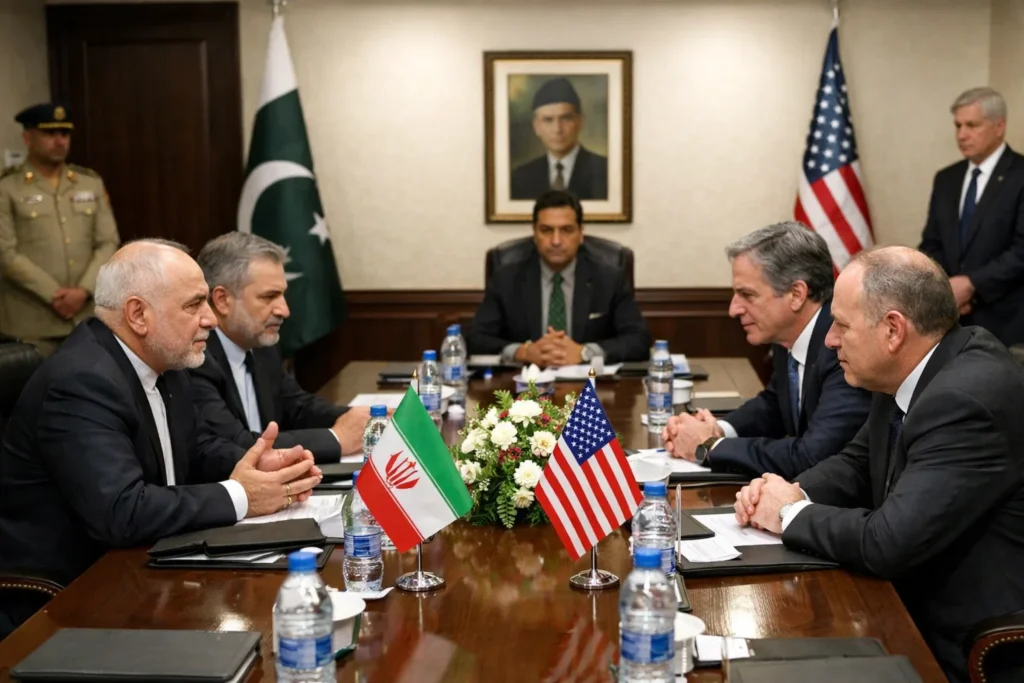
The 20-year freeze, if accurate, is especially significant because it goes far beyond a temporary pause. It would amount to a long-term cap on one of the most sensitive parts of Iran’s nuclear program. That kind of demand is likely meant to create a durable security buffer, but it also raises the political cost for Tehran, which would need to justify such a concession at home. This is an inference based on the reported terms and the public positions of both governments.
There is also a financial angle. Reuters reported that before the talks, a senior Iranian source said the U.S. had agreed to release frozen assets held in Qatar and other foreign banks, though a U.S. official denied that claim. That gap alone shows how fragile the process is: even the basic contours of a deal are still being disputed in public.
Then came another signal from Washington. Reuters reported that the White House said Iran had indicated it would turn over its enriched uranium stockpiles, describing that as one of President Donald Trump’s main priorities. But the same report made clear that details were not provided, and Defense Secretary Pete Hegseth warned the U.S. still reserved the right to strike again if needed.
U.S. Asked Iran to Freeze Uranium: For readers trying to separate signal from noise, the takeaway is simple: this is not a finished deal. It is a high-stakes bargaining phase where nuclear limits, frozen assets, shipping lanes, and military threats are all being traded against one another. Whether the 20-year freeze becomes a real proposal or just another reported demand, it shows how much is on the table in the U.S.-Iran confrontation.