Published by TrenBuzz.com | April 13, 2026
Key Points at a Glance
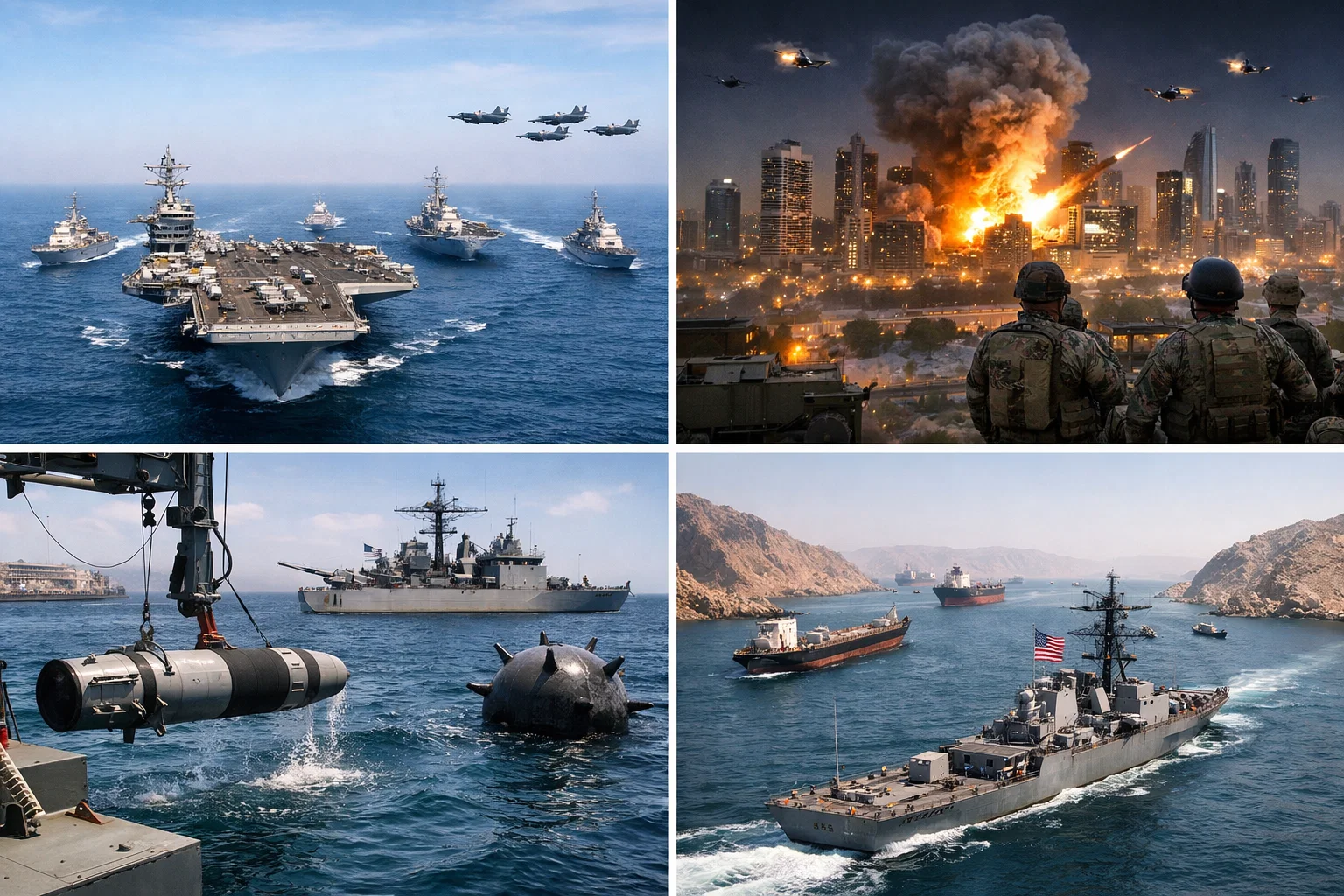
- After peace talks in Islamabad collapsed, Trump ordered the US Navy to blockade all ships entering or leaving Iranian ports effective April 13, 2026.
- The blockade targets Iranian ports on both the Arabian Gulf and Gulf of Oman — and will interdict every vessel that has paid a toll to Iran.
- Gulf states — UAE, Saudi Arabia, Kuwait, and Bahrain — are privately urging Trump to “finish the job” and decisively defeat Iran.
- The UAE has faced over 2,300 Iranian missile and drone strikes and is pushing hardest for a ground invasion.
- The US Navy needs two carrier strike groups + 12+ surface ships outside the Gulf and at least 6 destroyers inside to enforce the blockade.
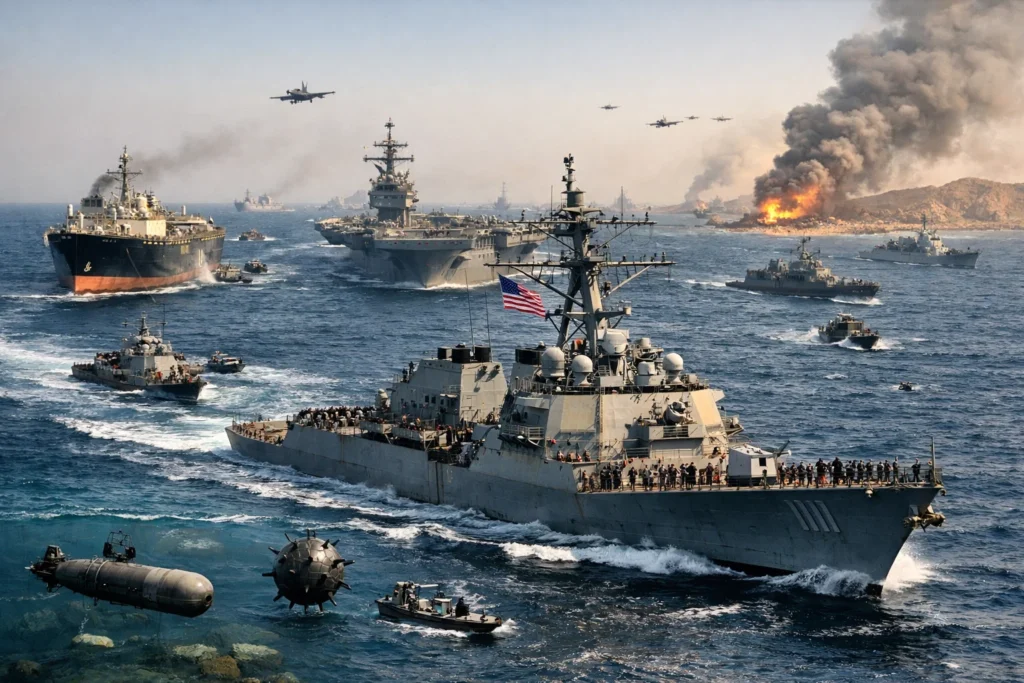
- Iran has laid mines in the Strait of Hormuz — US underwater drones and allied minesweepers are being deployed.
- Oil prices have surged past $100 per barrel again following the blockade announcement.
- The Strait of Hormuz carries roughly 20–25% of the world’s seaborne oil trade.
The Iran war just crossed a new and dangerous threshold — and the Gulf states are telling Washington: don’t stop now.
Following the failure of peace talks in Pakistan, President Trump announced: “Effective immediately, the United States Navy, the Finest in the World, will begin the process of BLOCKADING any and all Ships trying to enter, or leave, the Strait of Hormuz.”
Why Gulf States Are Cheering — Not Fearing — the Escalation
Saudi Arabia, the United Arab Emirates and other Gulf allies of the United States are urging President Trump to keep prosecuting his war against Iran, saying a month of strikes has not weakened Tehran enough.
The UAE has emerged as perhaps the most hawkish of the Gulf countries, pushing hard for Trump to order a ground invasion. Kuwait and Bahrain also favor this option. The UAE, which has faced more than 2,300 missile and drone attacks from Iran, has only grown more irritated as the war grinds on.
Saudi Arabia has argued to the US that ending the war now won’t produce a “good deal.” The Saudis say a war settlement must neutralize Iran’s nuclear program, destroy its ballistic missile capabilities, end Tehran’s support for proxy groups, and ensure the Strait of Hormuz cannot be effectively shut down again.
Trump told reporters: “Saudi Arabia’s fighting back hard. Qatar is fighting back. UAE is fighting back. Kuwait’s fighting back. Bahrain’s fighting back. They’re all fighting back.”
What the US Navy Blockade Actually Means
The blockade will be enforced impartially against vessels of all nations entering or departing Iranian ports and coastal areas, including all Iranian ports on the Arabian Gulf and Gulf of Oman. CENTCOM forces will not impede freedom of navigation for vessels transiting the Strait of Hormuz to and from non-Iranian ports.
Trump also announced that the US Navy will “seek and interdict every vessel in International Waters that has paid a toll to Iran,” calling Iran’s toll strategy “world extortion.”
The Mine Problem — How the Navy Plans to Clear Hormuz
Shortly after the war began, Iran had begun laying mines in the Hormuz Strait. Mines are countered in two key ways — sweeping and hunting. For moored mines, sweeping uses mechanisms that cut cables attaching them to the sea floor. For bottom mines, minesweeping ships tow gear that mimics the acoustic, electrical, or magnetic signatures of ships to detonate them safely.
However, some advanced mines have counters that will let a certain number of ships pass before detonating, making it “very difficult to determine if all the mines in a minefield have been detonated or otherwise neutralized,” said former US Navy Captain Carl Schuster.
Analysts said Washington may have to look outside its own ranks for thorough mine-sweeping. “This is an area in which the US Navy would probably rely on allies and partners more than one would assume,” said King’s College London professor Alessio Patalano.
The Firepower Required — A Military Breakdown
Retired US Navy Admiral James Stavridis said the Pentagon would need two aircraft carrier strike groups and about a dozen surface ships outside the Gulf, plus at least six US destroyers inside the Gulf, along with help from UAE and Saudi Arabian navies. “You want to try to bottle it up on both sides,” he said.
A former South Korean submarine officer called the blockade “high risk,” warning that if Iran accepts it as a violation of its sovereignty, “the possibility of a local military conflict could increase significantly.”
The Global Economic Shockwave
Oil prices topped $100 a barrel again after the blockade announcement. The Asian Development Bank predicted that growth in the Asia-Pacific region would slow to 5.1% in 2026, calling the Middle East conflict “the single biggest risk to the region’s outlook.”
The Strait of Hormuz carries around 20% of the world’s oil consumption, with the vast majority of crude ending up in Asia, which is heavily reliant on Gulf imports.
US Navy Blockade of Iran: The world is watching a 34-kilometer stretch of water — and what happens there in the coming days could reshape global energy markets, Middle East alliances, and the trajectory of Trump’s second term all at once.
Disclaimer: This article is for general informational and news reporting purposes only. All quotes, military assessments, and economic data referenced are based on publicly available and credible news sources as of April 13, 2026. TrenBuzz.com does not represent any government or military body. Readers are advised to follow official government and credible international news sources for real-time developments.