
Key points
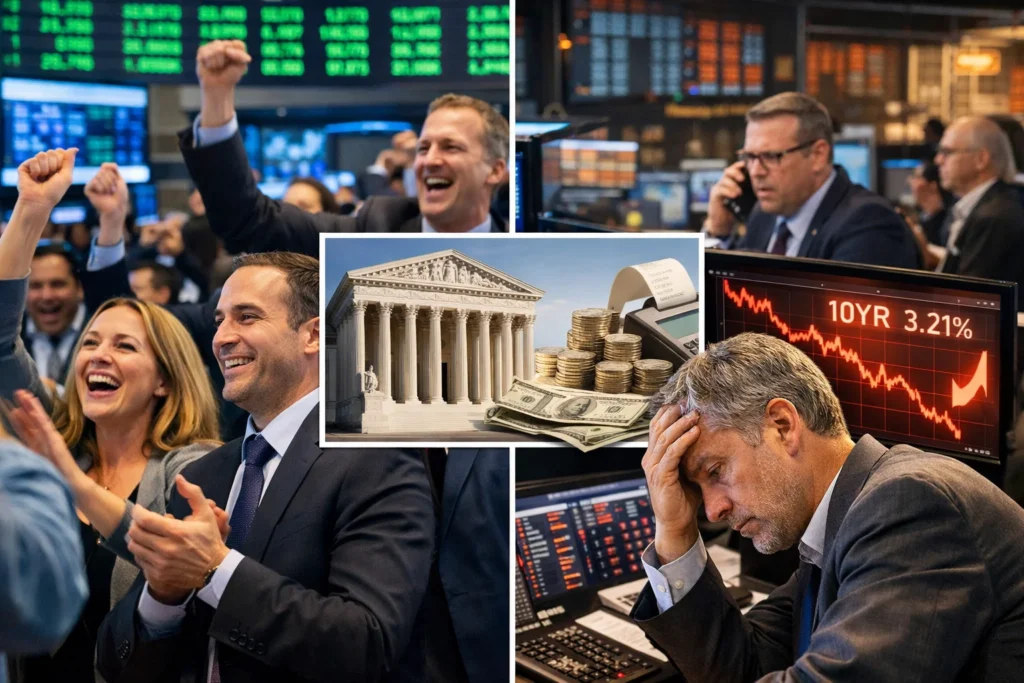
- The Supreme Court’s decision to strike down the administration’s emergency-based global tariffs pushed Treasury yields higher and prices lower as markets digested the fiscal and policy fallout.
- Investors fear the ruling could force billions in tariff refunds and widen budget deficits, lifting long-term yields; Penn-Wharton estimates more than $175 billion in revenue could be at risk.
- The 10-year Treasury yield jumped after the ruling, reflecting higher expected supply and longer-run fiscal risk; the move was felt across the curve but was largest at the long end.
- Stocks broadly rose (retail and consumer sectors cheered), but bond traders sold first and asked questions later — a classic “risk re-price” where equities and fixed income diverged.
What happened — US treasuries fall
The U.S. Supreme Court struck down the broad tariffs imposed under the administration’s emergency authority, ruling that the law used didn’t give the president the power to levy economy-wide import duties. Traders immediately re-priced the outlook: if those tariffs are invalidated, previously collected duties may need to be refunded and future tariff revenue is uncertain — both of which can increase federal borrowing needs and push Treasury yields up.
The immediate market reaction was classic: bond yields rose (prices fell) as investors demanded higher compensation for added fiscal and refund risk, while many equities — especially retailers and import-heavy sectors — rallied on the prospect of lower import costs going forward. Short-term volatility followed as money managers and dealers recalibrated balance-sheet assumptions.
Why bonds dropped (simple explanation)
- Refund risk = fiscal pressure. If sizable tariffs collected this year are later found unlawful, the government may have to refund importers — a cash outflow that worsens the fiscal picture and could raise the size of future Treasury issuance. Penn-Wharton’s early estimate flagged more than $175 billion potentially exposed, a number that traders found meaningful.
- Higher future issuance. More refunds or permanently lower tariff receipts both point toward larger or more persistent deficits, increasing the expected supply of Treasuries. More supply → yields up (prices down).
- Policy uncertainty. The ruling narrows an executive tool for trade policy but opens alternative paths (Congressional fixes, new statutory invokes) that could create fiscal and trade noise — investors dislike uncertainty and price it into yields.
Market moves to watch (how to read the tape)
- 10-year Treasury yield: the bellwether — follow it for direction on mortgage rates, corporate borrowing costs and broader risk appetite. Expect larger intraday swings as refund guidance and agency commentary arrive.
- Curve steepness: watch the 2s-10s spread. A steeper curve would signal higher long-run inflation/fiscal risk expectations; flattening would suggest growth concerns dominate.
- TIPS breakevens: inflation expectations embedded in TIPS vs. nominal yields show whether investors expect tariff-driven price effects or longer-run fiscal inflation.
- Credit spreads: widening corporate spreads would indicate risk-off contagion from the bond move; tightening in consumer retail names suggests sectoral winners from lower import barriers.
Practical guidance for different readers
For bond investors / portfolio managers
- Re-check duration exposure. A sudden increase in yields penalizes long-duration holdings most — trimming duration or hedging with futures/options could be prudent in a volatile window.
- Monitor agency guidance on refunds and likelihood of Treasury issuance; trading fast around official announcements is often rewarded.
For corporates and treasurers
- Liquidity planning matters. If Treasury yields and borrowing costs rise, your refinancing and commercial paper programs could become more expensive — accelerate or hedge planned issuance where sensible.
- Import-dependent firms: prepare for margin improvements in imports (retail, apparel), but also for FX and funding volatility that can affect working capital.
For everyday readers/consumers
- Housing and loan rates: higher long-term yields can translate into slightly higher mortgage rates if the move persists. Don’t overreact, but if you’re planning to lock a mortgage soon, get multiple quotes.
- Retail prices: sectors that benefited from tariffs (apparel, electronics) may see price relief over time, but pass-through to consumers isn’t immediate.
Policy and central-bank angle
The ruling complicates the macro picture the Federal Reserve watches: a fiscal shock (refunds or higher borrowing) can add inflationary pressure or crowding-out risks. While the Fed doesn’t set fiscal policy, higher expected deficits and a bump in yields feed into the policy calculus about the neutral rate and the timing of rate cuts. Expect Fed watchers to parse the data (inflation, payrolls, growth) more closely in the coming weeks to decide whether higher yields reflect transitory adjustments or a sustained rise in inflation/fiscal risk.
What to watch next — quick timeline
- Days: Treasury and Commerce guidance on how to treat previously paid tariffs and any administrative refund rules.
- Weeks: Litigation and refund claims may start piling up; specialized legal filings will shape market expectations about the size and timing of payouts.
- Months: Congressional reactions — either to codify tariff authority or to constrain executive emergency powers — will determine the medium-term trade/fiscal framework.
Bottom line
Friday’s Supreme Court decision removed an executive-level trade instrument but added a layer of fiscal and market uncertainty: bond investors sold first, sending Treasury yields upward on concerns about refund liabilities and higher future issuance. Stocks and specific sectors reacted positively to lower trade barriers, but the bond move underscores a simple fact: legal rulings that affect government revenue can have immediate and material consequences for borrowing costs and financial markets. Watch official Treasury guidance and Penn-Wharton/agency estimates — those numbers will drive the next leg of the market re-price.