
A federal bribery and conspiracy indictment that shadowed Rep. Henry Cuellar’s career suddenly closed this week when former President Donald Trump issued a full pardon for Cuellar and his wife.
The announcement on Dec. 3, 2025, immediately reshaped legal, political and ethical debates in Washington.
This article walks readers through the charges, the pardon language, political reactions, practical consequences for Cuellar’s House service, and the larger questions the move raises — step by step.
We keep each point short and practical so you can follow what matters most.
What Cuellar was indicted for — the basics
Federal prosecutors unsealed a 2024 indictment accusing Representative Cuellar and his wife of accepting roughly $600,000 in money and benefits.
The charges included bribery, money laundering and unlawful foreign-agent activity tied to an Azerbaijani energy firm and a Mexican bank.
Cuellar publicly denied wrongdoing after the indictment and said he would fight the accusations in court.
The case was scheduled to proceed toward trial before the pardon was announced.
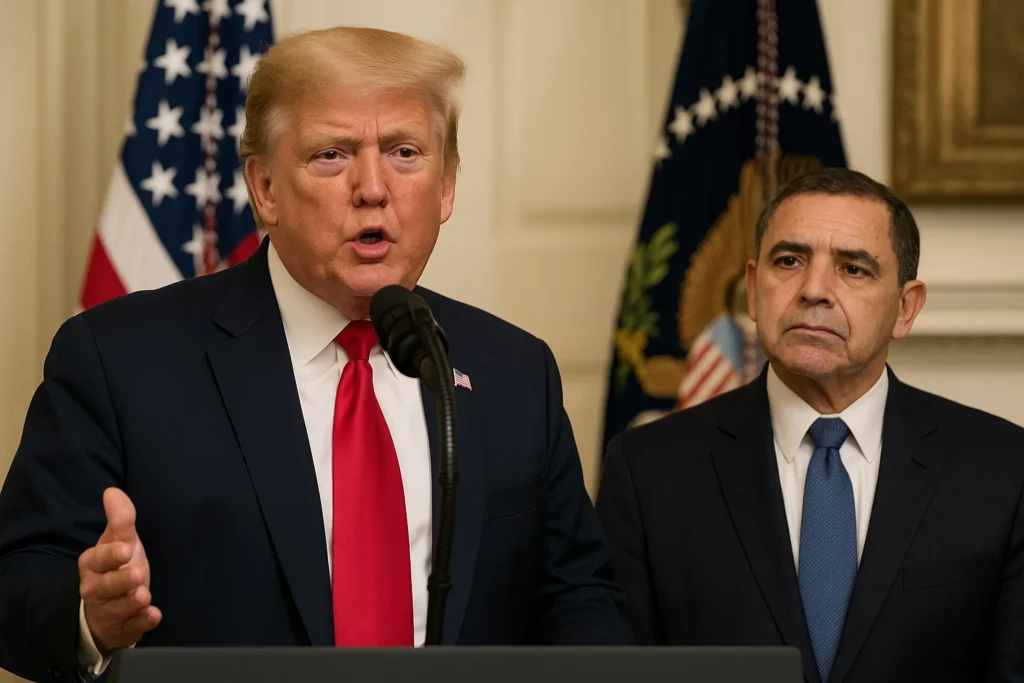
What Trump said and why he pardoned them
Trump framed the pardon as correcting a politically “weaponized” Justice Department, saying Cuellar was targeted for his public criticism of the Biden administration’s border policies.
The pardon statement cited Cuellar’s oppositional stance on immigration as a reason for executive clemency.
A presidential pardon restores federal civil rights and prevents federal prosecution on the pardoned offenses going forward.
But a pardon does not erase public controversy or halt related congressional inquiries.
Immediate political fallout on both sides
Democrats were split: some expressed relief while others warned that accepting a pardon raises ethical and reputational questions.
House leaders emphasized the ongoing need for congressional oversight and the separate role of the House Ethics Committee.
Republicans applauded the pardon as a check against prosecutorial overreach and highlighted Cuellar’s conservative votes on some border and defense issues.
The pardon also intensified debate about selective clemency and the political calculus for future presidents.
Legal technicalities — what the pardon does and does not do
The presidential pardon is federal and clears Cuellar of the specific federal charges covered by the document.
It does not vacate any state charges (if they existed) and does not prevent Congressional investigations, ethics reviews, or censure procedures.
Additionally, a pardon does not legally equate to exoneration; it is an act of clemency — not a judicial finding of innocence.
For many observers, the distinction matters politically even if it ends the criminal case.
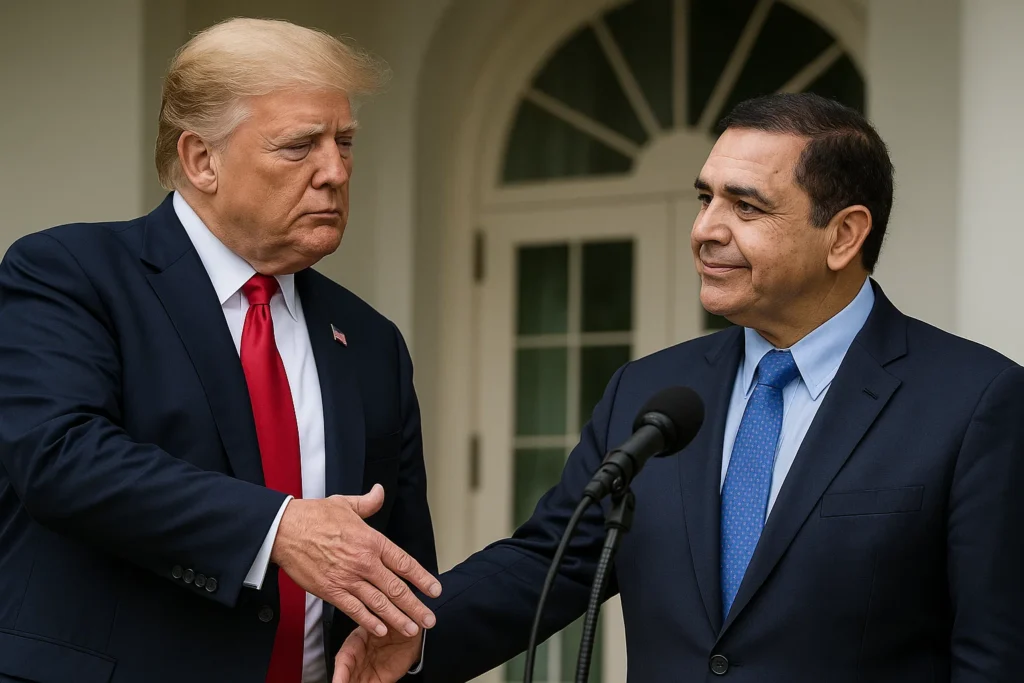
What this means for Cuellar’s House role and re-election plans
Cuellar filed for re-election shortly after the pardon, signalling his intent to remain in Congress and continue representing his South Texas district.
The pardon removes the immediate criminal cloud, but the House Ethics Committee and local political dynamics will shape his next months.
His future committee assignments, fundraising, and support among Democrats may hinge on ethics findings and how constituents react.
Even cleared of federal prosecution, political vulnerability can persist in closely watched districts.
Broader implications — precedent and power
This pardon follows a pattern of controversial clemencies that critics say reward allies or settle political debts.
Supporters argue clemency can correct injustices; detractors warn it can undermine trust in nonpartisan law enforcement.
The Cuellar case will likely be cited in future debates about limits on presidential pardon power and whether additional statutory guardrails are needed.
Expect renewed legislative and scholarly attention to clemency norms and DOJ independence.
How to follow further developments (practical tips)
- Watch for official filings from the House Ethics Committee and any related congressional letters.
- Track Cuellar’s public statements and local town halls to see how he addresses constituents’ concerns.
- Note any new reporting from major outlets — Reuters, AP, Texas Tribune — for updates on political and legal next steps.
How experts are reacting — short takes
Constitutional scholars stress the pardon is lawful but politically fraught, and ethics experts recommend transparent congressional reviews to restore public confidence.
Criminal-justice reform advocates say clemency should be used sparingly and with clear criteria to avoid perceptions of favoritism.
Which Steve Cropper recording means the most to you?
Bottom line
The Henry Cuellar pardon clears a high-profile federal case quickly, but it does not erase political controversy or stop congressional oversight.
How the story settles will depend more on ethics reviews, constituent reaction, and the next campaign cycle than on the criminal docket.
Disclaimer: This article summarises reporting and public documents available at the update time and is for informational purposes only.
It is not legal advice; for authoritative guidance consult official filings, congressional statements, or a qualified attorney.