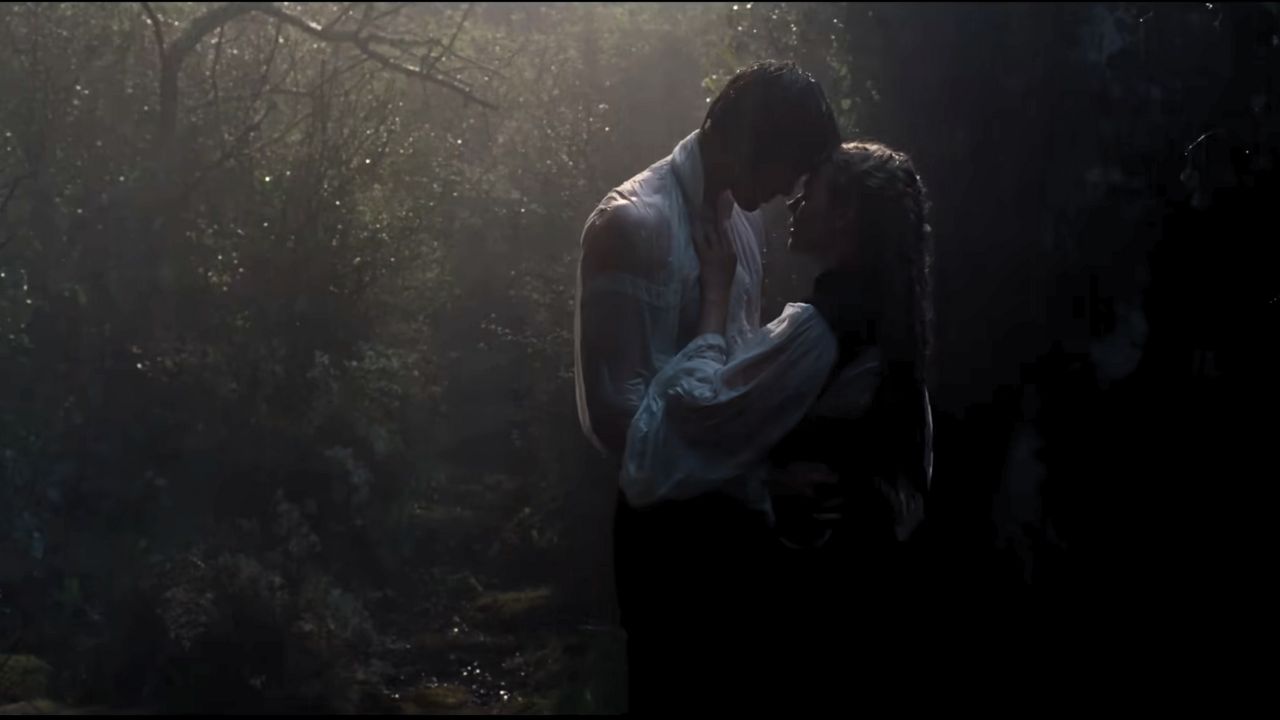
Wuthering Heights 2026 — this TrenBuzz feature brings together the confirmed facts, the trailer takeaways, production context, casting conversation (including Margot Robbie’s role), and a clear guide for readers who want to follow the film from teaser to opening night.
Quick headline: the one-line news
Emerald Fennell’s new adaptation of Wuthering Heights, starring and produced by Margot Robbie (with Jacob Elordi as Heathcliff), has a trailer out and is scheduled for an early-February 2026 theatrical release — a bold, modern take that’s already igniting debate.
1 — Why this adaptation matters
Wuthering Heights is one of the great Gothic love stories in English literature, and any major screen adaptation invites scrutiny: will it honor Emily Brontë’s emotional brutality, or will it soften the book’s revenge-and-ruin core for mainstream audiences?
Emerald Fennell’s name on the project — fresh from provocative work like Promising Young Woman and Saltburn — signals that this will not be a gentle, museum-piece version. Expect stylistic choices that push at the edges of the text.
2 — Who’s making it (creative leads)
Emerald Fennell wrote and directed the film; Margot Robbie produces through LuckyChap, and Warner Bros. Pictures is handling distribution in major markets. That combination — an auteur director plus a commercially savvy producer-star — explains both the bold marketing and the decision to aim for a big theatrical window.
3 — The confirmed release plan
Warner Bros. has scheduled the film to open in the U.K. and U.S. around Valentine’s Day week 2026 (early-to-mid February), positioning it as a high-profile awards-season-adjacent release that also targets couples and cinephiles alike. The studio’s date choice is intentional: a gothic romance on or near Valentine’s Day tends to drive conversation.
4 — Margot Robbie’s role — star and producer
Margot Robbie plays Catherine Earnshaw and is a producer on the project through LuckyChap Entertainment. Her producing credit and public promotion suggest she’s been deeply involved in the creative direction, marketing strategy, and casting choices. Robbie’s involvement gives the film star power and a clear link to contemporary indie-style branding.
5 — Jacob Elordi as Heathcliff — a new interpretation
Jacob Elordi has been cast as Heathcliff. He previously collaborated with Fennell on Saltburn, and his casting signals a continued working relationship that the director values. Expect a Heathcliff shaped by Fennell’s taste for intensity and ambiguous charm rather than a strictly period-bound portrayal.

6 — The trailer: tone and the visual shorthand
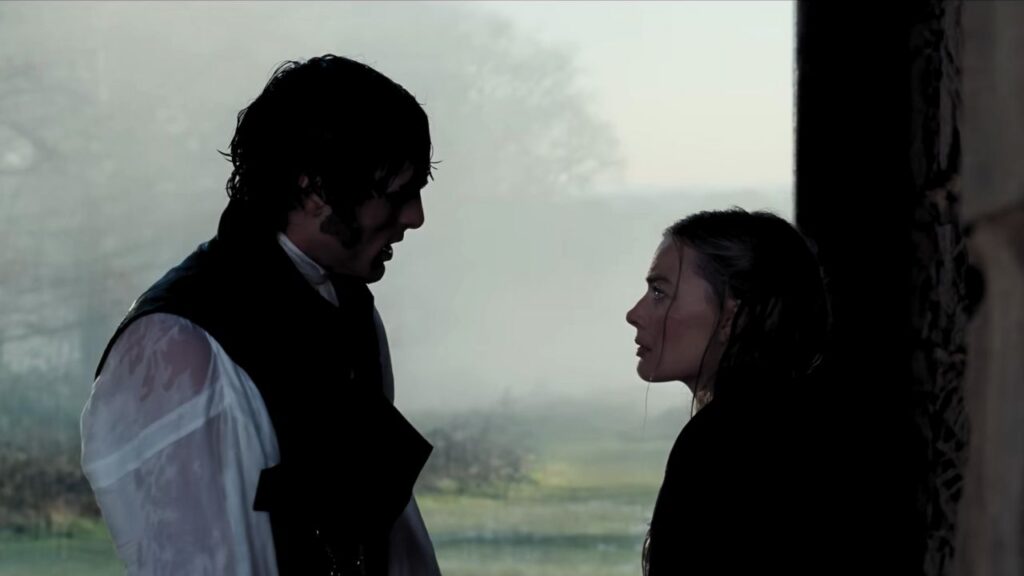
The first trailer leans into atmosphere: wide, windblown moors; close-ups that linger on emotional rupture; and modern sound-design choices that pull the viewer into the characters’ psychic states. Costume moments — including an ornate Victorian wedding dress — are juxtaposed with a contemporary musical sensibility that makes the film feel both classic and immediate.
7 — What the trailer reveals (spoiler-light)
You’ll see the magnetic, destructive chemistry between Catherine and Heathcliff teased early. The trailer emphasizes the story’s emotional extremities — jealousy, class rage, and obsession — without giving away plot reversals. It’s more mood piece than plot synopsis, which is what modern studios often do for prestigious adaptations.
8 — Soundtrack and vibe: modern beats meet classic misery
Reports and promotional material note a contemporary soundtrack presence — including modern pop and atmospheric tracks — layered over period visuals. That mash-up creates cognitive friction: the viewer hears now while seeing then, a technique that can amplify the text’s timeless emotional core or, depending on taste, feel dissonant. Expect music to play a big role in shaping the film’s identity.
9 — Casting controversy (race, age, and historic context)
Casting Heathcliff has always been politically freighted: the novel implies Heathcliff is of ambiguous origin (often read as Romany, Black, or otherwise “other” in Victorian Britain), and many readers argue that whitewashing erases that crucial social element.
Some critics and commentators questioned the choice of Elordi (a white Australian actor), while defenders pointed to directorial interpretation and the idea that adaptations need not be literal reproductions of textual race markers. The debate is part artistic, part political — and will shape how audiences receive the movie.
10 — Past adaptations: where this one sits in the lineage
Screen versions of Wuthering Heights have ranged from classic 1939 dramatisations to Andrea Arnold’s 2011 raw, earthy reimagining. Each adaptation highlights different aspects: romance, social commentary, or primal violence.
Fennell’s film looks poised to join the line of bold reinterpretations rather than gentle restorations. That inheritance matters because every new film inevitably answers (or rejects) choices made by previous filmmakers.
11 — Production design and cinematography clues
Early stills and the trailer point to high-production values: expressive, often harsh natural light on the moors; intimate interiors that feel both claustrophobic and theatrical; and a color palette that moves between muted Victorian browns and moments of saturated emotional red. Cinematographer Linus Sandgren is credited, and viewers familiar with his work can expect a modern, highly composed visual language.
12 — Who else is in the cast (supporting players to watch)
Beyond Robbie and Elordi, the film includes Hong Chau, Shazad Latif, Alison Oliver and Martin Clunes in supporting roles. Those names suggest Fennell assembled a mix of experienced character actors and rising talent to populate the circle around Catherine and Heathcliff. That mix is important — strong supporting performances often carry the moral and social frame of Brontë’s novel.
13 — How to approach the film as a viewer
Come prepared to be provoked. Go in curious about how the director reframes themes of class, gender and otherness.
If you love the novel and want literal fidelity, brace for adaptation choices; if you enjoy bold reinterpretations, prepare to be surprised. In either case, pay attention to small production cues — music, editing rhythm, and how the film stages the moors — because that’s where Fennell will signal her core argument about the story.
Marketing and awards strategy — what the studio seems to be doing
Choosing an early-February release does two things: it captures Valentine’s-adjacent audiences and places the film close enough to awards season to stay in awards conversations without being buried in December releases. Expect targeted festival play and an awards campaign that emphasizes its director, lead performance, cinematography and production design.
Practical viewing tips for November–February
- Watch the trailer once to get visual anchors, then again to spot small details.
- If you haven’t read the novel recently, revisit key scenes — the Earnshaw household’s arrival of Heathcliff, Cathy’s emotional rupture, and the later generational fallouts. The film will likely compress and reassign moments.
- For family viewing, note that Wuthering Heights is emotionally intense and deals with abuse and obsession; prepare accordingly.
Final briefly: what to expect when the film opens
Expect passionate responses. This movie has everything that drives strong reactions: a beloved canonical text, a provocative director, a high-profile star-producer, and a trailer that promises intensity. Whether it becomes a cherished new reading of Brontë’s novel or a divisive provocation depends on how audiences judge fidelity, tone and moral weight.
TrenBuzz editorial note & disclaimer
This article synthesizes verified reports and studio announcements current as of November 2025. It is not a review of the finished film. Release schedules and cast credits are subject to official studio confirmation and may be updated.