Published by TrenBuzz.com | May 8, 2026
Key Points at a Glance – Trade Court Strikes Down Trump Replacement Global Tariffs
- A split 2-1 three-judge panel of the US Court of International Trade in New York ruled Thursday that Trump’s 10% global tariff is “invalid and unauthorized by law.”
- This is Trump’s third major tariff legal defeat — after the Supreme Court struck down his IEEPA tariffs on February 28, 2026 and the Federal Circuit ruled against his reciprocal tariffs in August 2025.
- The court found Trump overstepped the tariff authority that Congress delegated to the president.
- The tariff was Trump’s replacement measure — imposed after the Supreme Court struck down his broader “Liberation Day” IEEPA tariffs.
- Small businesses were the plaintiffs in this case — filing suit after the 10% global tariff replaced the invalidated levies.
- The Trump administration is expected to appeal immediately — and plans to replace these tariffs using new Section 232 investigations into overproduction by China, the EU, Japan, and 13 other trading partners.
- Markets rose on the ruling — Dow futures gained 215 points.
- The US Constitution gives Congress the power to impose tariffs — presidents can only act when Congress delegates that power, and courts have now ruled three times that the delegation doesn’t cover Trump’s broad scope.
- The ruling does not affect Section 232 tariffs on steel, aluminum, and autos — those remain in full force.
Three courts. Three rulings. Three times the judiciary has told President Trump the same thing: you do not have the legal authority to do this.
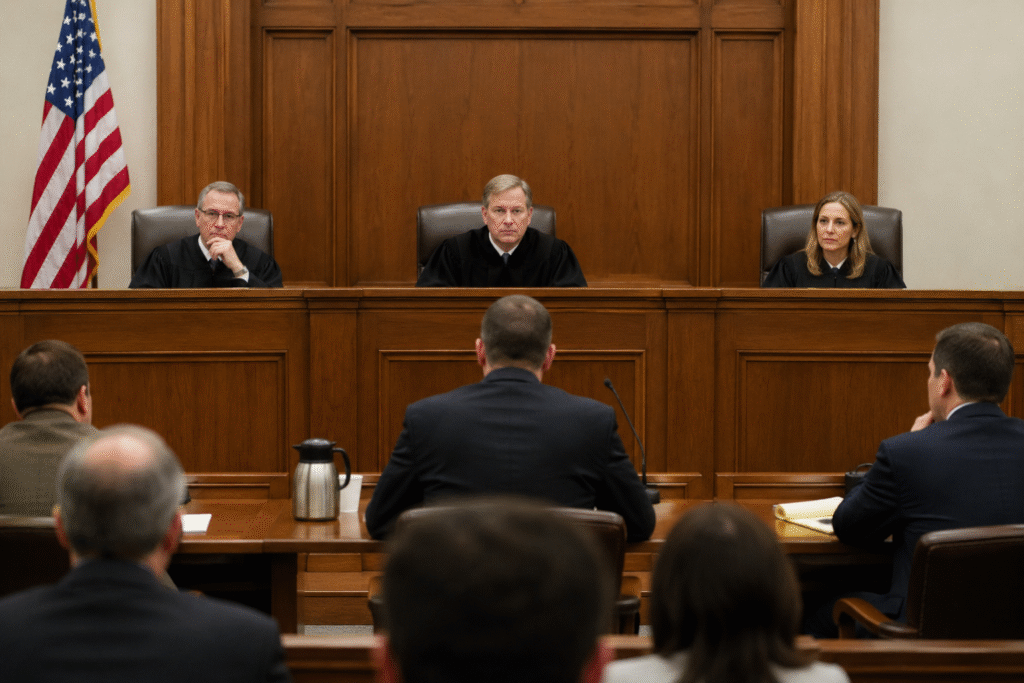
A federal court ruled Thursday against the new global tariffs that President Donald Trump imposed after a stinging loss at the Supreme Court. A split three-judge panel of the Court of International Trade in New York found the 10% global tariffs were illegal after small businesses sued. The court ruled 2-1 that Trump overstepped the tariff power that Congress had allowed the president under the law. The tariffs are “invalid” and “unauthorized by law,” the majority wrote.
The Backstory — How We Got Here
Last year, Trump invoked the 1977 International Emergency Economic Powers Act (IEEPA) to declare the nation’s longstanding trade deficit a national emergency, justifying sweeping global tariffs. The Supreme Court ruled February 28 that IEEPA did not authorize the tariffs. The US Constitution gives Congress the power to establish taxes, including tariffs, though lawmakers can delegate tariff power to the president.
After that February Supreme Court loss, Trump pivoted — imposing a new 10% global tariff he argued rested on a different, narrower legal foundation. Thursday’s ruling says that foundation is equally hollow.
What the Court Actually Said — The Legal Core
The ruling marked another legal setback for the Trump administration, which has attempted to shield the US economy behind a wall of import taxes. The third judge on the panel dissented — finding the law allows the president more leeway on tariffs. The majority disagreed, saying Congress never intended to hand the executive branch such sweeping unilateral power over global trade.
The dissent keeps the door open for the administration’s appeal — but with two of three judges voting to invalidate, the legal math is not in Trump’s favor heading into the Federal Circuit.
What Tariffs This Does — and Doesn’t — Cover
Thursday’s ruling targets the 10% global tariff imposed after February’s IEEPA loss. Section 232 tariffs — covering steel (25%), aluminum (25%), and automobiles (25%) — are separately authorized and are not affected by this ruling.
The administration is conducting two investigations that could end in more tariffs. The Office of the US Trade Representative is looking into whether 16 US trading partners — including China, the European Union, and Japan — are overproducing goods, driving down prices and putting US manufacturers at a disadvantage. Those investigations could form the legal basis for a new round of tariffs under different statutory authority.
Trump’s Next Move — A New Legal Foundation in the Works
Trump is widely expected to try to replace the tariffs that have been struck down. The administration is conducting two Section 232-style investigations — a pathway that has survived legal scrutiny before, particularly for steel and aluminum. If the USTR investigations find overproduction constitutes a national security threat, new tariffs under that authority could be imposed without the IEEPA legal vulnerability.
The White House immediately indicated it would appeal — but the administration is also accelerating those alternative investigations, aware that courts may again put the 10% tariff on hold pending appeal.
The Market Reaction — Relief, With Caution
Markets responded positively to the ruling Thursday evening. Investors read the decision as reducing the likelihood of a prolonged blanket import tax regime — though analysts cautioned that the administration’s alternative tariff strategies could restore similar trade barriers through different legal channels within weeks.
The three-court losing streak is historic. The economic wall Trump is building around America keeps getting torn down by judges — and he keeps finding new bricks to replace it. Whether any of them ultimately hold is now a question not just for courts, but for Congress.
Disclaimer: This article is for general informational and news reporting purposes only. All legal findings and quotes are based on publicly available reporting from OPB, WPTF, KIX 102 FM, Arab News, and the Court of International Trade’s published opinion as of May 7–8, 2026. The ruling is expected to be appealed — it does not immediately eliminate the tariffs pending appeal. TrenBuzz.com does not provide legal or financial advice. Readers should consult qualified legal and trade advisors and follow official government and court sources for the most current status of US tariff policy.