Published by TrenBuzz.com | June 28, 2026
Key Points at a Glance – Texas Roadhouse and Every Major Chain in California Has Three Days Left
- Starting July 1, 2026, California will implement a law requiring restaurant chains with 20 or more locations to disclose major food allergens on all physical and digital menus, marking the first U.S. state-level mandate for allergen labeling in restaurants.
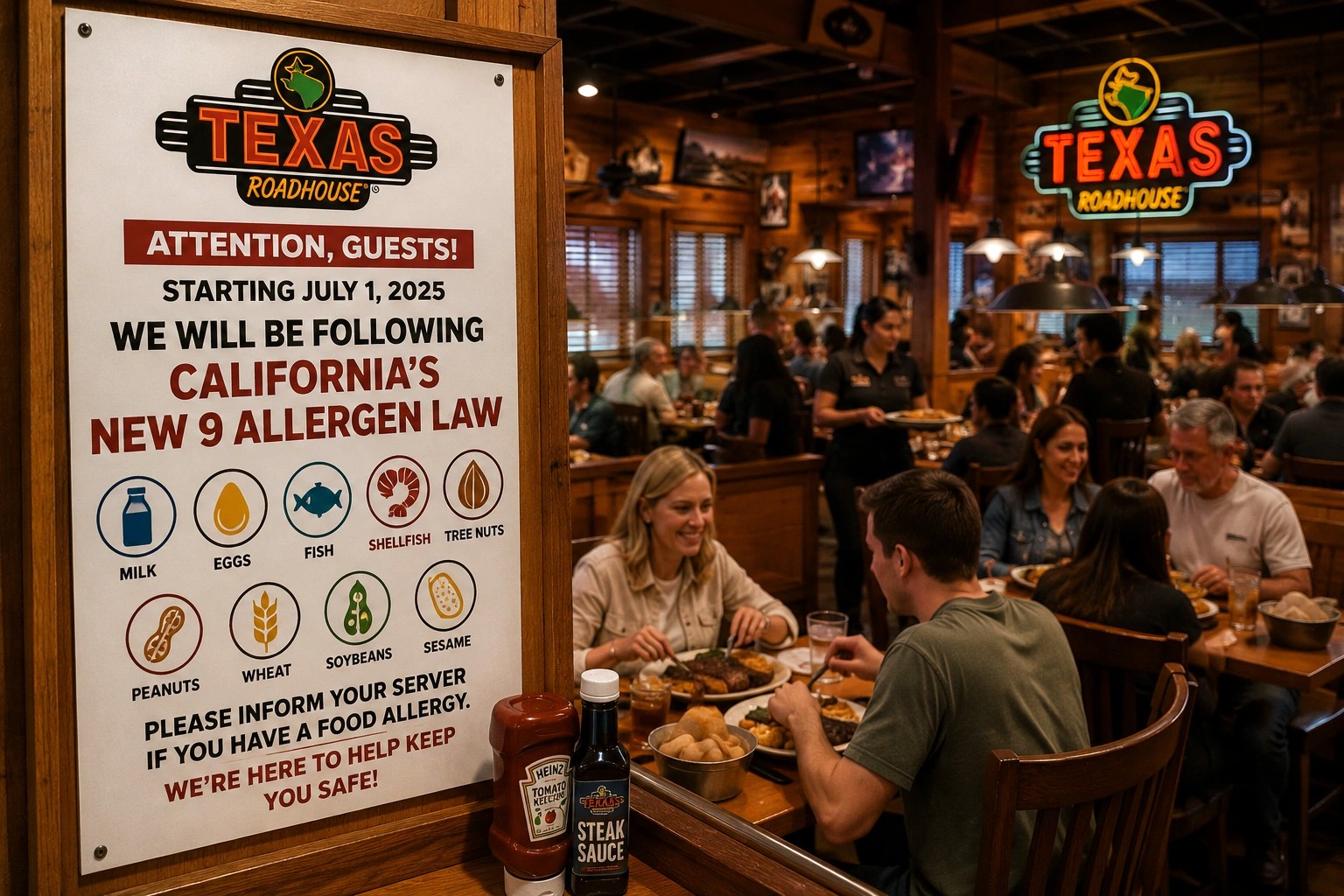
- Texas Roadhouse, Chili’s, Olive Garden, McDonald’s, and every chain with 20+ US locations must now show California Big 9 allergen requirements on every menu.
- The 9 most common food allergens covered are milk, eggs, peanuts, tree nuts, fish, shellfish, soy, wheat, and sesame.
- Restaurants may provide allergen information directly on the physical menu or in a digital format such as a QR code, but must also offer a print option for customers who cannot access the digital menu.
- The law applies to any U.S. brand with 20 or more locations, including one in California, whether in Los Angeles, San Diego, Sacramento, or Northern California.
- Failure to comply could result in regulatory scrutiny from the California Department of Public Health and local health agencies that regulate food and restaurant safety.
Texas Roadhouse California Allergen Law: Why This Matters to Every Diner in Los Angeles, San Diego, and Beyond
Any U.S. brand with 20 or more locations, including one in California, must show consistent allergen info on all menus by July 1, 2026. Franchisors supply verified data; operators display it.
California Governor Gavin Newsom signed SB 68, the Allergen Disclosure for Dining Experiences Act, into law on October 13, 2025. The bill passed the Senate 39-0 and the Assembly 66-1, with overwhelming bipartisan support.
California Big 9 Allergen Requirements: What Must Now Appear on Every Chain Menu
These restaurants must clearly identify the presence of any of the nine major allergens: milk, eggs, fish, shellfish, tree nuts, peanuts, wheat, soybeans, and sesame, in each menu item. The requirement focuses on intentional ingredients and does not extend to potential cross-contact risks.
Compliance requires operational changes, including recipe documentation, staff training, and updated procurement practices to ensure accurate allergen tracking throughout the supply chain.
What This Means for Tourists Flying to California, Disneyland Visitors, and Catalina Island Travelers
For visitors flying into Los Angeles or San Diego, checking the California map for outdoor dining and camping spots, or exploring Disneyland and the surrounding Southern California area, the new law creates a fundamentally safer dining experience. Whether you’re checking what time it is in California before calling ahead to a restaurant reservation, navigating the California DMV website before a road trip, or checking California weather ahead of a camping trip to the best places to camp in California, knowing that allergen information will now be printed on every major chain menu removes a major barrier for food-allergy families traveling across the Golden State.
The California gas tax already makes the state expensive. Hotel California bookings are always competitive. But starting July 1, the one thing every Californian and tourist can count on in a chain restaurant is finally knowing exactly what’s in their food.
🔗 [Also Read: “Gavin Newsom DOJ Investigation: Trump vs Newsom Full Story” | TrenBuzz.com]
🔗 [“California Primary Results 2026: Scott Wiener Leads Pelosi Seat Race” | TrenBuzz.com]