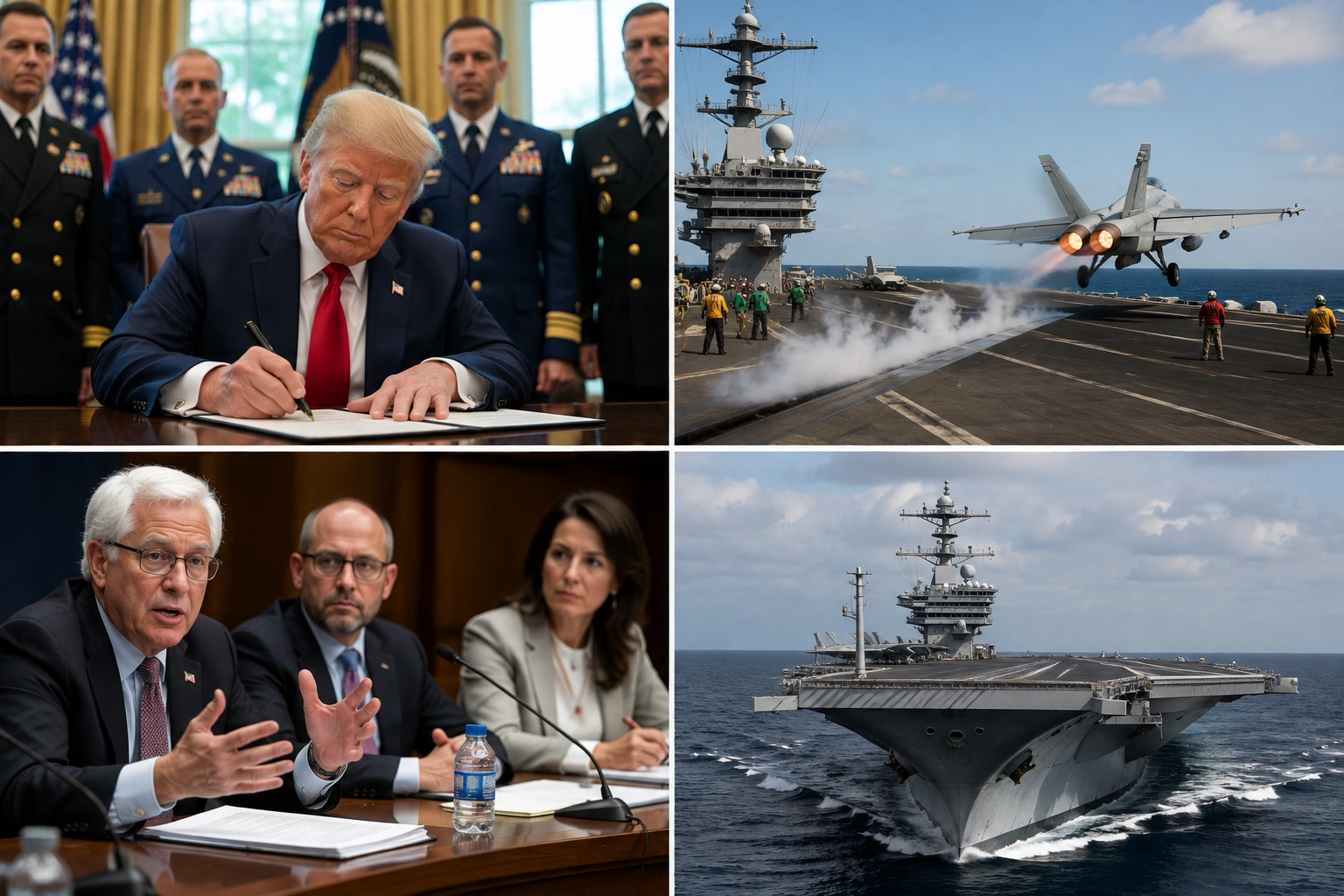
Key Points: Trump Steam Catapults Order
- Trump steam catapults directive orders the Navy back to older launch technology on future carriers
- The USS Doris Miller becomes the first Ford-class ship required to make the switch
- Defense experts call the reversal “illogical” and warn it could cost billions
- This fight dates back years, tracing to Trump’s long-running frustration with EMALS technology
President Trump just ordered one of the most expensive technology reversals in recent Navy history, scrapping cutting-edge equipment in favor of a system his own military moved away from decades ago.
What The Trump Steam Catapults Order Actually Does
Trump signed a national security memorandum Thursday directing the Navy to abandon its Electromagnetic Aircraft Launch System on future Ford-class carriers, according to reporting from USNI News and the Wall Street Journal.
Here’s exactly what changes. Future carriers will use traditional steam-powered catapults instead of EMALS, along with hydraulic weapons elevators replacing the current Advanced Weapons Elevators.
The USS Doris Miller, the fourth Ford-class carrier still under construction, becomes the first ship required to implement these changes under the new directive.
Here’s an important distinction worth understanding. The first three Ford-class carriers, including the already-commissioned USS Gerald R. Ford, will keep their existing electromagnetic systems entirely untouched.
Why This Fight Has Been Years In The Making
Trump has publicly criticized EMALS technology for years, dating back to his first term. During a 2019 visit to Yokosuka Naval Base, he told sailors plainly he wanted future carriers to “use steam.”
He repeated that frustration even more colorfully in 2020, telling Time magazine the Navy’s electromagnetic system was “not good, not good” compared to the older steam-based approach.
That criticism resurfaced again more recently. Aboard the USS George Washington in October, Trump told troops directly, “When we build aircraft carriers, it’s steam for the catapults and it’s hydraulic for the elevators. We’ll never have a problem.”
Why Defense Experts Are Pushing Back Hard
Here’s where this order runs into serious resistance. Mark Montgomery, a senior fellow at the Foundation for Defense of Democracies and former carrier strike group commander, called the reversal “illogical, inefficient and a waste of money.”
He specifically noted EMALS “reduce wear and tear on aircraft by providing smoother acceleration,” while requiring significantly less water, energy, and maintenance than steam-based alternatives.
Here’s a staffing detail adding real weight to that criticism. EMALS cut the number of sailors needed to operate carrier catapults from roughly a dozen down to just two people.
That matters enormously given current Navy recruiting struggles. The service has continued having difficulty filling actual warship positions, even during a stretch of improved overall recruiting numbers.
General Atomics, the company that manufactures EMALS, pushed back publicly too, stating the decision “warrants careful reconsideration” given that Doris Miller’s construction is already nearly 50% complete.
What This Redesign Will Actually Cost
Here’s the practical reality facing the Navy now. Officials confirmed the service hasn’t purchased steam catapult systems in more than 20 years, meaning suppliers will likely need substantial upfront investment just to restart production lines.
The broader memorandum also directs Defense Secretary Pete Hegseth to submit a report within 120 days addressing submarine and aircraft carrier readiness more broadly, including potential use of an additional public shipyard.
With redesign work now required on an already-finalized ship, and defense experts warning of billions in added costs and further construction delays, this steam catapult reversal may prove to be one of the costliest presidential preferences to actually reach the shipyard floor.