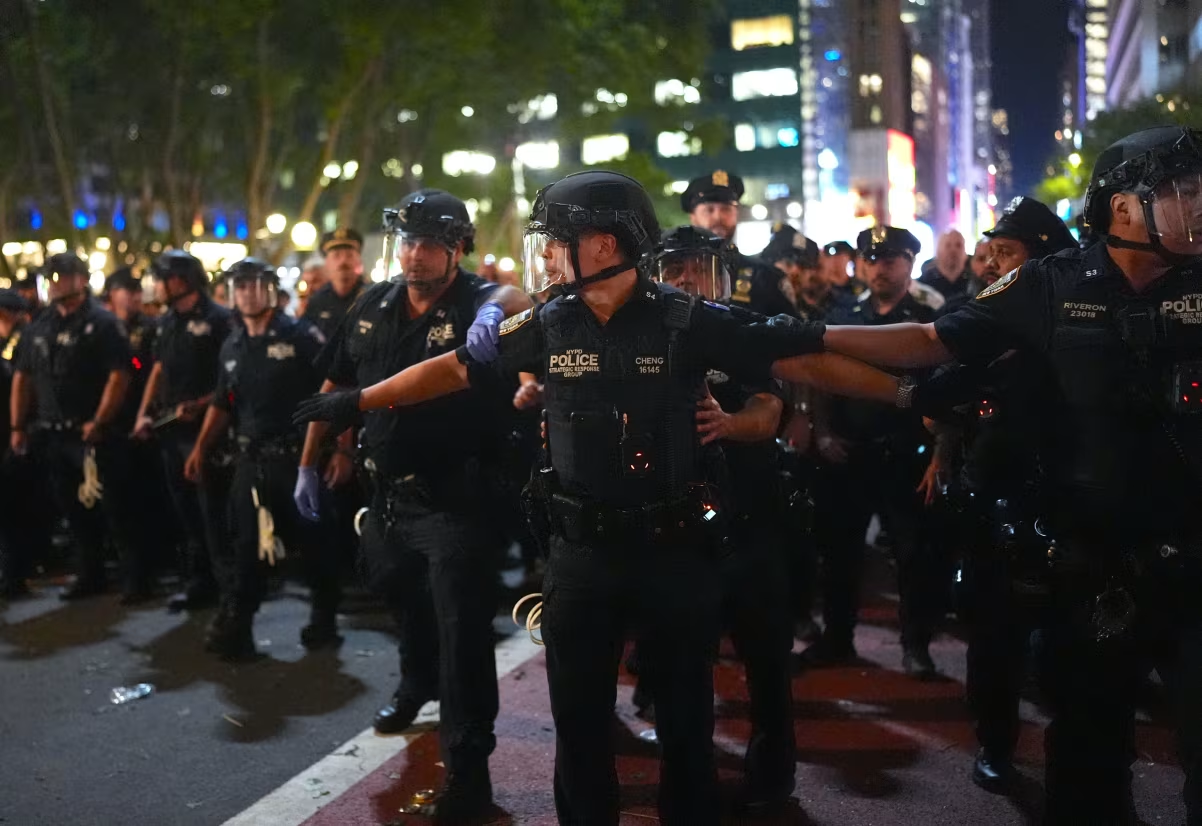
Key Points: SRG Disbanded
- On Monday, November 16, Mayor Zohran Mamdani announced he is disbanding the NYPD’s Strategic Response Group, known as the SRG.
- The unit had about 500 officers. Its counterterrorism work moves to the NYPD’s Intelligence and Counterterrorism Bureau.
- The new rules include a New York City ban on kettling, tear gas and long guns at demonstrations, plus limits on pepper spray.
- Three new bodies take over protest response, one of them a civilian team with no weapons and no arrest powers.
- Officials say the changes need no extra money or new hires.
Few New Yorkers could have named the SRG a decade ago. By Monday afternoon, it was the biggest police story in the city.
Mamdani made the announcement in a video, standing alongside Police Commissioner Jessica Tisch. He called it a promise kept.
What Is the SRG? A Quick Guide for NYC Readers
The SRG, short for Strategic Response Group, was formed in 2015 as a counterterrorism backup force. It was meant to support other units during mass attacks.
Over time, the SRG NYPD team also became the department’s main protest response unit. The department described that role as supporting First Amendment activity.
That mix is where the trouble started. Critics, including a former NYPD deputy inspector, have called it an inherent conflict to train officers for heavy weapons and then send them to peaceful marches.
The unit drew scrutiny after the 2020 protests, when a city review found excessive force that violated protesters’ rights. A 2023 settlement later limited how it could be used at demonstrations.
Earlier this year, SRG officers were among those who made more than 60 arrests at an anti-ICE protest in a Lower Manhattan hotel lobby.
SRG NYC Changes: Where the Officers and Duties Go
The SRG is not simply vanishing. Its functions are being split into pieces, and each piece has a different job.
- Counterterrorism: Heavy weapons duties at critical sites move to the Intelligence and Counterterrorism Bureau.
- A civilian team: A new Community Dialogue and De-escalation Division sits in the Mayor’s Office of Community Safety. It has no weapons and no power to arrest.
- A First Amendment Support Team: About 30 uniformed officers trained in communication and de-escalation.
- A Patrol Support Division: Patrol officers with extra crowd training, who can make protest arrests in rare cases.
Officials say headcount stays the same. No timeline for putting all this in place has been made public yet.
The New York City Ban on Kettling, Explained
Kettling means surrounding a group of people and stopping them from leaving. Protesters say it traps peaceful people and bystanders alike.
Under the new rules, kettling is banned during demonstrations. So are tear gas and long guns, and pepper spray is restricted.
Long range sound devices are capped at 90 decibels. Police bicycles can be used as a weapon only to prevent death or serious injury.
Why NYC SRG Numbers Tell a Surprising Story
Here is the part most coverage skips. Reports say the SRG was deployed only with the mayor’s approval, responded to fewer than 20 events this year and made about a dozen arrests.
That does not sound like a force on every street corner. It suggests the fight was never only about volume.
Think of it this way. The real change is about who decides, and which tools come out, when a crowd gathers.
The unit was small, but its image was big. Moving the decision from a specialized squad to a civilian-first approach changes the first face a protester sees.
That is analysis, not a reported finding. But it helps explain why both supporters and critics treat this as a major turning point.
Zohran Mamdani and the Fight Over Who Holds the Power
Mamdani campaigned on ending the SRG, and he repeated the pledge in January. Pressure also came from allies on the left, including Democratic Socialists of America members.
Tisch had long defended the unit. On Monday she backed the new setup and said it would make the department stronger.
Still, some criminal justice advocates have worried the Patrol Support Division could become the SRG under a new name. That concern is real because that unit can make arrests.
A mayor can change police policy through an executive decision. But a later mayor can undo it just as quickly.
The CURB Act: Locking In the Change
That is why a City Council bill matters. The CURB Act, from Council Member Chi Ossé, would bar the SRG from responding to First Amendment events or crowd control.
It would also ban kettling and tear gas across the whole department. It requires the NYPD to file quarterly reports on how it responds to protests.
The bill had 26 sponsors, a majority of the Council, but no hearing had been held as of October. This is its third attempt, and Mamdani now supports it.
What to Watch Next
- The timeline: Officials have not said when the new units will start work.
- The Patrol Support Division: How many officers it has, and how often it makes arrests.
- The CURB Act: Whether it finally gets a hearing and a vote.
- The first big protest: The first large rally under the new rules will be the real test.
Supporters see a long overdue reset. Critics worry about public safety. The answer will come on the street, not in a press release.