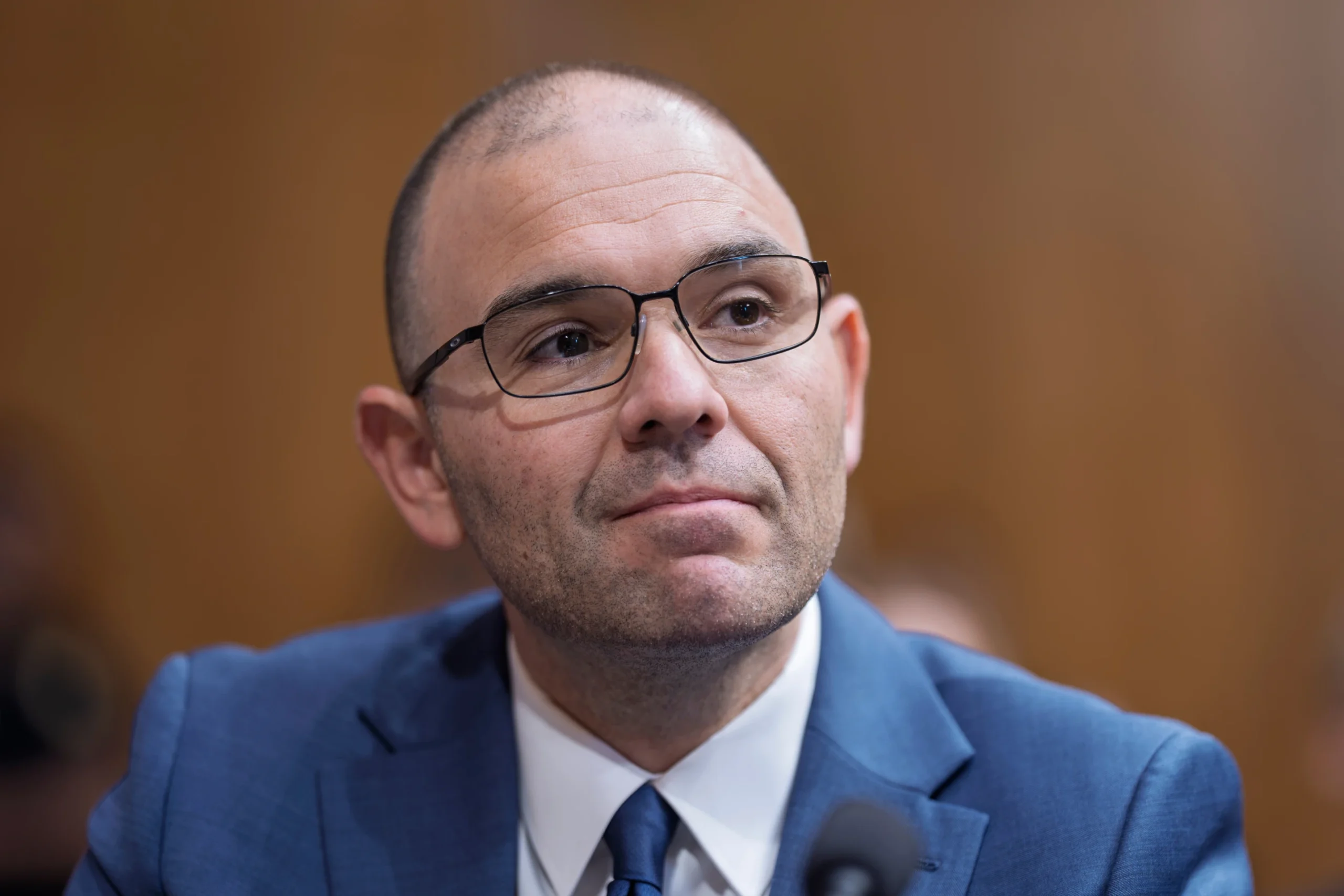
Key Points: Michael LoSapio’s CISA Hearing
- Michael LoSapio, Palantir’s chief information security officer, faced a Senate confirmation hearing on Thursday, November 19, to lead CISA, the nation’s civilian cyber defense agency.
- Asked whether the Capitol was attacked on January 6, 2021, he said he did not believe it was. Sen. Richard Blumenthal told him he was “disqualified” for the job.
- He also declined to say who won the 2020 election, and he avoided weighing in on staffing and budget cuts at the agency.
- CISA has had no Senate-confirmed director for the entire second Trump term. Nick Andersen has been acting director since February.
- Reports say a committee vote is unlikely before the Thanksgiving recess, and a floor vote could come in the lame duck session.
The hearing was short, and it drew most of its attention from a single exchange.
That is the headline. The bigger story is who will run a weakened agency while the country deals with a rough week for technology.
Who Is Michael LoSapio?
LoSapio is an engineer by training with about two decades of hands-on security work. He joined Palantir as a systems engineer in the mid-2010s, left, and returned in 2017.
He led the company’s network security team from 2017 to 2024. In September 2024 he became chief information security officer.
Reports note that he has no significant management background and appears never to have worked in government. President Trump nominated him earlier this month after his first pick, Sean Plankey, withdrew in April.
The role matters. CISA helps protect federal civilian networks and works with power, water and hospital operators on security threats.
What Happened at the Hearing
LoSapio was one of 13 nominees before the Senate Homeland Security and Governmental Affairs Committee. Five senators questioned him: Lankford, Hassan, Moreno, Slotkin and Blumenthal.
Blumenthal pressed him repeatedly on January 6. LoSapio first said he did not know, then said he did not believe it was an attack, adding, “I know what I saw on the news.”
Blumenthal replied that he was “disqualified from the position that you’ve been nominated to fill.” LoSapio also declined to name the winner of the 2020 election.
Sen. Elissa Slotkin asked about cuts that eliminated about 1,000 CISA positions and a proposed $385 million reduction. He said he was not yet inside the agency and could not comment, and that more money does not always mean more security.
On a possible government shutdown, he called the outcome “catastrophic.” Asked by Sen. Maggie Hassan whether he would follow the law if told to act illegally, he said, “Follow the law.”
What He Promised on CISA
On staffing, he said he would study the gaps left by cuts and report back with a gap analysis. Reports say the agency has lost about a third of its workforce.
On technology, he said he would bring together the broader security community and national labs to give defenders tools, including AI tools.
He declined to comment on recent technical outages, saying he is “not inside” the agency today.
Two Empty Chairs: A Pattern Behind the Headlines
Here is a reading you will not find in most coverage. Put this story next to another one from the same week.
On the same day as the hearing, the White House’s national cyber director, Sean Cairncross, was reported to be out. Kirsten Davies, the Pentagon’s chief information officer, will serve as acting director.
CISA has an acting leader too. That means the two most visible civilian cyber jobs in the federal government are both run by acting officials, during a week of outages at Microsoft, the FAA, JPMorgan Chase and Apple.
Officials say there is no sign of a coordinated attack, and the outages had separate causes. This is not a claim that anyone failed. It is a point about how thin the bench looks at a tense time.
That is our analysis, not a reported finding. But it helps explain why this single hearing drew attention beyond Washington.
Why Confirmation Is Not Guaranteed
The calendar is a problem. Democrats take control of Congress in January, which reports say could make confirmation harder.
Republicans hold the Senate for now, and the committee is chaired by Sen. Rand Paul, who has been among Republicans seeking to narrow CISA’s role, according to earlier reports. Palantir’s work on surveillance programs has also drawn criticism from Democrats.
There is a history too. Trump has criticized CISA for its role in debunking his claims about the 2020 election, according to The Record.
If the nomination does not move in the lame duck session, it could carry over into a different Senate. For a nominee, timing can matter as much as testimony.
How CISA Affects Daily Life
CISA is easy to overlook until something goes wrong. In plain terms, it does four main things.
- Alerts: It warns the public and companies about newly found software flaws.
- Help: It assists hospitals, utilities and local governments after cyber attacks.
- Coordination: It links federal agencies and private companies when a threat spreads.
- Elections: It has supported state and local election offices on security.
That last item explains why the January 6 questions mattered so much to the senators.
What to Watch Next
- A committee vote: Whether it is scheduled after the Thanksgiving recess.
- The lame duck window: Whether the full Senate has time to act.
- The gap analysis: If confirmed, what he finds and how fast he shares it.
- The cyber director post: Whether Davies or another nominee is named, and how the two roles work together.
Michael LoSapio now waits on a Senate that has already shown it has questions. The agency he hopes to lead is waiting too.