Published by TrenBuzz.com | July 14, 2026 | BREAKING SUPREME COURT
Key Points at a Glance – Justices Barrett and Kagan Head to Congress
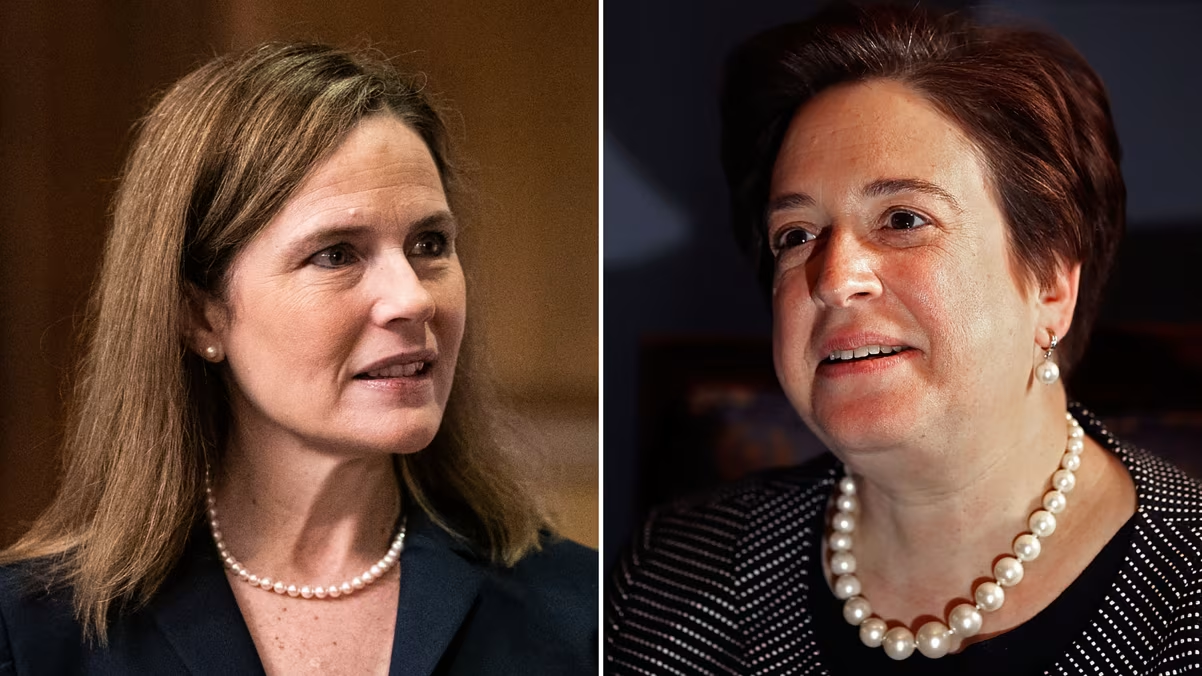
- Justices Amy Coney Barrett and Elena Kagan testify Tuesday July 14 before both House and Senate Appropriations subcommittees on the Supreme Court’s fiscal 2027 budget, the first time justices have testified on Capitol Hill since 2019.
- The court is requesting $225.1 million total, a roughly 10% increase over fiscal 2026 funding, primarily driven by security spending.
- Security incidents involving judges classified as of “significant concern” jumped 57% in 2025, with Barrett’s home targeted in a fictitious shooting swatting call in May 2026.
- Conservative legal operative Mike Davis called Barrett’s birthright citizenship vote “highly destructive and inexcusable,” but said appropriations hearings are “not the right place” to raise those concerns.
- Multiple congressional aides told CNN that lawmakers plan to go “far beyond their budget talking points,” including questions on ethics, prediction markets, the emergency docket, and Barrett’s votes against Trump this term.
- Conservative groups are calling on Kagan to recuse from upcoming climate litigation over her endorsement of a climate science manual.
Justices Barrett and Kagan Hearings: The Budget Is the Pretext, Not the Point
Justices Elena Kagan and Amy Coney Barrett will face lawmaker scrutiny as they head to Capitol Hill to defend the Supreme Court’s budget weeks after a series of divisive rulings and amid escalating tensions between Congress and the courts.
That framing, from Bloomberg Law, captures the real stakes of Tuesday’s hearing. The budget request is straightforward: $207 million for salaries, $14.6 million for expanded personal security. Congress has rarely said no to these requests. What is not straightforward is what happens when a member of Congress looks directly at Amy Coney Barrett and says, “Why did you side with the liberals on birthright citizenship and tariffs after we confirmed you?”
Elena Kagan’s Conservative Recusal Problem
Before the hearing even began, Fox News reported that conservative groups accuse Elena Kagan of failing to recuse from Suncor Energy v. Boulder County, citing her endorsement of a climate science manual.
That recusal demand adds a layer to Tuesday’s already politically loaded hearing. If Republican members press Kagan on climate impartiality, and Democratic members press Barrett on her independence from Trump, both justices will spend the morning being interrogated about exactly the kind of substantive judicial decisions they are constitutionally prohibited from discussing in a congressional setting.
What Barrett’s Security Situation Actually Looks Like
Security incidents involving judges that the Marshals Service classified as of “significant concern” jumped 57% in 2025. Barrett has been involved with several close calls that have become public. Police in Washington’s Virginia suburbs said in May that they had been called to the home of a Supreme Court justice for what they determined was a “fictitious” report of gunfire. CNN later reported that it was Barrett’s home that was targeted, though neither the justice nor the court has publicly acknowledged the incident. The home of Barrett’s sister in South Carolina was the target of a bomb threat a year earlier.
Those details explain why the court needs more money. They also explain why Barrett is showing up in person to make the case. Nothing argues for a security budget increase better than a justice describing, in person, what has been done to her and her family.
The Barrett vs. Trump Tension Nobody in the Hearing Room Will Say Directly
The tension between Trump’s most recent nominee and some in the conservative legal movement has been palpable for more than a year. That friction was exacerbated last month when Barrett sided with Chief Justice John Roberts and the court’s liberals in concluding that the president’s attempt to end automatic birthright citizenship through an executive order was unconstitutional.
Barrett will not discuss her votes. She will not explain her jurisprudence. She will answer questions about the FY2027 budget and security needs. But the subtext of every question directed at her will be the same: whose side are you on? And that is the one question a Supreme Court justice is not supposed to be able to answer.