Published by TrenBuzz.com | July 14, 2026 | IRAN WAR LIVE UPDATE DAY 137
Key Points at a Glance – US Resumes Naval Blockade of Iran
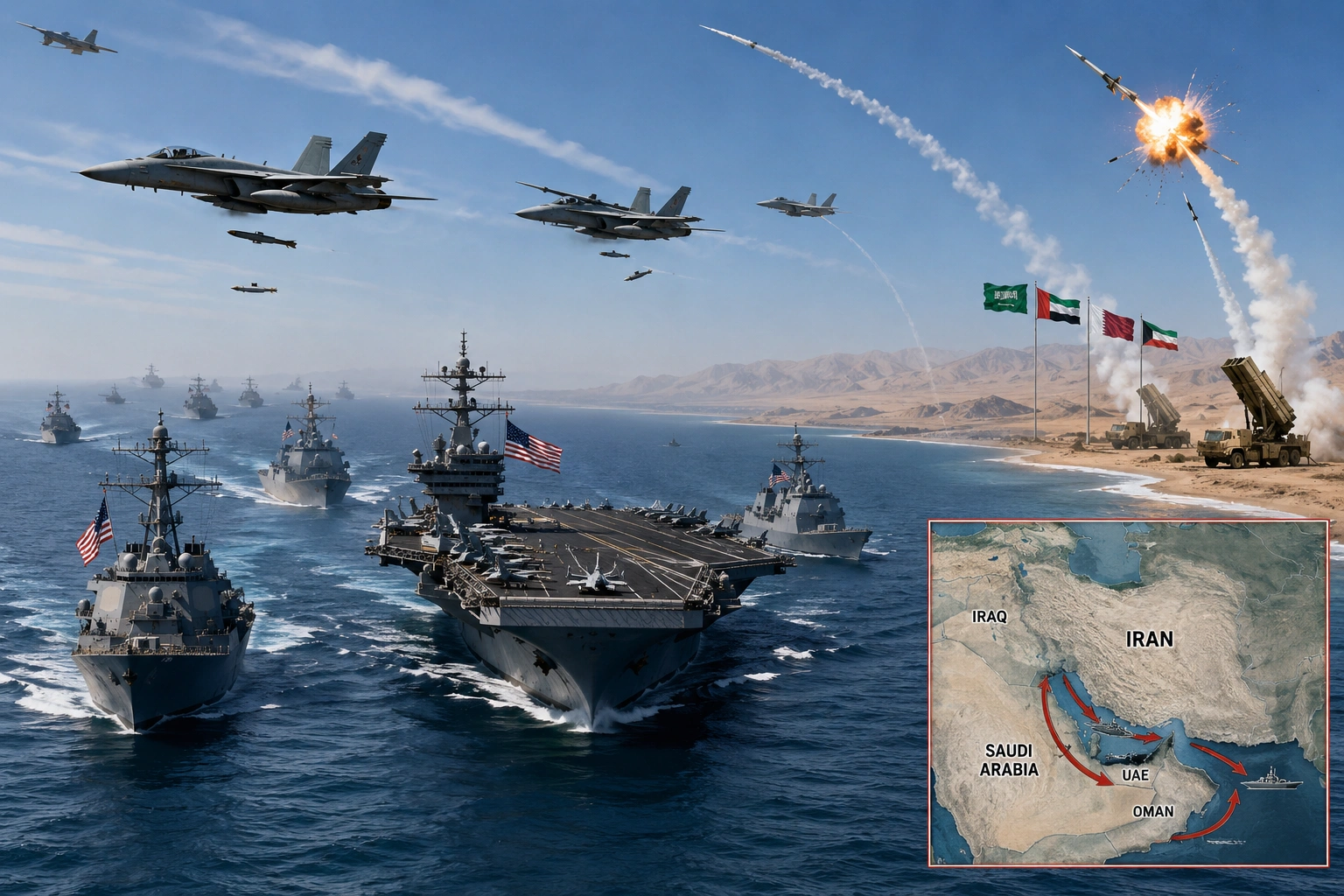
- The US naval blockade of Iranian ports and coastal areas resumed at 4 p.m. ET Tuesday July 14, with CENTCOM reporting over 20 US Navy warships and hundreds of military aircraft operating across the Middle East.
- American forces launched a fourth consecutive day of airstrikes against Iranian targets including Bandar Abbas, Hengam Island, and sites near Sirik in Hormozgan province, all near the strategic Strait of Hormuz.
- Iran retaliated by striking two ships in Omani waters, killing one crew member, and launching ballistic missiles and drones at Kuwait, Bahrain, and Jordan.
- Kuwait intercepted one ballistic missile, five cruise missiles and 33 drones Tuesday in attacks targeting several vital and civilian facilities, with debris causing material damage and four Kuwaiti navy personnel injured.
- Trump reversed a 24-hour-old decision to charge commercial shippers a 20% cargo fee for Hormuz passage, replacing it with trade and investment deals from Gulf Arab states.
- Iran’s deputy foreign minister said Tehran has “no obligations” under the Versailles MOU and accused the US of destroying the interim peace deal.
US Resumes Naval Blockade of Iran: What Tuesday Marks in the Wider War
The US launched another set of airstrikes against Iran on Tuesday ahead of the reimposition of its naval blockade, according to a US military statement. “At 3 p.m. ET today, US Central Command forces began launching an additional round of strikes against Iran to continue degrading Iranian capabilities used to attack commercial shipping in the Strait of Hormuz,” CENTCOM said.
There are currently more than 20 U.S. Navy warships and hundreds of military aircraft operating across the Middle East. American forces remain vigilant, lethal, and ready.
Strait of Hormuz News: The Ship Traffic Number Nobody Is Putting on the Front Page
Even before the latest round of strikes, just 22 ships crossed the strait on July 9, compared to 147 crossings the day before the war began in February, according to Kpler, a firm that tracks global commodities and shipping.
That 85% drop in strait traffic is the most important economic number in the world right now, and it has been sitting in analyst reports rather than newspaper headlines.
Trump’s 20% Fee Reversal: A 24-Hour Policy Lifespan
Trump said he had decided to replace the 20% United States Reimbursement Fee with Trade and Investment Deals that the various Gulf States will be making into the United States.
Trump told reporters he was called by kings and emirs who wanted to invest rather than pay a toll. The 20% fee lasted from Monday evening to Tuesday afternoon, making it one of the shortest-lived formal US economic policies on record.
The MOU Is Dead: Iran Says So Officially
The US first imposed the blockade in mid-April and then lifted it in mid-June, a day after the signing of the interim deal aimed at permanently ending the war.
Iran’s deputy foreign minister, Kazem Gharibabadi, said Tuesday that Tehran has “no obligations” to the 14-point agreement with the US that was reached last month.
The Versailles deal lasted 27 days. Iran says it is gone. Washington says it never officially canceled it. And oil tankers in the Strait are now under fire from both sides of the argument.
[Also Read: “Gulf States Reject Iran’s Hormuz Authority in Letter to IMO” | TrenBuzz.com]