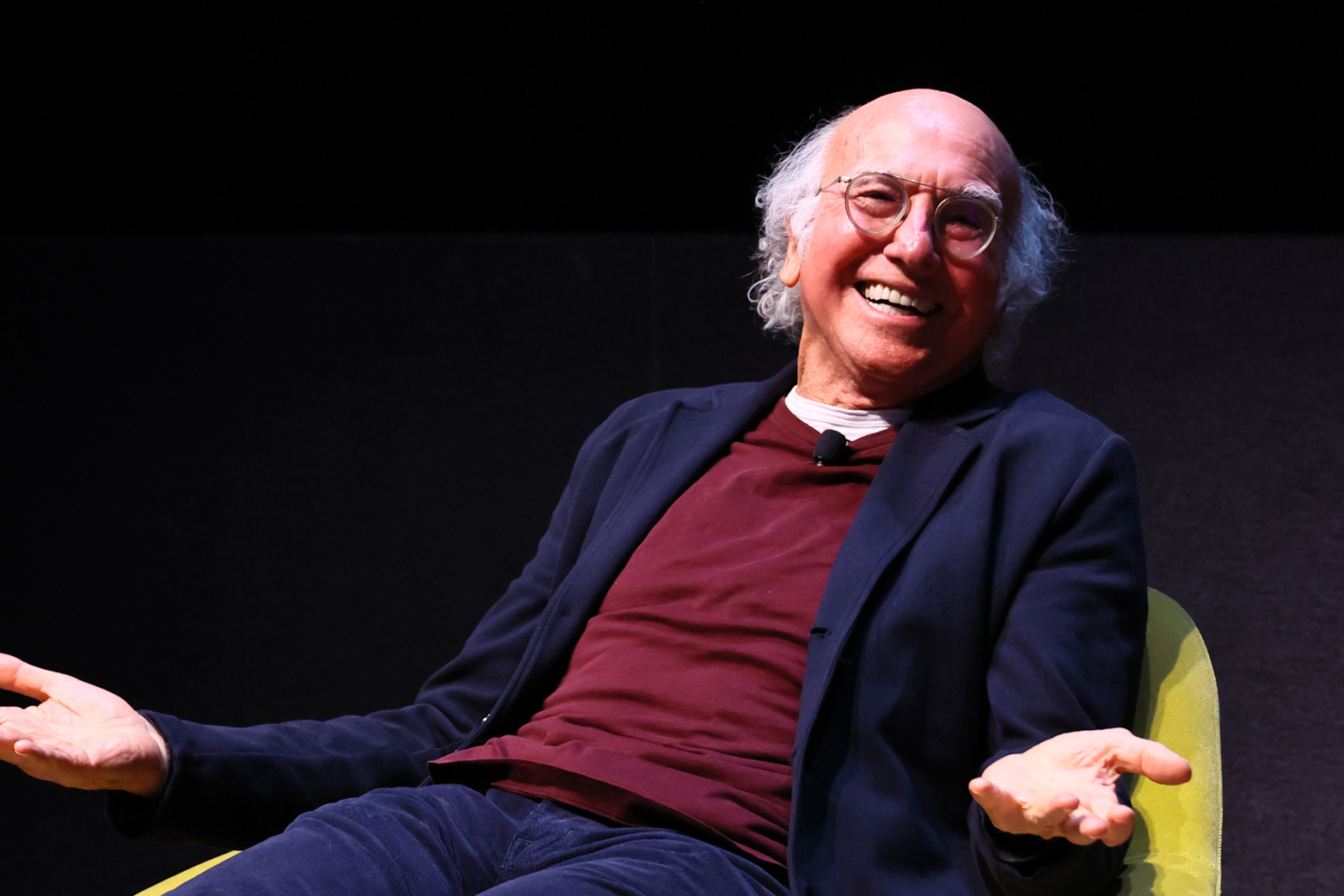
Key Points: Larry David Regrets Everything
- Larry David is back in headlines this week thanks to a new authorized biography and a satirical essay
- “Emperor of Nothing,” by Blake J. Harris, arrives October 20
- David says he regretted agreeing to the book, and still does
- The pattern behind his regrets may explain why audiences trust him
Larry David has had a very busy week of being unhappy about things, and it may be the most useful thing about him.
Why Larry David Is Everywhere Right Now
The first authorized biography of the Seinfeld co-creator, “Emperor of Nothing,” hits shelves October 20. Author Blake J. Harris spent six years persuading David to take part.
David’s official review is classic. He said he agreed to do it, immediately regretted it, and still does.
Harris says he hears the same line from David for six years: that he would hate whatever got written. The comedian then admitted the author did a good job.
The Fridays Story That Sets The Tone
Excerpts show how David’s career started. He landed a writing job on “Fridays,” a 1980 ABC sketch show.
He felt it was a rip-off of “Saturday Night Live.” A fellow writer agreed with that assessment.
The ratings were decent, and it gave a perpetually broke David his first steady paycheck. None of that mattered to him. In his words, he still didn’t think it was good.
Here Is The Angle Nobody Is Writing
Put this week’s headlines side by side and a pattern appears. David dislikes the show that launched him, regrets the book about him, and reportedly hated the early Seinfeld pilot.
He also threatened to quit Seinfeld over network notes about two of its main characters. Jerry Seinfeld said he would leave too, and the network backed down.
That story is revealing. David’s discomfort with compromise is not just a personality quirk. It works as quality control.
Call it the regret ledger. Every entry is something David disliked, and many of those things became durable. Seinfeld ran nine seasons, and Curb Your Enthusiasm filled 120 episodes across twelve.
This is a pattern, not proof. But it suggests something rare in entertainment. When David says a thing is bad, people believe him. When he is quiet, they wonder.
That makes his complaints a kind of reverse endorsement. A famously unhappy man who approves of something is a stronger signal than any publicist’s praise.
The Satire That Is Not Real News
David also published an essay in Air Mail on October 17. In it, he jokes that he joined the Democratic Socialists of America and lists a series of proposals.
One example is that every private home must keep its doors unlocked so strangers can use the fridge and bathroom.
This is satire, not a real membership announcement. It is worth saying plainly, because political jokes now travel faster than corrections.
It also fits a habit. In 2025, he published a satirical New York Times story about having dinner with Hitler in 1939. Many readers saw it as a jab at a comedian who dined with a sitting president.
David tends to use short satirical pieces to poke at politics. That keeps him out of the pundit business while still saying something.
A Maryland Angle And A Brooklyn One
There is a local story too. Students at the University of Maryland are hoping to lure David back to College Park as a commencement speaker. He earned his bachelor’s degree there in 1970.
Given how he feels about speeches and obligations, the odds look long. Graduating seniors rarely ask the person least likely to say yes, which is probably why they are asking.
He also lives in public memory as a Brooklyn kid. That is part of why a recent story struck a chord. Paul McCartney, appearing on Jimmy Kimmel‘s Brooklyn run, said he would not invite David to concerts.
The reason was that David did not sing along to “Hey Jude” at a small Los Angeles club show earlier this year. McCartney called him a curmudgeon, and David has not disputed it.
What The Week Adds Up To
Taken together, these stories explain David’s staying power. Whether he is skipping a singalong or disowning an early job, he stays consistent.
He is almost never happy about the thing, and the thing tends to last. That is a strange formula, but it has held for more than four decades.
The biography will be the real test. A man who expects to hate a book about himself has been handed a fresh reason to complain, which is likely good news for everyone who watches him.