Key Points: France Riots Burn
- France riots peaked Saturday night after nationwide protests drew roughly half a million people, with more than 1000 detained and fires, looting and clashes in Paris, Lyon, Marseille and Limoges.
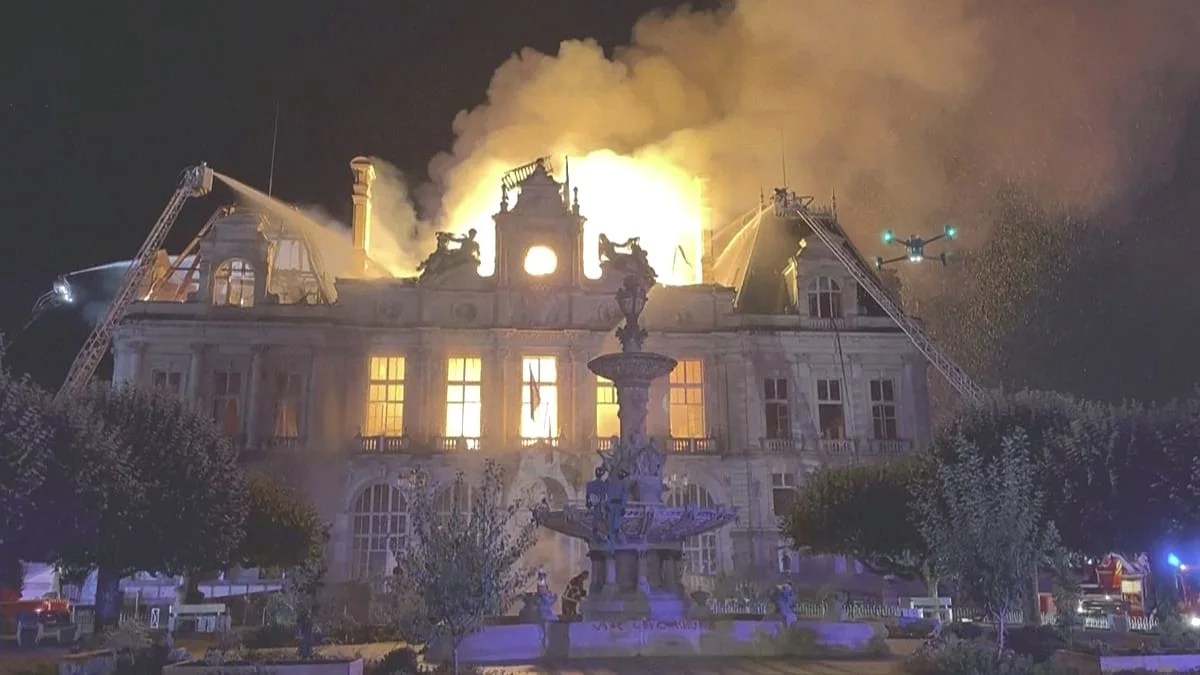
- Limoges City Hall, a 143-year-old building, was largely lost after masked protesters set it on fire, and its roof collapsed.
- The unrest began in mid-September as school blockades in Paris suburbs over teacher shortages and run-down facilities, then grew into a wider fight over living costs.
- The overlooked thread is diesel: fuel anger helped spark the 2018 Yellow Vests, and a new fuel shock tied to the Iran war is hitting French and American drivers alike.
France Riots: What Is Happening In France Right Now
What is happening in France right now is the country’s worst unrest in years. Saturday’s nationwide day of protest turned violent after dark, and the damage is still being counted on Sunday.
Crowd estimates differ widely. Early reports said tens of thousands marched, while later accounts put the number near 550,000. Police counts, union counts and media counts often disagree, and final figures usually come later.
French authorities said more than 1,000 people were detained. President Emmanuel Macron condemned “sowers of chaos” and promised that those who attacked prefectures and looted businesses would be prosecuted.
Why Is France Protesting? Three Movements, One Calendar
The protests in France did not start as a riot. They began in mid-September at high schools in Paris’s working-class northern suburbs, where students protested teacher shortages and shabby facilities.
Two other groups then joined. Former Yellow Vests, the grassroots movement born in 2018 over fuel taxes, came back in high-visibility vests, and trade union members marched too, while the government tries to pass an austerity budget through a split parliament.
Climate activists and farmers also showed up. That mix explains why the demands sound scattered, and why the movement has been hard for any one leader to calm.
The timing matters too. Macron is in the final stretch of his presidency, the National Assembly is split, and the next presidential election is in spring 2027.
Paris Riots Today: What Happened Saturday Night
As evening fell in Paris, groups of young people looted shops and set fires after the marches ended. Police answered with tear gas, water cannons and baton charges in narrow streets.
In Marseille, black-clad protesters broke into City Hall and covered it in graffiti. In Lyon, protesters burned the tourist office.
Prime Minister Sébastien Lecornu said 937 police officers and gendarmes had been injured since the protests began. Interior Minister Laurent Nuñez said stun grenades, suspended during the student protests, could be used on Saturday.
Hard-left leader Jean-Luc Mélenchon backed the students and accused police of unleashing violence, while also condemning looting and arson.
Limoges City Hall: What Was Lost
In Limoges, central France, a group torched a police car outside the town hall, then broke windows and went inside, according to witnesses. The local prefect, Maurice Barate, called the loss a “catastrophe for heritage” and said the roof had collapsed onto the lower floors, except the west wing.
The building dates to 1883 and has a story of its own. A local resident, Alfred Fournier, left his entire estate to the city in 1875, and the council then decided to replace the older town hall on the same site.
History offers an odd echo. After the 1871 Paris Commune, a crowd stormed the town hall and prefecture in Limoges, and Macron’s words this weekend, about attacks on prefectures and town halls, sound strikingly similar.
Officials were still assessing the damage on Saturday night, and what was lost inside has not been fully reported.
The Diesel Thread Nobody Is Connecting
Here is the angle most coverage skips. The Yellow Vests began in 2018 as a revolt against a diesel tax, and fuel is again part of the anger.
Euronews links the cost of living pressure to rising fuel prices that followed the Iran war. In the United States, federal data showed diesel at $6.38 a gallon in late September, up $2.62 in a year.
That is why Washington’s diesel moves, from the red dye order to the Russian supply deal, are close cousins of the French story. Different countries, same pump.
This is not to say fuel caused the riots. The students’ grievances over schools came first, and the arson was committed by a smaller group. But fuel is the grievance that let an education protest become a national one.
What Macron And Lecornu Do Next
The government has two tracks. One is a hard line on violence, with prosecutions and heavier policing, and the other is addressing the grievances behind the marches.
Lecornu described police as facing “violence of extreme intensity,” and the government has offered some responses to the protesters’ concerns. The reports I reviewed did not spell those out in detail.
The risk is that a crackdown alone could harden the movement. With an election months away, every decision will be read as politics.
If You Are Traveling To France
Anyone with plans in Paris or other big cities should check airline notices and their embassy’s alerts, and expect transport delays. Avoid demonstration areas and follow instructions from local authorities.
The Bottom Line
The France riots started with underfunded classrooms and ended with a burning city hall, and the gap between those two stories is the political problem Macron faces. Expect more demonstrations, and more pressure on fuel and school budgets.
Trenbuzz will keep following the France protests and any government response.