Table of contents
- Quick summary
- Timeline of the incident (what we can verify)
- Who was Renee Nicole Good? — background and family
- Federal account: DHS and ICE statements
- Local account and video evidence that complicates the official story
- Political reaction — mayor, governor and national leaders
- Public response: protests, vigils and school closures
- Investigations under way and legal questions to watch
- Community context — why Minneapolis reacted the way it did
- What to expect next (timeline of likely steps)
- Reader poll — do you trust the federal account? (results visible only to you)
- Closing note & disclaimer
1 — Quick summary (ICE Shooting in Minneapolis)
On January 7, 2026, a U.S. Immigration and Customs Enforcement (ICE) officer shot and killed a 37-year-old Minneapolis woman who has been publicly identified as Renee Nicole Good.
Federal officials say the agent acted in self-defense; local officials and witness video dispute that account, and protests erupted across the city.
2 — Timeline of the incident (what we can verify)
Local and national reporting places the shooting near 34th Street and Portland Avenue during a large ICE enforcement operation in south Minneapolis.
Video captured by bystanders shows agents surrounding an SUV and an officer firing as the vehicle moves; emergency responders later pronounced the woman dead.
3 — Who was Renee Nicole Good? — background and family
Reporting identifies the victim as Renee Nicole Macklin Good, 37, a mother of three who recently moved to Minneapolis and had worked in health and service roles in the past.
Family members and local acquaintances describe her as a writer and mother, and say she was devoted to her children; officials say she was a U.S. citizen.
4 — Federal account: DHS and ICE statements
The Department of Homeland Security (DHS) and ICE issued statements saying the agent fired after the woman “weaponized” her vehicle and attempted to run over officers, framing the shots as defensive.
5 — Local account and video evidence that complicates the official story
Multiple videos and eyewitness accounts published by local outlets appear to show the vehicle reversing away and then moving forward as agents hung on the car, leading critics to say the footage contradicts the federal account.
City leaders say the videos raise serious questions about the justification for the use of deadly force.
6 — Political reaction — mayor, governor and national leaders
Minneapolis Mayor Jacob Frey denounced the shooting as reckless and demanded ICE leave the city; he publicly told federal agents, “Get the f*** out of Minneapolis.”
Minnesota Governor Tim Walz and other state leaders also criticized the operation, while DHS leadership defended the agency and described the act as a defensive response.
7 — Public response: protests, vigils and school closures
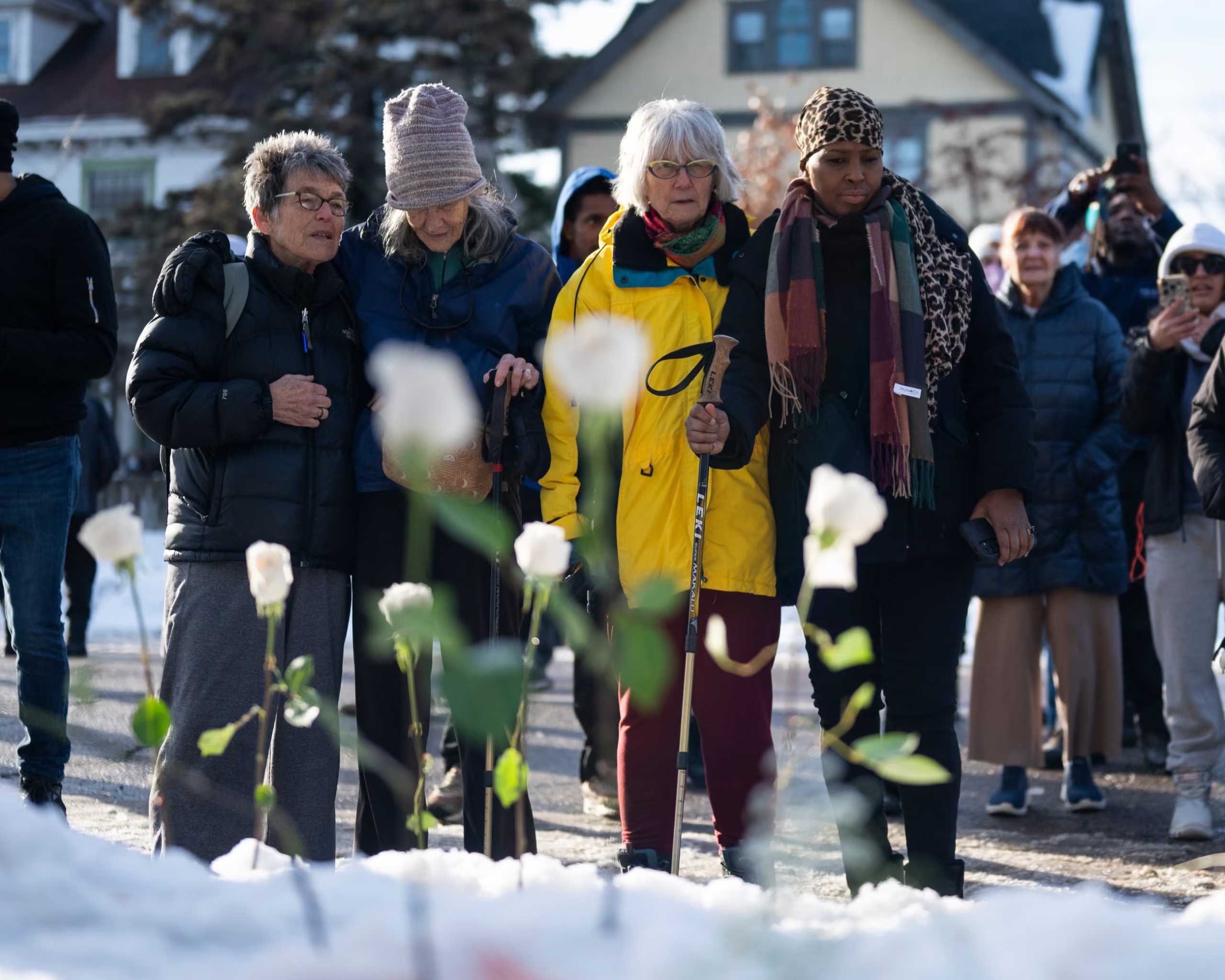
Hundreds gathered for an immediate vigil and demonstrations formed around the neighborhood and at other sites in the Twin Cities and beyond.
Minneapolis Public Schools canceled classes for the remainder of the week amid safety concerns, and community groups called for ICE’s withdrawal.
8 — Investigations under way and legal questions to watch
Federal and state investigative bodies have been reported as involved; local reporting indicates the FBI and state investigators will review the shooting alongside federal inquiries.
Key legal questions include whether the use of force met the constitutional and departmental standards for lethal force and whether procedures for rendering first aid and securing the scene were followed.
9 — Community context — why Minneapolis reacted the way it did
The shooting occurred less than a mile from the site where George Floyd was killed in 2020, a fact that amplified anger and anxiety in a city still sensitive to questions about federal and local use of force.
Longstanding tensions over immigration enforcement in immigrant neighborhoods also contributed to rapid mobilization and vocal condemnation by community leaders.
10 — What to expect next (timeline of likely steps)
Expect formal public briefings from the involved agencies, the release of additional video as part of investigations, and potential calls for independent review by civilian oversight bodies.
Legal filings, medical examiner findings and any federal disciplinary reviews will be crucial in shaping whether criminal charges or administrative sanctions follow.
Based on reporting and video you have seen, do you trust the federal account that the ICE agent acted in self-defense?
12 — Closing note & how we’ll update this story
This article summarizes reporting and publicly available video as of early January 2026; many details remain under investigation and may change as official findings are released.
Disclaimer: This is a news summary compiled from multiple local and national reports and videos published January 7–8, 2026. It is not a legal determination. Key sources used for this report include the Associated Press, Star Tribune, The Guardian, Reuters, KARE-11 and national broadcasters that obtained witness video.