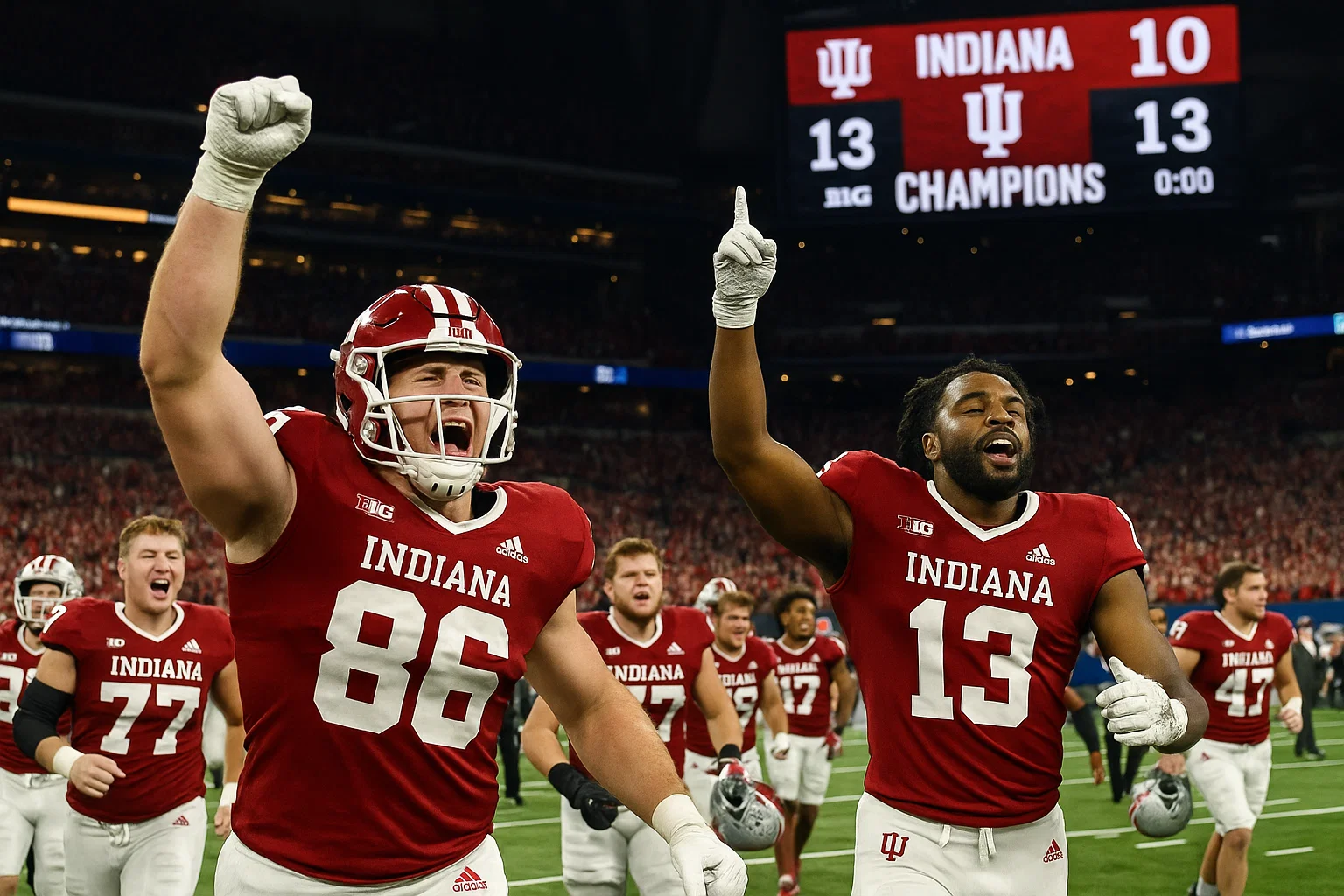
Indiana stunned No.1 Ohio State 13–10 to claim the Big Ten championship — a result that has Hoosier Nation buzzing and the wider sports world rethinking the playoff picture.
Minutes after the game, quarterback Fernando Mendoza said, “I want to give all the glory to God,” a line that quickly became the viral soundbite fans and commentators replayed.
This story unpacks the game, Mendoza’s comment and why it touched a nerve — socially, culturally and in the locker room — so you can decide: did Indiana win glory or give glory to God?
Indiana Stunned No.1 Ohio State- The moment on the scoreboard
Indiana’s 13–10 victory over Ohio State came in a defensive, low-scoring thriller that ended with a missed field goal chance for the Buckeyes.
The Hoosiers’ first outright Big Ten title since 1945 now crowns a 13–0 season and likely secures them the top seed in the College Football Playoff.
That final kick — a short attempt that could have tied the game late — sailed wide, and Indiana held on as Lucas Oil Stadium erupted.
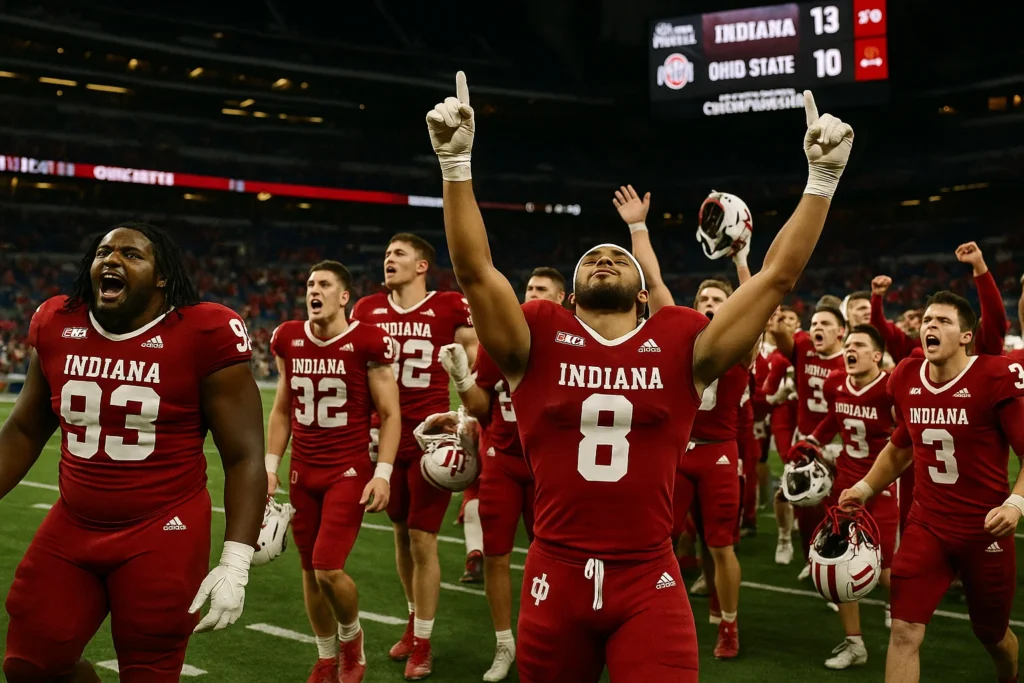
On the field the win is historic; in the postgame interviews it became personal and, for many players, spiritual.
Fernando Mendoza’s line that went viral
Asked about the win, Mendoza answered with gratitude: “I want to give all the glory to God. We were never supposed to be in this position, but by the glory of God… we’re flipping champs — let’s go!”
The phrase immediately grabbed headlines and social clips, used by fans praising faith and by critics who questioned public expressions of religion in sport.
Whether you hear inspiration or overtness depends on your lens — but the quote is now part of the game’s story as much as the scoreboard.
Why players often use religious language after wins
Athletes commonly use spiritual language as shorthand for gratitude, meaning, or a way to channel pressure into purpose.
For Mendoza and some Hoosiers, invoking God in the moment is sincere and culturally resonant, especially in Midwestern college football communities.
Religion in locker-room speech has long history in college sports; it’s a personal reflex for some players and a public communication for others.
Because college athletes are also public figures, those private habits become public moments once microphones are present.
Public reaction: praise, critique, and the inevitable memes
Responses online split quickly. Many fans and faith groups celebrated Mendoza’s words as testimony and humility.
Other voices pushed back: some asked whether religious declarations should be part of broadcast moments, while a few commentators mocked the clip’s soundbite quality and the meme culture that followed.
Sports culture has a quick memory for both reverence and ribbing; Mendoza’s line hit both tracks at once.
The football facts that matter
On the field, Mendoza completed 15 of 23 passes for 222 yards and a touchdown and earned MVP honors for his leadership.
Indiana’s defense held Ohio State to a low total and made critical stops in the fourth quarter to preserve the upset.
Those objective facts explain the “glory” side: a major program win, a conference title, and a potential No. 1 playoff seed — athletic achievement in plain terms.
Why the “God” angle matters beyond one interview
Public athletes who speak about faith surface complicated conversations about free speech, communal identity and broadcasting norms.
A quarterback’s “glory to God” may comfort some viewers and alienate others, but it also forces media and fans to talk about values, role models, and what we want public celebrations to include.
Universities, broadcasters and sponsors juggle those reactions while respecting players’ rights to personal expression.
In practice that usually means letting the athlete speak and letting the audience respond — which is exactly what happened here.
Historical context: faith and college football
College football has deep roots in faith communities across America; locker-room prayers, faith-based teams and religiously motivated service are common.
Stars from different eras have publicly thanked God after big games — Mendoza’s comment sits squarely in that tradition.
At the same time, modern media amplifies every phrase so historical continuity meets instant scrutiny in a way older generations didn’t experience.
That acceleration is why short postgame lines can become national talking points overnight.
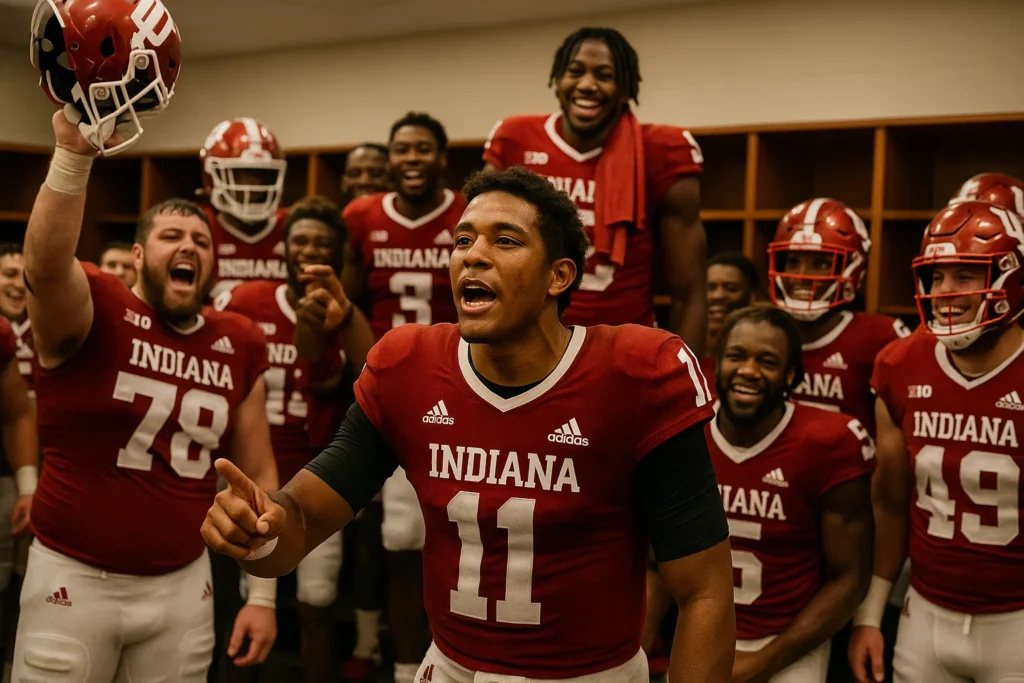
What this means for Indiana, the Heisman, and the playoff picture
Indiana’s Big Ten title propels the Hoosiers into national spotlight and elevates Mendoza’s profile as a Heisman candidate.
Winning the conference the first outright time since 1945 rewrote program narratives and gives the team momentum heading into the CFP.
For voters and voters’ media, on-field results will outweigh any single quote — but quotes color perception, and perception matters in award voting and public conversation.
How institutions usually respond to these moments
Teams and schools usually balance applause for players’ convictions with a reminder about inclusivity.
Indiana’s public messaging has highlighted team unity and celebrated the title while allowing individual players to speak candidly in interviews.
Broadcasters typically carry the full postgame remarks but rarely editorialise during the live feed; the talk shows do the heavy lifting afterward.
That sequence — game, interview, analysis — is part of modern sports media’s rhythm.
A journalist’s quick checklist if you want to follow this story
- Watch the full postgame interview to hear context, not just the clip.
- Track reaction pieces across faith communities and sports media to see which arguments gain traction.
- For awards and playoff implications, follow CFP announcements and Heisman chatter over the next two weeks.
After Indiana’s win and Fernando Mendoza’s comment, what do you feel is the stronger takeaway?
Final thought — a short, balanced takeaway
Indiana undeniably won glory on the scoreboard — a conference crown and national attention that will shape the program’s future.
At the same time, players like Mendoza who publicly gave glory to God remind us that sport is more than statistics for many participants; it’s a stage for meaning.
Which of those two takes you prefer depends on your vantage point — the field, the locker room, or the wider cultural conversation.
Either way, this Hoosiers’ night gave fans both a headline and a soundbite to remember.
Disclaimer: This article summarises available reporting and public statements as of the update time.
It aims to present both the athletic facts and the cultural reaction without endorsing any religious or political view.