Key Points: Israel Election
- Israel voted on Tuesday, October 27, 2026, and exit polls show no bloc reaching the 61 seats needed in the 120-seat Knesset.
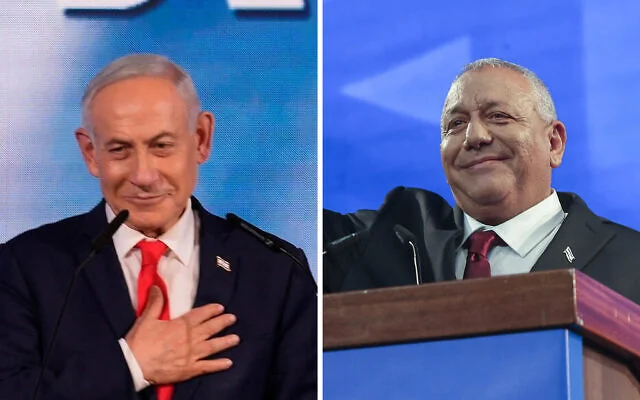
- Netanyahu’s Likud looks like the largest party, while the opposition led by Gadi Eisenkot may hold a narrow edge as a bloc.
- Arab parties are projected to win a record 17 to 19 seats.
- More than 650,000 special ballots could shift the final count, with results possibly not complete until Friday.
- No one has won the right to form a government yet.
Who Won the Israel Election? It Depends on What You Mean
Search results are full of the same question, and the honest answer is “not yet.” Exit polls from Channels 11, 12, and 13 show a deadlock.
The word “win” has three meanings here. One is the biggest party, another is the bigger bloc, and the last is who can actually form a government.
On the first, Netanyahu’s Likud leads. On the second, the picture is a toss-up. On the third, nobody has a clear path.
Did Netanyahu Win or Lose?
Early exit polls gave Eisenkot’s bloc a small lead. As the night went on, updated numbers moved toward Netanyahu.
Channel 12 later put his bloc at 52 seats against 49 for the opposition. Channels 11 and 13 had the two sides tied at 51.
Netanyahu told supporters Likud is the largest party and claimed victory. Eisenkot said Israelis voted for change but warned these are only exit polls.
A Polling Miss Worth Noticing
Here is a detail many readers will skip. The final pre-election polls had consistently put Eisenkot’s Yashar party ahead of Likud.
The exit polls flipped that, with Likud first at roughly 24 to 27 seats and Yashar at 21 to 23. That gap suggests many voters made late choices or did not tell pollsters the truth.
It also shows why exit polls and final results can differ, especially in a country with this many small parties.
The Referendum on Netanyahu
Many Israelis treated this vote as a referendum on Netanyahu’s long rule. AP reported that security, military conscription, and integrity were top issues.
For critics, the result is a rebuke if his bloc stays short of a majority. For supporters, a Likud first-place finish shows he still has the strongest party base.
Both readings can be true at once, which is why the country is waiting.
Arab Parties Could Hold the Keys
Arab parties are projected to win 17 to 19 seats, which would be an unprecedented result. Pre-election surveys had them at 14 to 16.
The Joint List is projected at 10 to 11 seats and Ra’am at 7. With the main blocs only a few seats apart, their position could shape every coalition option.
How they choose to act will be one of the biggest stories of the coming weeks.
Why the Count Could Take Until Friday
Turnout was historic. By 8 p.m. Israel time, 74.3 percent had voted, the highest at that hour since 1988, compared with 66.3 percent in 2022.
More than 650,000 double-envelope ballots still need checking. These include votes from soldiers, diplomats, hospital patients, and people away from their home polling station.
Officials said counting could run until Friday morning.
The 3.25 Percent Trap
Israel has a threshold of 3.25 percent for entering the Knesset. Early polls showed three parties, including Amcha Yisrael and the Reservists-Economic Party, falling below it.
Votes for parties under the line are discarded. That can quietly shift seats to others and change which bloc crosses its target.
With so many close calls, final seat totals may differ from the exit polls by a seat or two.
What Happens Next
President Isaac Herzog will meet each party and then pick someone to try to form a coalition. That person normally gets 28 days, with a possible extension of up to 14.
Netanyahu will likely stay on as caretaker prime minister while talks play out. If no one succeeds, Israel could face another election.
Israelis have been through repeat votes before, so this outcome is not unfamiliar.
Quick Answers for Readers
When is election day, and what time is it in Israel? Voting happened October 27. Israel is six hours ahead of U.S. Eastern time until U.S. clocks change on November 1.
Where do voters vote? Israelis vote at an assigned polling station based on their registered address. Special ballots exist for soldiers, diplomats, and hospital patients.
Where to follow updates? Israeli outlets such as Haaretz, the Jerusalem Post, and Ynet are tracking the count, and U.S. outlets are covering the exit polls.
The Bottom Line
The Israel election has produced a split verdict. Likud leads as a party, the opposition may lead as a bloc, and no one has the 61 seats needed.
Wait for the official results and for Herzog’s next move before calling a winner. The final answer may take weeks.