Key points (quick read)
- Federal prosecutors have opened a criminal probe into Federal Reserve Chair Jerome Powell; grand-jury subpoenas were served to the Fed late last week.
- Powell says the subpoenas threaten a criminal indictment and framed the move as political pressure on Fed independence.
- Markets reacted quickly: U.S. equity futures fell and safe-haven assets such as gold and the Swiss franc jumped.
- Republican Senator Thom Tillis publicly criticized the escalation and pledged scrutiny of related nominations until independence concerns are resolved.
- The probe centers on testimony and a high-profile renovation of Fed facilities; investors should watch legal filings, CPI data, and Fed communications.
What happened — Jerome Powell Investigation
U.S. prosecutors have opened an inquiry into Chair Jerome Powell tied to his testimony about a Federal Reserve building renovation.
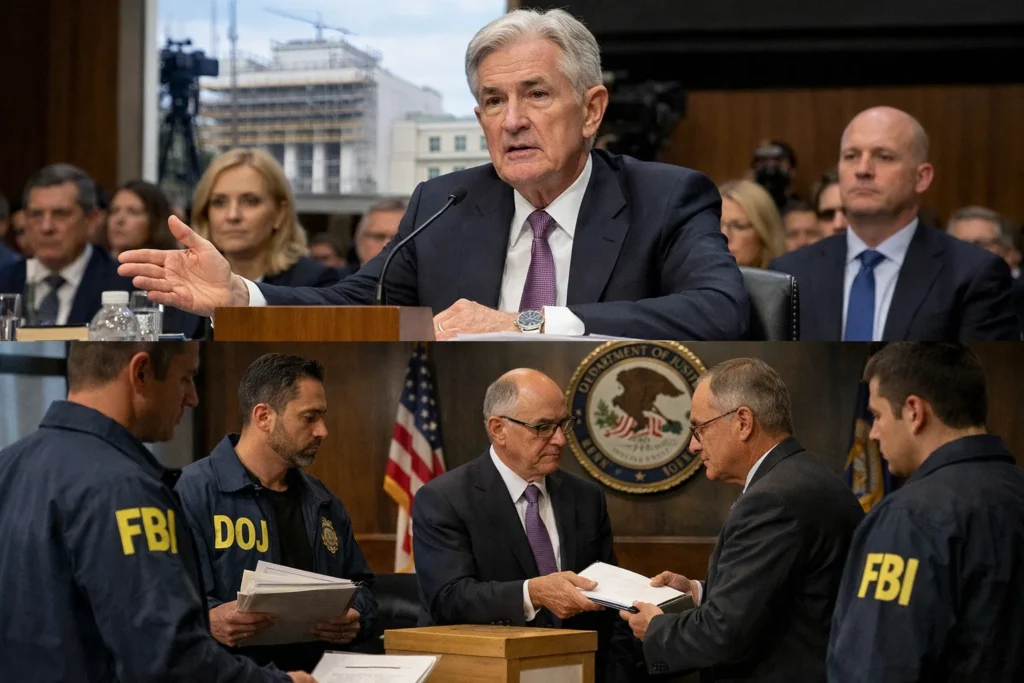
The Justice Department served grand-jury subpoenas to the Fed last Friday; Powell said the subpoenas included threats of criminal indictment.
Why the Fed chair’s status matters to markets
The Fed chair is the central figure in setting U.S. monetary policy and signalling interest-rate direction to markets.
Any threat to the chair’s independence raises immediate questions about political influence over interest-rate decisions.
Market reaction — immediate and measurable
After Powell’s public statement, S&P futures and other equity futures slipped while the dollar softened.
Safe havens and commodities — notably gold — rallied as investors priced in political risk to central-bank credibility.
The political dimension — where Thom Tillis fits in
Senator Thom Tillis criticized the move and warned it could undermine confidence in Washington institutions.
Tillis said he would oppose related nominations until the situation is clarified, adding a legislative political angle to the legal probe.
Legal and institutional mechanics at play
Reports say the inquiry focuses on whether testimony about the Fed renovation misled Congress and whether that conduct warrants prosecution.
A federal grand jury and DOJ prosecutors will review documents, testimony and whether any statutes were violated.
What investors should watch next (concise checklist)
- Any public filings or DOJ statements that clarify the scope of the subpoenas and whether charges are likely.
- Powell’s public remarks and Fed communications for signals about leadership continuity and policy posture.
- Near-term macro data — especially CPI and labor reports — that could re-anchor markets to fundamentals.
Short FAQ — quick answers investors want
Does this automatically change Fed policy?
No — the Fed’s policy decisions still flow from FOMC processes, but political pressure can alter markets’ perception of future policy.
Could Powell be removed?
The chair has legal protections; removal would require extraordinary steps and would likely prompt legal and political battles.
How long could uncertainty last?
Legal probes and grand-jury activity can last months; market reactions may ebb and flow with news and data.
Do you trust the Fed will remain independent during this probe?
Bottom line — balancing law, policy and markets
This episode places the justice system and monetary policy at a rare intersection, with tangible market reactions already visible.
Investors should monitor legal disclosures, Fed messaging, and incoming economic data for signs that fundamentals or politics will dominate price action.
Disclaimer: This article synthesizes reporting available as of January 2026, including official statements from the Federal Reserve and contemporaneous market coverage. It is informational and not investment advice; readers should consult primary legal filings, Fed releases and professional financial counsel for decisions.