Key points
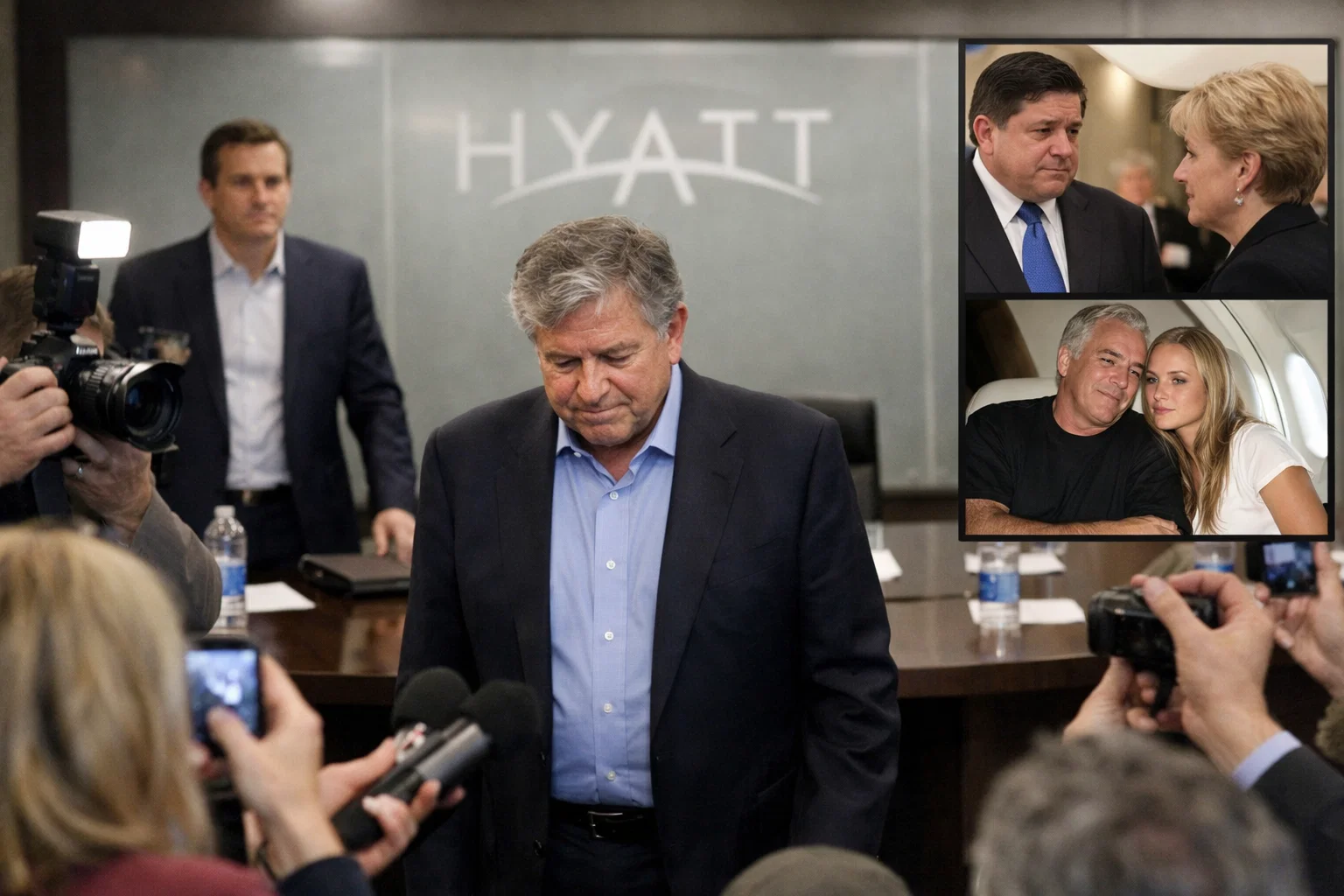
- Thomas (Tom) Pritzker stepped down as executive chairman of Hyatt after newly released documents tied him to associates of Jeffrey Epstein. Thomas Pritzker
- The resignation follows a tranche of DOJ-released files that have prompted a cascade of high-profile exits across business and civic institutions.
- Pritzker said he “deeply regrets” the association and described his decision as necessary to protect the company’s reputation; Hyatt’s CEO will assume chair responsibilities.
- The fallout raises political and governance questions because Tom Pritzker is a prominent member of the Chicago Pritzker family and a cousin of Illinois Gov. J.B. Pritzker.
- Observers say the episode spotlights how the Justice Department’s document release continues to trigger boardroom and institutional accountability—even where no criminal charges are alleged.
What happened — Pritzker resigns over Epstein ties
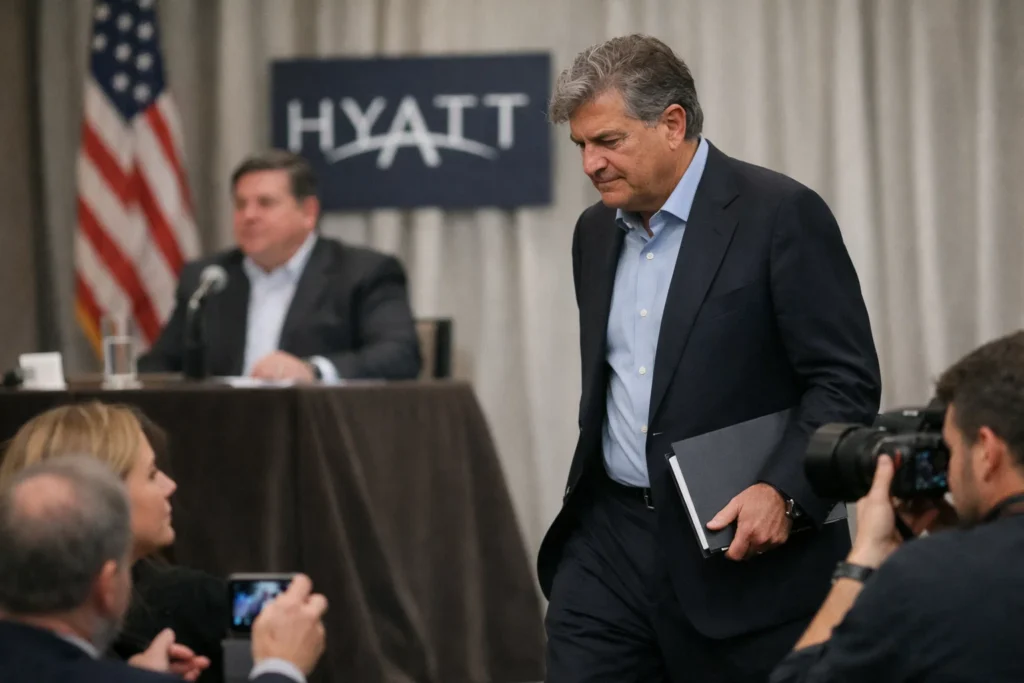
Thomas Pritzker resigned as executive chairman of Hyatt Hotels effective immediately after U.S. Department of Justice documents released in the latest tranche of the Epstein files included email exchanges and references linking him to Jeffrey Epstein and Ghislaine Maxwell. In a company letter, Pritzker acknowledged “terrible judgment” in maintaining contact and said stepping down was part of protecting Hyatt’s reputation.
The evidence and official framing
The materials made public by federal authorities include emails and contemporaneous notes that, according to reporting, show repeated contact between Epstein’s circle and multiple high-profile figures. News outlets say the files don’t automatically equal criminal allegations against everyone named; rather, the documents provide new primary material that institutions and the public are now parsing. Hyatt’s board accepted Pritzker’s resignation and the company’s CEO will assume the chairman role while the board reviews governance matters.
What Pritzker said and why he resigned
In his written statement Pritzker expressed remorse and said he had exercised “poor judgment” by remaining in contact with Epstein after Epstein’s 2008 conviction. He framed the resignation as an act of stewardship to prevent distraction at Hyatt and to avoid harm to the company’s brand and stakeholders. Corporate governance experts say voluntary exits like this are common when reputational risk threatens shareholder value—even absent allegations of criminal conduct.
Political and family angle
The resignation carries extra attention because Tom Pritzker is part of the influential Pritzker family in Chicago; his cousin J.B. Pritzker is the state’s governor. Local and national commentators are watching how the political wing of the family responds and whether the governor’s office will face questions about association, influence or separation from family business matters. Reporting so far indicates both political aides and corporate spokespeople are treating the matter as a private family and corporate governance issue, while remaining sensitive to public scrutiny.
Institutional fallout and wider pattern
Pritzker’s departure fits a pattern seen after the DOJ files began to circulate: boards, associations and nonprofit bodies have moved to remove or distance leaders whose names appear in the archive. Some resignations were voluntary, others followed internal reviews. Legal experts emphasize that appearance in documents is not proof of criminality, but institutions evaluate reputational risk separately from legal liability—and often act faster to preserve stakeholder confidence.
What this means for Hyatt, investors and customers
- Board stability: Hyatt’s leadership transition is designed to be orderly—CEO Mark Hoplamazian will take on the chair role temporarily—while the board conducts its internal review. Investors will watch governance disclosures and any further board changes.
- Brand risk: Hospitality companies are reputationally sensitive; travel-buyers and corporate clients may press for assurances that safety and corporate values aren’t compromised. Expect Hyatt to amplify communications about governance and ethics.
- Regulatory exposure: At present, reporting does not show criminal charges tied to Pritzker arising from the files; the main issue is public trust and potential shareholder pressure. Legal analysts say lawsuits are possible if new facts emerge, but the immediate consequence is reputational and operational.
Quick Q&A (readers’ likely questions)
Q: Is Pritzker accused of a crime?
A: No criminal charges have been announced. The current developments are driven by DOJ document disclosures and corporate governance decisions rather than by new indictments.
Q: Will Hyatt lose business?
A: Short-term stock or PR effects are possible, but Hyatt’s customer base and global operations are large; the company’s response and governance steps will shape whether the impact is sustained.
Q: Could more resignations follow?
A: Yes—reporting shows other leaders in business and civic life have already left roles after their names surfaced in the files, and more institutional reviews remain ongoing.
Bottom line
Tom Pritzker’s resignation illustrates the real-time governance consequences that can flow from massive public releases of investigative material. Even when documents don’t produce criminal charges, institutions often act quickly to limit reputational damage and restore stakeholder confidence. For readers: watch for the board’s public disclosures and any newly surfaced documents that clarify the timeline and nature of interactions.