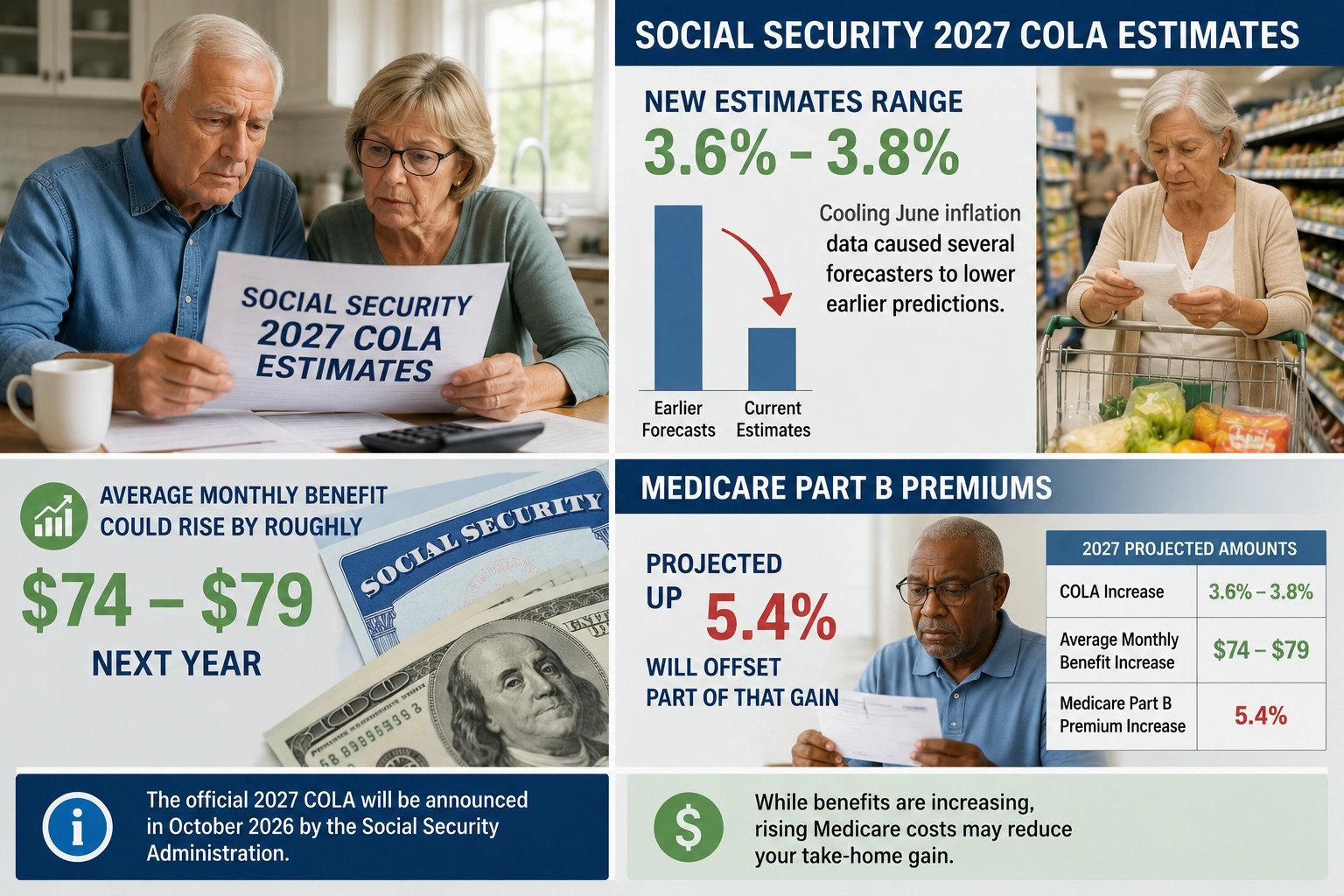
Key Points: Social Security 2027 COLA Increase
- Social Security 2027 COLA increase estimates now range from 3.6% to 3.8%
- Cooling June inflation data caused several forecasters to lower earlier predictions
- The average monthly benefit could rise by roughly $74 to $79 next year
- Medicare Part B premiums, projected up 5.4%, will offset part of that gain
Retirees waiting on next year’s Social Security raise just got a mixed signal, and it’s splitting experts who normally agree.
The Senior Citizens League held its forecast steady at 3.8% in its July 14 release, unchanged from June but down slightly from an earlier 3.9% spring estimate.
Independent analyst Mary Johnson moved in a different direction entirely. She dropped her own projection from 4.7% down to 3.7%, calling it one of her largest single month revisions in five years.
Here’s what’s driving that split. Earlier 2026 forecasts climbed as high as 4.7%, fueled by an energy price shock tied to spring inflation data.
June’s inflation report told a calmer story. The Consumer Price Index for Urban Wage Earners rose 3.5% over the past year, a clear slowdown from May’s pace.
AARP and financial analyst David Enna have both landed on an even more conservative 3.6% estimate, based on that same cooling inflation trend.
Whatever the exact number ends up being, one thing is consistent across every forecast. It’ll land well above 2026’s actual 2.8% increase.
Here’s what that means in real dollars. A 3.8% COLA would push the average monthly benefit from $2,084 to roughly $2,163, based on TSCL’s latest calculations.
The maximum possible benefit would see an even bigger jump, rising from $5,181 to approximately $5,378 under that same 3.8% scenario.
Here’s the detail that tends to catch retirees off guard every single year. Rising Medicare costs typically eat into a meaningful portion of any COLA increase.
Medicare Part B premiums have averaged roughly 5.4% annual growth over the past decade, and 2027 projections suggest that pattern will likely continue.
There’s a longer term policy angle worth watching too. Congress recently reintroduced the Social Security 2100 Act, which would raise benefits by 2% and switch the COLA formula to better reflect seniors’ actual costs.
That bill would also set a new minimum benefit tied to the federal poverty line, though its path through Congress remains far from certain.
The Social Security Administration won’t confirm the actual 2027 COLA until October 14, once September’s inflation data is finalized. Until then, every number circulating remains an informed guess, not a locked-in figure.