By TrenBuzz — Analysis
Key points
- A new national survey finds majorities want the Supreme Court to curb President Trump’s sweeping tariff authority — and to limit efforts to oust or control Federal Reserve officials.
- The poll shows broad public concern about executive overreach over economic levers: roughly six-in-ten respondents support limits on the president’s tariff powers and favor protections for Fed independence.
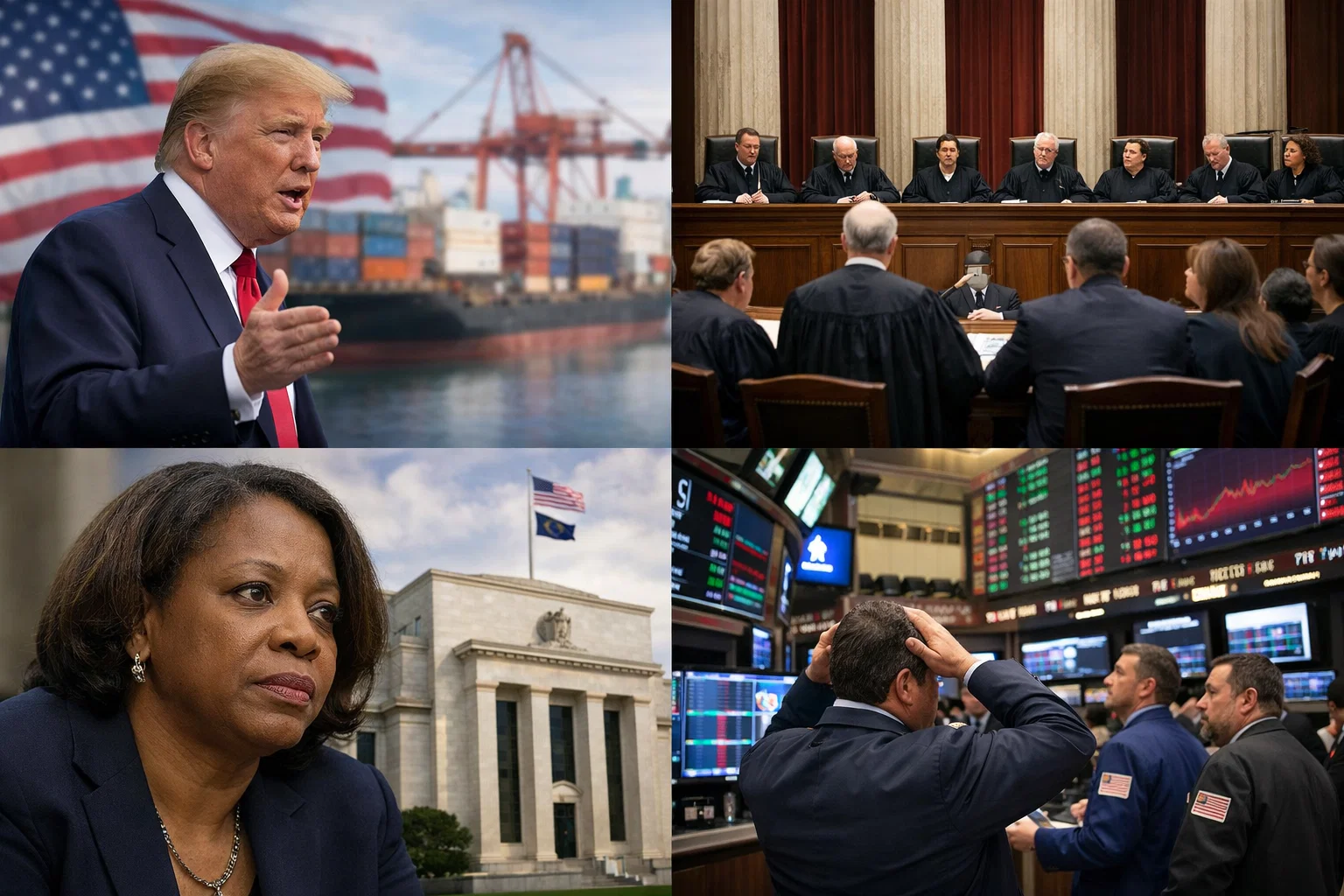
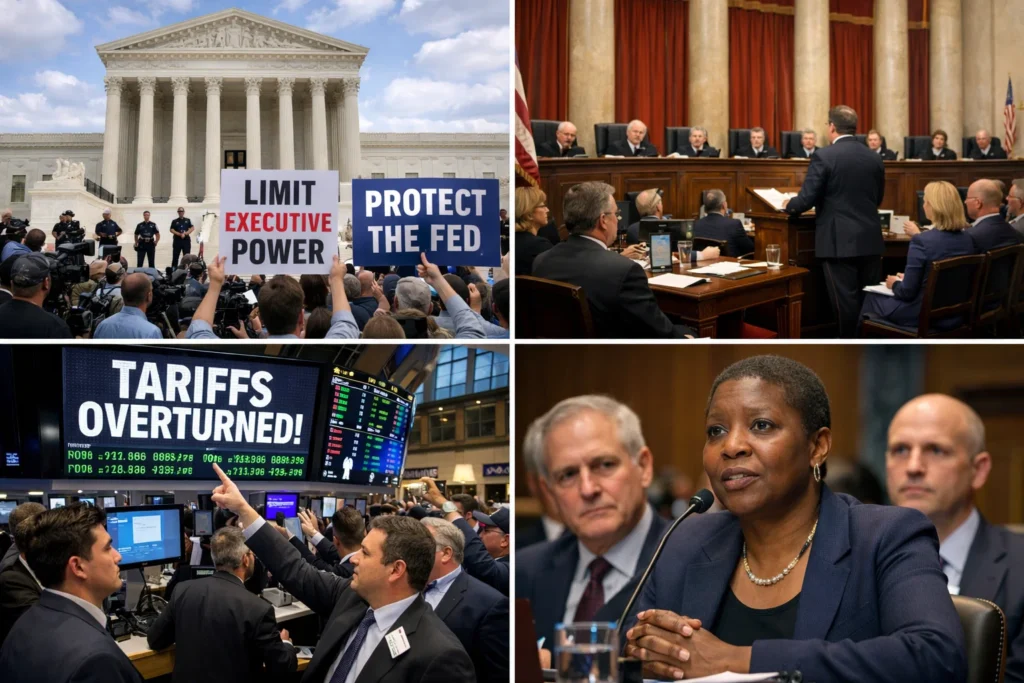
- The Supreme Court is already weighing both fights: a high-stakes case on the legality of Trump’s global tariffs and a separate challenge tied to his bid to remove Fed Governor Lisa Cook. Justices signaled skepticism in oral argument in both matters.
- If the Court rules against the White House, the consequences would be immediate and material — invalidating tariffs, exposing the Treasury to refund claims, and preserving the Fed’s political insulation from direct presidential control. Markets, trade partners and central-bank independence all hang in the balance.
Supreme Court to rule against Trump — why this matters now
A fresh national survey, released as the U.S. Supreme Court deliberates on two headline-grabbing cases, finds that most Americans want the justices to curb President Trump’s use of emergency tariff powers and to reject efforts to oust or politically control Federal Reserve officials. The combined political and economic stakes are enormous: a ruling against the president would limit a signature trade policy and reinforce long-standing safeguards that keep monetary policy independent from short-term political pressure.
What the poll actually says (the facts)
- The Marquette Law School national survey — one of the poll’s sources — reports that a large plurality (about 63%) favors Supreme Court limits on presidential tariff authority, while most adults also say presidents must obey court rulings. The poll finds durable support for legal checks on executive economic power.
- Media summaries and reaction pieces note similar public results: large majorities want the Court to rule against the administration on the tariff and Fed-control questions, reflecting concern about concentration of economic authority.
(Polling caveats: question wording, sample timing and margins of error matter — read the underlying instrument and sample frame for precise estimates.)
Court context — the two headline cases
- Tariffs case: Lower courts have already found the president overstepped in imposing sweeping tariffs using emergency economic-powers statutes. The Supreme Court heard arguments and has been deliberating the legality of those tariffs — a decision could require rescinding tariff orders and could trigger large refunds for importers.
- Federal Reserve / Lisa Cook: The Court also considered whether the president can remove a Fed governor (Lisa Cook) for political reasons — a decision that would either preserve or weaken the Fed’s insulation from direct presidential firing power. Justices appeared wary of upending the Fed’s long-standing independence in oral argument.
Both decisions touch the boundaries of presidential authority over critical economic levers — trade policy and monetary policy — and thus explain why the public is watching closely.
Why many Americans want the Court to side against the president
- Economic impact: Tariffs act like taxes on consumers and businesses; many voters see unilateral tariff moves as economically damaging and prone to retaliation. Poll respondents often cited pocketbook effects when judging tariff policy.
- Guardrails against politicization: Central-bank independence is widely viewed as a virtue that keeps inflation and financial stability goals insulated from day-to-day politics — voters worry that politicizing the Fed would have long-term costs.
- Rule-of-law instincts: Large majorities in other surveys say presidents should comply with court rulings — a simple democratic norm that colors views on high-profile legal fights.
What a Court loss — for tariffs or Fed control — would mean practically
- If tariffs are struck down:
• The U.S. could be required to refund billions in duties already collected. Markets that re-priced trade flows around tariff protection would face adjustments. Import-dependent industries would see immediate cost relief while manufacturers that benefited from tariffs would need to re-compete. - If the president cannot fire Fed governors at will:
• The Fed retains legal protections that make interest-rate decisions more resistant to short-term political pressure. That preserves market confidence in the central bank’s commitment to price stability and independent judgment.
Either outcome would recalibrate the administration’s toolkit for using unilateral economic levers in foreign and domestic policy.
Political and market reaction to watch
- Markets: Traders are already pricing the odds of different outcomes (markets implied probabilities fluctuate); a clear Court ruling would likely move risk assets, bond yields and the dollar.
- Diplomacy and trade partners: Allies and trading partners will respond to any ruling that unravels tariffs — a decision against the president could ease tensions and reduce the risk of reciprocal measures.
- Congressional politics: A Court rebuttal of executive action could empower Congress to revisit statutory language (e.g., IEEPA or other emergency authorities) to clarify separation of powers. Expect legislative interest in tightening or clarifying the law.
How to interpret the poll — three reading tips
- Correlation ≠ causation: Polls register attitudes but do not determine legal outcomes. Public sentiment can influence political pressure, but the Court decides on law and precedent.
- Question framing matters: Support levels for “limit the president” or “protect the Fed” depend on exactly how questions were asked; small wording shifts can move majorities. Review the poll instrument for nuance.
- Durability of views: High-salience legal fights can shift public opinion if consequences (refunds, inflation, market moves) become tangible — the headline poll is a snapshot, not a permanent mandate.
What to watch next (timeline)
- Supreme Court rulings: Decisions are expected in the current term window (announced pattern suggests rulings could arrive by late spring/early summer). The timing will determine market and political reaction speed.
- Market indicators: Watch bond yields, dollar strength, and implied probabilities in betting/market-pricing tools for early signals of how traders expect the Court to rule.
- Congressional fixes: Any rapid legislative response to limit emergency tariff powers or to shore up Fed safeguards will be important barometers of long-term institutional change.
Bottom line
The poll shows a public skeptical of unilateral executive control over the levers that shape the economy. With the Supreme Court now deciding on both the tariffs and the president’s attempted control over the Fed, Americans’ preference for judicial limits — at least as captured in recent surveys — is aligned with deep institutional concerns about economic stewardship, market stability and the rule of law. Whatever the Court decides, the rulings will reshape U.S. economic governance for years to come.