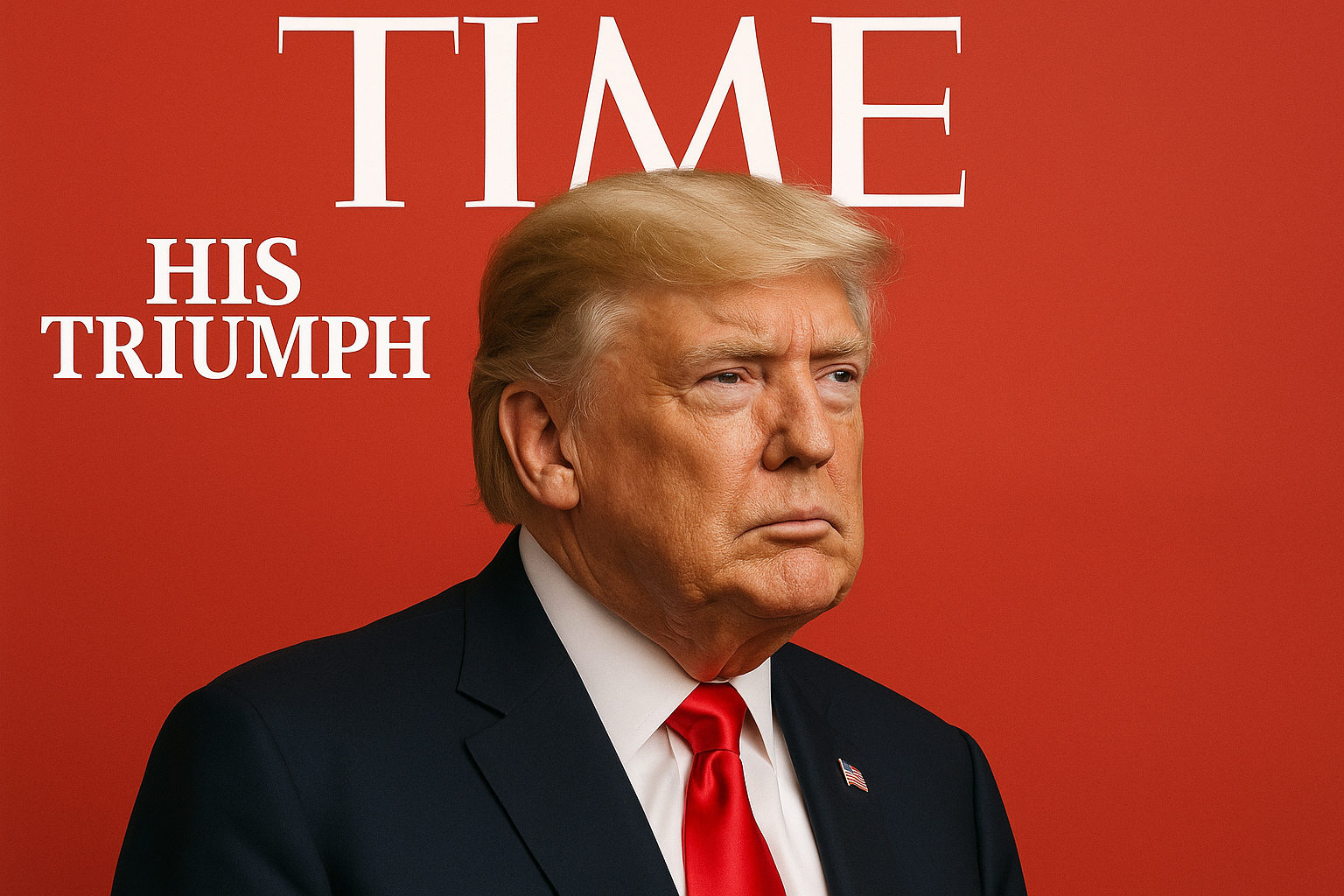
Time Magazine Cover: Time’s new cover — headlined roughly “His Triumph” and depicting Donald Trump — spotlights his role in a recent Israel–Hamas ceasefire and hostage-exchange push. The cover was posted by Time and praised by some outlets, but it also drew a viral public reaction after President Trump himself criticized the photo as unflattering. Below I explain what’s on the cover, why it matters, who reacted, and where to verify the facts.
1) What the cover shows (and what Time said)
Time posted an image of the November/early-November issue showing Donald Trump in a three-quarter pose with the headline framing his diplomatic push in the Middle East as a major success. The magazine’s social post of the cover was widely shared online.
2) Why Time focused on Trump now
Time Magazine Cover: The issue frames a recent diplomatic moment — the U.S.-backed ceasefire/prisoner-exchange surrounding Israel and Hamas — as potentially a turning point and thus a major foreign-policy story, which is the editorial rationale for making it a cover story. That context is the core reason a major outlet put a sitting/soon-to-be former leader on the cover.
3) Trump’s very public reaction — he disliked the photo
Shortly after Time posted the cover, President Trump publicly criticized the photo — calling it “super bad” and “the Worst of All Time” on his platform, complaining the image “disappeared my hair” and included a small object above his head he found odd. His post quickly became part of the story itself and was widely reported.
4) How media reacted — a mix of praise, analysis and jokes
News outlets covered both the cover story and Trump’s reaction. Some stories focused on the diplomatic angle (the peace/hostage work), others on the media moment (a president critiquing a magazine photograph), and many social posts turned the exchange into memes. Coverage ranged from straight reporting to commentary about political optics.
5) Is this unusual? Trump has often objected to portraits and photos
This is not the first time Trump has publicly objected to media images of himself — he has previously criticized artworks, filters and covers he found unflattering, even when the underlying story was positive. That pattern helped fuel immediate attention to his comments about Time’s cover.

6) The cover in historical context — Time and major political covers
Time regularly places presidents and major political actors on the cover when an event or policy is potentially historic. In 2016 and 2024 Time’s covers featured Trump in other contexts; using a candid or dramatic portrait for an editorial statement is standard magazine practice. For collectors and researchers, Time’s online vault lists 2025 covers and earlier years.
7) The real story beneath the image: the diplomatic claim
Time’s article and many follow-ups treated the ceasefire/prisoner exchange as a substantive foreign-policy event and placed the president’s role at the center of the narrative — which is why the cover language and image were chosen. Whether the policy will prove durable is a separate policy question; the cover captures the moment and the magazine’s editorial judgment.
8) What this means for readers and publishers
If you’re a reader: treat the cover as a packaged editorial claim (Time’s judgment about significance) plus the extra story — the president’s reaction — which became news itself.
If you’re a publisher or social sharer: link to the original Time post and major outlets for context rather than sharing the cover alone; that avoids stripping the image of its reporting frame.
9) Where to verify and follow updates (trusted sources)
For the most reliable follow-up: check Time’s official post, major wire services (AP, Reuters), and mainstream outlets that reported the president’s comments. I recommend saving Time’s tweet announcing the cover and reading the magazine’s full cover story to understand the reporting behind the headline.
Quick checklist for journalists (how to quote and attribute)
- Use Time’s social post as the primary artifact for the cover image.
- Quote Trump’s statement from his public platform and corroborate with mainstream reporting (WaPo/People/Variety).
- When summarizing the policy claim (peace/hostage exchange), cite the wire coverage and Time’s article for specifics.
Sources (verified links — checked Oct 14, 2025)
Below are the primary, reputable links I used for this article. Use these for quoting, screenshots or further context.
- Time (official) — Time’s social post showing the cover. (X (formerly Twitter))
https://x.com/TIME/status/1977784098929385818 - The Washington Post — reporting on Trump’s public criticism of the cover photo. (The Washington Post)
https://www.washingtonpost.com/politics/2025/10/14/trump-time-magazine-cover/ - People — coverage summarizing the cover and Trump’s reaction. (People.com)
https://people.com/trump-blasts-time-cover-super-bad-picture-11829206 - Variety — analysis and coverage of the controversy. (Variety)
https://variety.com/2025/biz/news/trump-complains-time-magazine-cover-disappeared-hair-1236552316/ - Fox News — story on Time’s cover and the magazine’s framing of the diplomatic event. (Fox News)
https://www.foxnews.com/media/time-magazine-heralds-israel-hamas-peace-plan-trumps-triumph-new-cover - Time Vault — archive of Time covers and context for 2025. (TIME)
https://time.com/vault/year/2025/
Disclaimer
This article summarizes reporting and editorial content current as of the update date above. It is informational and not an endorsement of any political claim or media portrayal. For the full reporting and the magazine’s reporting context, read Time’s cover story and the wire-service follow-ups cited above. Images used in this article are royalty‑free or licensed for commercial use and are provided here for illustrative purposes.