Key points
- President Trump delivered a combative Davos address that reiterated his Greenland demands and tariff threats — markets reacted nervously and U.S. futures slipped.
- Trump used the World Economic Forum platform to boast about U.S. inflation progress while proposing big housing moves and new trade pressure on Europe.
- Dow Jones / DJIA futures and broader U.S. equity futures fell ahead of and during the speech as investors priced geopolitical and trade risk.
- The World Economic Forum livestreamed the address and global leaders scrambled for diplomatic damage control; markets will watch follow-up meetings and any concrete tariff actions.
What Trump said (Trump Davos Speech)
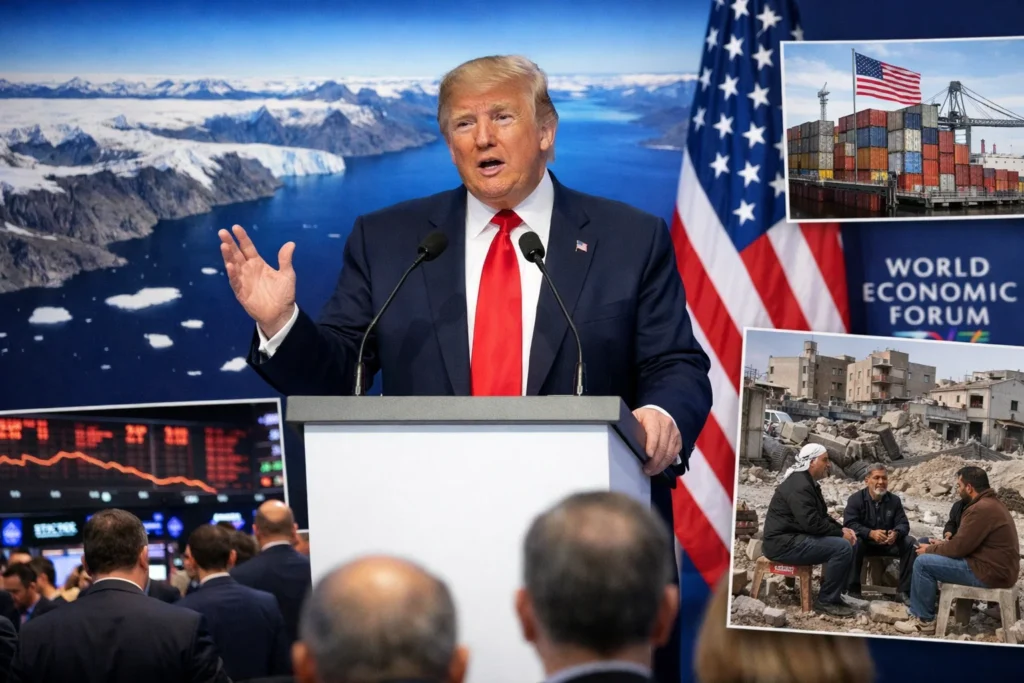
At Davos, Trump framed Greenland as strategically vital, said he would not use force but called it “our territory,” and threatened tariffs if talks don’t move his way.
He also touted U.S. economic gains, outlined a housing-affordability plan and suggested a “Board of Peace” for Gaza — a mix of policy boasts and geopolitical provocation.
Market reaction in plain language
Ahead of and during the address, U.S. futures — including Dow (DJIA) futures — moved lower as traders priced in heightened trade risk and political uncertainty.
Safe-haven flows and commodity moves (including gains in gold) accompanied the pullback in equity futures.
Why Davos matters this year
Davos gathers global policymakers, finance chiefs and corporate leaders — a stage where rhetoric becomes policy risk if it signals trade coercion or unexpected geopolitical steps.
Because Trump tied tariff talk to territorial aims, investors treated the speech not only as rhetoric but as a risk marker for transatlantic relations.
What traders and CEOs are watching next
Markets will look for concrete follow-through: any U.S. tariff proclamations, EU countermeasures, and whether bilateral Davos talks calm or inflame the row.
Economic data and Fed signals still matter, but political shocks from Davos can move near-term flows in futures and FX desks.
Quick, practical takeaways for readers
- If you trade futures or own equities, expect volatility windows around Davos news and tariff headlines.
- Long-term portfolios should weigh fundamentals; short-term traders should watch headline risk and order-book depth.
Did Trump’s Davos speech increase your concern about market stability?
Final note — why you should care right now
Davos speeches shape narratives that change risk premia quickly; when a sitting U.S. president links trade threats to geopolitical aims, futures react first and questions about supply chains and tariffs follow.
Watch for official trade notices, EU statements, and market-moving Davos side meetings over the next 48 hours.
Disclaimer: This article synthesizes reporting available as of January 21, 2026. It is informational, not financial advice; consult primary market data and official statements before making investment or trading decisions.