Key points
- President Trump announced he has revoked Canada’s invitation to join the U.S.-led “Board of Peace,” a newly launched international initiative for Gaza reconstruction.
- The move followed Canadian Prime Minister Mark Carney’s critical remarks at the World Economic Forum in Davos; the White House framed the rescission as a response to those comments.
- The Board of Peace is presented by its U.S. backers as a high-profile reconstruction and governance mechanism that asks founding members for large voluntary contributions and seats on an executive council — a structure that has already drawn diplomatic caution.
- Washington’s public disinvitation risks immediate diplomatic friction with a close ally, complicates coalition-building for Gaza relief, and raises questions about the Board’s credibility and funding prospects.
Trump disinvites Canada — what happened and why it matters
President Trump announced on January 22, 2026, that he was withdrawing Canada’s invitation to join his newly announced “Board of Peace,” after Prime Minister Mark Carney’s remarks in Davos criticizing the use of economic coercion and defending Canadian independence. The public nature of the dispute—played out across speeches and social posts—turns what might otherwise be a high-level diplomatic coordination task (post-war Gaza reconstruction) into a test of alliance politics and the U.S. administration’s ability to assemble a multilateral coalition.
The facts, clearly stated
- Revocation announced by the U.S. president. The White House publicly acknowledged that Canada’s invitation had been rescinded; President Trump framed the decision in personal and political terms on his platform and in public remarks.
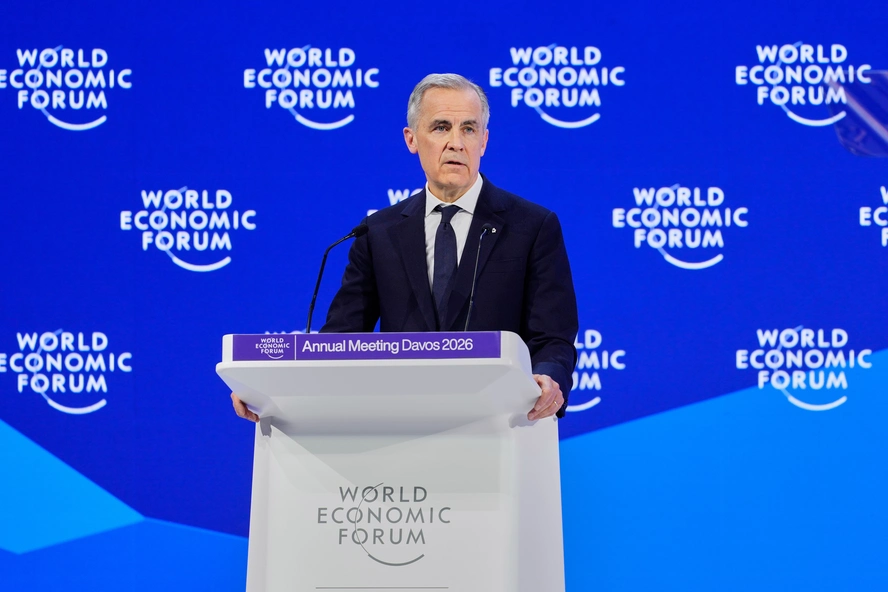
- Context in Davos. Prime Minister Carney used his World Economic Forum platform to criticize coercive trade tools and to emphasize middle-power roles in defending a rules-based system — remarks U.S. officials and the president characterized as unfriendly and partly the proximate trigger for the revocation.
- What the Board of Peace is. According to the White House rollout and reporting, the Board is intended as an international governance and reconstruction forum for Gaza; it has an executive council, voting mechanisms, and asks founding members for significant financial commitments — a design that has prompted unease among some traditional partners.
(These load-bearing facts are supported in contemporaneous reporting and official readouts.)
Why Washington’s public disinvite is significant
- Diplomatic costs with a close ally. Canada is a NATO partner with deep trade, security and people-to-people ties to the U.S.; publicly disinviting its leader over an opening speech risks immediate political backlash and long-term diplomatic friction.
- Coalition credibility and fundraising. The Board’s organizers have pitched a high-cost founding structure (noted voluntary contributions and permanent seats), so ruptures among major prospective members create doubts about the board’s legitimacy and fundraising prospects for Gaza reconstruction.
- Signal discipline and messaging. The episode sends a message about how the administration expects allied behavior in public forums; other potential members may recalibrate participation based on whether they prefer diplomatic engagement or distance from the controversy.

Reactions so far
- Ottawa: Canadian officials pushed back, emphasizing Canada’s sovereignty and rejecting the implication that criticism of policy is cause for exclusion; Ottawa has signaled it will weigh its options but has not announced reciprocal measures.
- Other potential members: Some countries have already been cautious about joining the Board; a few European leaders declined to participate, citing concerns about the charter and the inclusion of controversial actors. Those reservations are now amplified by the dispute with Canada.
- Policy and expert response: Analysts highlight that politicizing recruitment for reconstruction efforts risks fragmenting the international response and reducing resources available to civilians in Gaza who need aid and rebuilding.
What this means for the Board of Peace and Gaza reconstruction
- Short term: Expect diplomatic shuttle diplomacy to try to contain the fallout and to reassure other prospective members. Contested membership may delay early consultations and fundraising.
- Medium term: If more potential members distance themselves, the Board’s authority and capacity to coordinate a large reconstruction package will be weakened—forcing the U.S. either to dilute the Board’s design or to underwrite more costs bilaterally.
- Humanitarian consequences: Delays in assembling credible multilateral financing and management risk slowing actual reconstruction projects on the ground, with real consequences for civilians dependent on rapid infrastructure repair.
Practical takeaways for readers
- For policy watchers: Track whether the White House publishes the Board charter and a formal member list; those documents will show the financial and governance obligations that are driving partner caution.
- For diplomats and NGOs: Expect a short period of intense diplomacy; humanitarian planners should press for fire-walled implementation channels that can operate even amid political disagreement.
- For the public: Distinguish symbolic gestures (invitations and withdrawals) from operational commitments that translate into funding and projects—substantive assistance depends on cash, clear governance and sustained cooperation.
What to watch next
- Official White House text of the Board charter and membership requirements. That will clarify whether the Board’s structure makes participation politically costly and financially demanding.
- Canada’s diplomatic response. Will Ottawa escalate, remain public, or quietly engage in parallel reconstruction channels?
- Responses from other major donors and multilateral institutions. The UN, EU and major NGO consortia will indicate whether they see the Board as complementary or in competition with established channels.