Published by TrenBuzz.com | May 1, 2026
Key Points at a Glance – Trump Lifts Scotch Whisky Tariffs
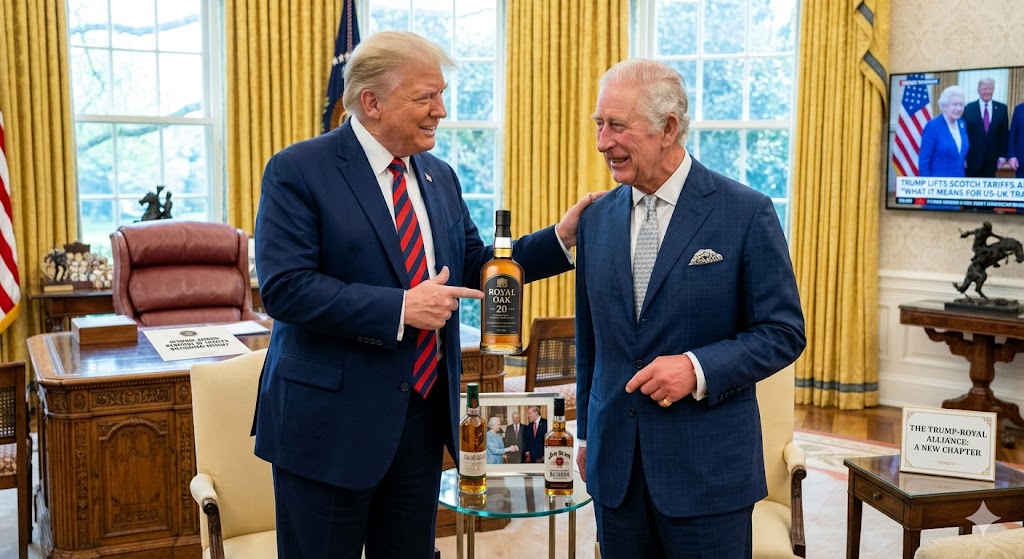
- President Trump announced he is lifting all tariffs and restrictions on Scotch whisky on April 30, 2026 — directly crediting King Charles III and Queen Camilla’s White House visit.
- Trump posted on Truth Social: “The King and Queen got me to do something nobody else was able to do, without hardly even asking!”
- The move removes the 10% tariff on Scotch whisky imports from the UK — part of a long-running Airbus-Boeing aerospace subsidy dispute.
- The tariff specifically targeted Scotland’s ability to work with Kentucky on whisky and bourbon barrel cooperation.
- Scotland’s First Minister John Swinney called it a “tremendous success” — saying jobs were at stake and “millions of pounds were being lost every month.”
- UK officials have pushed for this removal since the tariff was first imposed under Trump’s first term.
- The Distilled Spirits Council praised the move as “restoring a proven zero-for-zero model” of fair transatlantic trade.
- The exact scope of the tariff removal — whether it covers bottled Scotch, production materials, or wooden barrels — remains to be clarified.
- The move signals a broader US-UK trade warming following King Charles’s state visit.
- Biden had previously removed the tariff, Trump reinstated it, and now — again — it’s gone.
It took a king. And a very good bottle of whisky.
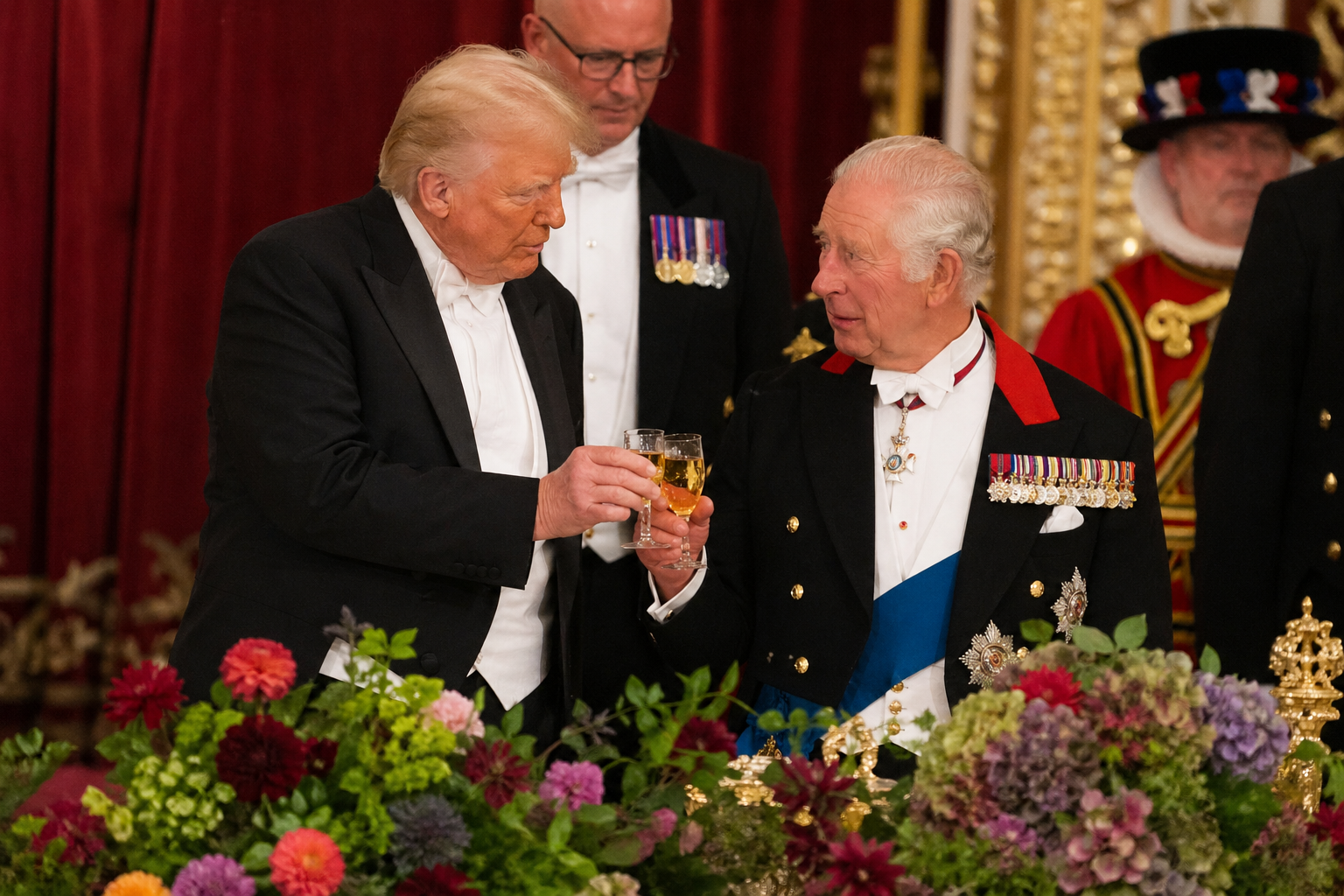
In one of the more unexpected outcomes of a state visit in recent diplomatic memory, President Donald Trump announced he was dropping tariffs on Scotch whisky — an announcement delivered not through a formal treaty or press briefing, but via a Truth Social post hours after King Charles III departed Joint Base Andrews on his way back to London.
“In Honor of the King and Queen of the United Kingdom, who have just left the White House, soon headed back to their wonderful Country, I will be removing the Tariffs and Restrictions on Whiskey having to do with Scotland’s ability to work with the Commonwealth of Kentucky on Whiskey and Bourbon,” Trump said.
What Tariffs Were Lifted — And Why They Existed
Trump lifted the 10% tariff on Scotch whisky imports from the United Kingdom. Tariffs on Scotch had been part of a long-running dispute tied to aerospace subsidies in the Airbus-Boeing battle, and the added cost hit producers, distributors, and consumers on both sides of the Atlantic. Removing those tariffs clears a path for smoother trade and lowers costs for American buyers who enjoy a good bottle from Scotland.
The Trump administration placed tariffs during both terms, though nations felt relief when President Biden removed them. The new removal could benefit whiskey producers once again across the US and the world.
The tariff specifically targeted one of the most cherished products of the Scotland-Kentucky axis — with Scots sending aged spirits to America, and American bourbon cooperages sending their oak barrels back across the Atlantic for Scotch maturation.
Scotland’s Reaction — “Jobs Were at Stake”
Scottish distillers felt the pressure for years; higher prices meant fewer exports, tighter margins, and lost market share. American importers passed those costs down, and buyers noticed. John Swinney, Scotland’s First Minister, interpreted the president’s statement as a removal of tariffs on Scotch itself, calling it a “tremendous success” for his country.
“People’s jobs were at stake. Millions of pounds were being lost every month from the Scottish economy,” said Swinney, expressing gratitude to both Trump and King Charles III.
Charles himself is said to be “raising a dram” in celebration — a rare moment of royal and presidential alignment over something deeply Scottish.
The Industry’s Response — “Zero for Zero”
“The United States and the United Kingdom share a deep and enduring spirits tradition built on generations of craftsmanship, agriculture and market access. We applaud President Trump for working to restore a proven zero-for-zero model of fair, reciprocal trade between our two nations. This action strengthens transatlantic ties, brings much-needed certainty to our industry, and allows spirits producers on both sides of the Atlantic to grow, invest and support jobs at a critical time,” said Chris Swonger of the Distilled Spirits Council.
What It Means for US-UK Trade — The Bigger Picture
Lifting the tariffs doesn’t just help a single industry — it signals a willingness to ease friction with a close ally when it makes sense. The decision follows renewed engagement with King Charles III and comes at a time when trade tensions between the two allies needed a reset.
The whisky tariff removal is also being read as a test balloon for a broader US-UK trade deal — something both countries have discussed for years without completing. Prime Minister Keir Starmer’s government is expected to push for a wider agreement in the coming weeks, emboldened by the warmth generated during the royal state visit.
Trump’s post left it unclear whether the tariffs were being lifted on bottles of Scotch directly or on the materials — like wooden barrels — used to produce alcohol in both countries. That distinction matters enormously for the industry and will need formal clarification from the Treasury Department.
For now, from the distilleries of Islay to the bourbon bars of Lexington — the drams are flowing, the toast is to the king, and the trade war between the world’s oldest English-speaking allies is, for one sparkling moment, on the rocks no more.
Disclaimer: This article is for general informational and news reporting purposes only. All quotes and tariff details are based on publicly available sources including the South China Morning Post, Inc. Magazine, PJ Media, and Radio NewsHub as of May 1, 2026. The precise scope of the tariff removal — including whether it covers bottled Scotch or production materials — had not been formally confirmed in a Federal Register notice as of publication. Readers are encouraged to follow official US Trade Representative and Treasury Department announcements for the exact terms of the tariff lifting.